








Caveat Emptor! Lance, Manti and Believing the Sports Media
 Story by:
Adam Reeves
Story by:
Adam Reeves
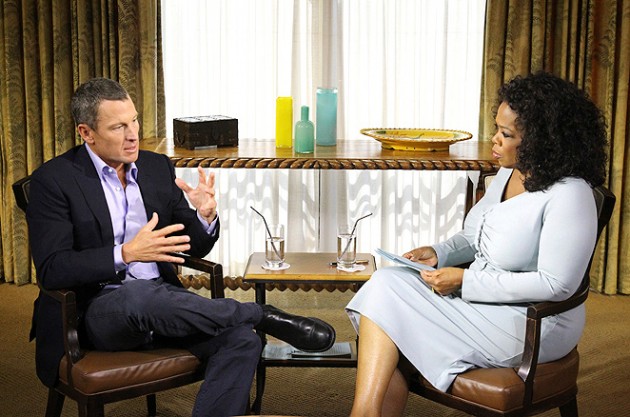
If you happen to take your inspiration from sports figures, last week was not your week. First, Lance Armstrong confessed that his Tour de France titles were fueled by blood doping and performance enhancing drugs. Next, Deadspin.com reported that the most “heartbreaking and inspirational story of the college football season” was a hoax. Turns out Manti Te’o’s deceased girlfriend Lennay Kekua, to whom the Notre Dame linebacker dedicated much of his play this season, was never real. These revelations are shocking to be sure—Armstrong’s for the sheer duration of his previous denials and Te’o’s for the sheer weirdness. The idea, however, that these revelations will make the sports media change the way it reports them is as much an illusion as Kekua herself.
 “Now that our long era of shattered innocence is finally over,” writes Jonathan Mahler of the Armstrong scandal, “it’s time to move past the sanctimony and outrage.” While Mahler says this in an effort to advocate some acceptance for drugs in sports, his exhortation is just as easily directed at those in the media who continue to express shock and dismay every time one of our sports heroes turns out to be less than heroic. Indeed, for fans, revelations like those last week are nothing new. Almost one hundred years ago, eight members of the Chicago White Sox intentionally lost the World Series. Today, only two of the eight sprinters who ran in the 100-meter finals at the 1988 Olympics in Seoul remain untainted by steroids. As Danny Almonte and his forged birth certificate proved, not even Little League is safe.
In reality, the only people who seem to have escaped the past century without even a hint of cynicism are the people who follow sports most closely: sportswriters. Take, for instance, Rick Reilly. After Lance Armstrong admitted his cheating to the ESPN columnist by texting the words “I’m sorry,” Reilly reacted like a jilted lover. “Two words? For 14 years of defending a man? And in the end, being made to look like a chump?” Or, take Pete Thamel. Despite admitting he could never find an obituary for Kekuka or even properly spell her brother’s last name, Thamel acknowledged only noticing “small red flags” in Te’o’s story.
But if you think sportswriters are now going to stop placing story over statistic, stranger-than-fiction over fact, then you are a bigger chump than Te’o. The sports media makes its money by presenting sports in such a way that the stories off the field subsume the contests occurring on it. Lance Armstrong isn’t a cyclist, he’s a cyclist that beat cancer. Manti Te’o isn’t a linebacker, he’s a linebacker whose girlfriend died of leukemia. These stories are so tempting, so dripping with the emotion and triumph sportswriters want sports to represent, they can’t help but believe them. More importantly, sportswriters expect you to read their articles, click on their webpages, and do the same. If Rick Reilly didn’t believe Lance Armstrong, then what would he write about next?
Don’t believe me? On the same day Deadspin broke the story of Te’o’s hoax, Yahoo! sportswriter Pat Forde declared that he believed Notre Dame and its claim it never furthered the lie about Te’o’s fake girlfriend. Swayed by the quivering chin and catching voice of Notre Dame Athletic Director Jack Swarbrick, Forde assured readers he had “a read on [Swarbrick’s] personality.” Evidently, despite every reason for journalistic skepticism, Forde has chosen to take the blue pill and remain inside the Matrix.
All this is not to say that fans should never believe in Chuck Pagano, Pat Summitt, or anyone else whose off-the-field struggles makes his athletic achievements an inspiration. But what the sanctimonious outrage of Rick Reilly, Pete Thamel, and the rest of the sports media proves is that they will never stop believing, even when the story is too good to be true. Caveat emptor, indeed.



Comments 0
No Readers' Pick yet.