


Why Your Favorite Six-Pack Costs More Two States Over
 Story by:
Dating and Relationships Blog
Story by:
Dating and Relationships Blog
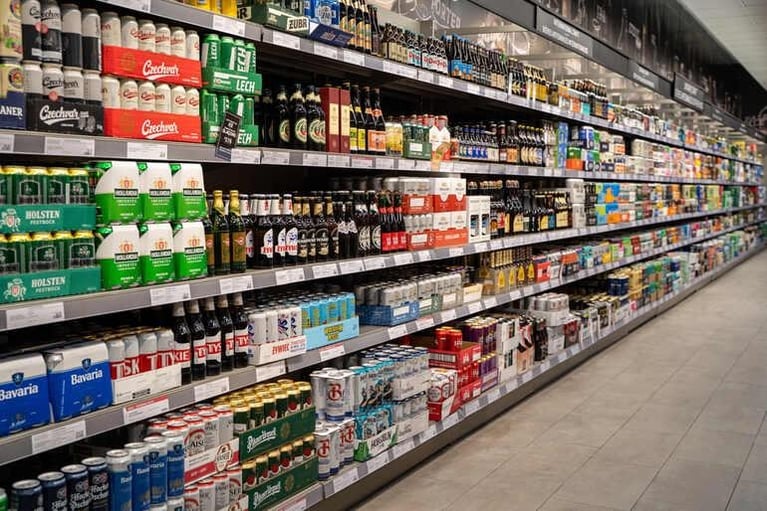
Anyone who travels with a cooler in the trunk has seen it happen. The four-pack of hazy IPA that costs one price at your local bottle shop rings up several dollars higher a few hundred miles away, or it isn’t on the shelf at all. It is easy to blame the store. Most of the gap, though, is built in long before the can reaches the cooler, because beer in the United States moves through a system designed after Prohibition, and every state runs it a little differently.
The Three-Tier System Sets The Stage.
When Prohibition ended in 1933, most states adopted what is now called the three-tier system. Brewers sell to distributors, distributors sell to retailers, and retailers sell to drinkers. That structure shapes everything from a single bottle to a six-pack on a retail shelf. Each tier takes a margin, and each state writes its own rules about how the tiers can deal with one another.
Some states let small breweries deliver their own beer to stores up to a set volume, while others send nearly everything through a wholesaler before it reaches the shelf as a six-pack. Franchise laws add another layer. In many states, once a brewery signs with a distributor, ending that relationship is slow and expensive. That is why a beer can vanish from one state for years after a falling out while it stays easy to find just across the border.
Taxes Are Not The Same Everywhere.
State excise taxes on beer vary enormously. According to the Tax Foundation, Wyoming charges about two cents a gallon, while Tennessee charges well over a dollar. Add local taxes, container deposits in the states that have them, and different sales tax rates, and the same case can carry a very different tax bill depending on where it is sold.
Distance, Freshness, and Small Batches
Distance costs money too. Hoppy beers need to stay cold and move quickly, so freshness matters when a brewery sends a refrigerated truck across several states and pays for every mile. Limited releases follow their own logic. A small batch of barrel-aged stout may be split between markets a few cases at a time, and a retailer who gets six cases for the whole year prices them accordingly.
How Breweries Keep An Eye On The Shelf
For breweries, the gap between the price they expect and the price on the shelf matters. A beer priced too high in one market can sit and go stale while it sells out elsewhere, and distributors don’t always report retail pricing in much detail. So larger craft breweries, and the sales teams at distributors, track what retailers charge across their territory. Much of that tracking now happens online, where grocery chains and bottle shops list prices and stock for the store nearest the visitor. A check from a brewery office in Colorado shows Colorado prices, so the tools doing this work have to load each retailer’s page the way a local shopper would.
Some run those checks through Proxywing’s residential proxy servers, which connect through home internet addresses in the towns being checked, so the store’s website shows the same price and stock that someone shopping there would see. The results feed decisions drinkers never see: which markets get the next seasonal, where a price looks out of line,e and which accounts need a visit from a sales rep. Some drinkers try to skip the system entirely by ordering straight from breweries, but shipping laws vary widely, and many states still don’t allow breweries to ship beer directly to consumers.
Getting The Best Price As A Drinker.
- Buy close to the source: Taproom prices on a brewery’s own beer are often the best you will find, and the beer is at its freshest.
- Check the canned-on date before the price: A cheap four-pack of a three-month-old IPA is no bargain.
- Join brewery mailing lists: Many breweries sell limited releases through online presales and pickup windows instead of through distribution.
- Look at mixed packs and case pricing: Plenty of bottle shops discount cases or let you build your own pack.
- Ask your local shop to order it: Stores can often get beers their distributor carries even if they don’t keep them on the shelf.
- Watch the calendar: Retailers often mark down seasonal beers when the next season’s releases arrive, so an Oktoberfest lager can be a bargain by November.
The Price Tells A Story.
None of this makes an expensive four-pack feel better at the register, but it does explain it. When a beer you love costs more on the road, the difference usually says more about state law, taxes, and trucking than about the bottle shop. Even good packs can carry a higher price when distribution costs add up, and when a favorite disappears from your state entirely, the cause is often a contract dispute, not a brewery in trouble.
FAQ
State-by-state beer laws can make finding a favorite brew surprisingly complicated. Here’s why some out-of-state beers never make it to your local shelves.
Why can’t I find a beer from another state at my local store?
The brewery may not have a distributor in your state, or its distribution deal may have ended. Many small breweries stay in their home region on purpose.
Is beer cheaper at the brewery?
Often, especially for the brewery’s own cans and draft pours, because there is no distributor or retailer margin on a taproom sale.
Why do limited releases cost so much?
They are expensive to make and are produced in small batches, and each market may get only a few cases. Barrel-aged beers can spend a year or more aging before release.


Comments 0
No Readers' Pick yet.