



Drug Testing vs. Alcohol Testing: What’s the Difference?
 Story by:
Health and Wellness Blog
Story by:
Health and Wellness Blog
The term “drug and alcohol testing” is typically used as a single program. In reality, they are two distinct fields of testing, having different biomarkers, sample types, and detection windows, and sometimes different legal standards. That’s a rule of thumb that many in the beer world can attest to: that these are all different roles of the lab, quality control, and sensory analysis. The knowledge of what a particular test is supposed to be measuring can help in the correct interpretation and decision-making around the test.
If you are an employer, you can’t design a compliant testing program without an understanding of the difference. If you are an employee, you should understand what a test can and cannot detect, or if you are in a probation program or court-ordered testing program. Drug testing involves the identification of drugs (and the metabolites) in the urine, saliva, or hair, and can identify drugs for different periods of time (hours to months) depending on the drug and the type of specimen tested. Most commonly performed assays are ethanol or metabolites, usually a breath test (BAC) to determine impairment, or a urine/blood test to determine recent use, such as an EtG test.
What Is Drug Testing?
A drug test is a test of a body fluid to look for the presence of drugs or drug metabolites, which are the chemicals your body creates when it processes the drugs. The frequently used formats are:
- Urine Drugs of Abuse (UDS): The most common type of drug test used for employment and DOT testing, usually testing for 5-12 substances.
- Oral fluid (saliva) testing: This is a growing market because of its short detection time and the convenience of observed collection. Oral fluid testing is now approved by DOT instead of urine testing for regulated drug testing.
- High security screening: Hair follicle testing provides a 90-day historical window, which is why it is utilized in pre-employment screening.
- Blood testing – infrequently used outside of clinical or post-incident / legal situations because of invasiveness and short time window.
The amount of time the substances stay in your body before being detectable is highly variable, from a few days for some stimulants to a few weeks for chronic users of THC. One of the biggest differences between alcohol testing and this variability is the detection science involved with alcohol testing, according to Brewing News. This variability is one of the largest disparities between alcohol testing and the detection science involved in alcohol testing.
What Is Alcohol Testing?
Alcohol testing only tests for one target compound: ethanol, or a target metabolite that is a confirmation that ethanol has been recently metabolized. The main methods:
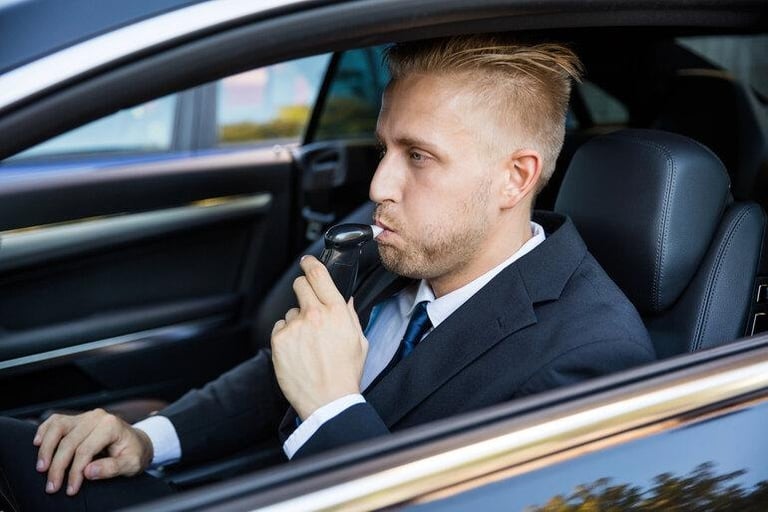
- Breath alcohol testing (breathalyzer): BAC in real time is measured by breath. This is what is used for DOT random testing, roadside DUI stops, and reasonable-suspicion workplace testing, and it captures impairment at the time of the test, not historical use.
- Blood alcohol test: In a DUI case and in a hospital, the most conclusive way of measuring BAC. The blood is detectable for about 24-36 hours after the alcohol has been taken.
- Urine EtG/EtS testing: Ethyl Glucuronide (EtG) and Ethyl Sulfate (EtS) are direct metabolites of ethanol. EtG/EtS is present in urine when a person is drinking alcohol; the presence of raw ethanol may occur in urine as a result of fermentation without consumption. This test is not a measure of impairment, but rather a measure to determine if alcohol was consumed in the window period.
- Transdermal monitoring (SCRAM): Ongoing sweat sampling on an ankle-worn sensor as part of DUI probation.
Detection Window Comparison
| Test Type | Detects | Typical Window | Best Use Case |
| Breathalyzer | Real-time BAC | Hours (until metabolized) | Roadside stops, DOT random testing |
| Blood alcohol | BAC | Up to ~24–36 hours | DUI cases, ER/legal evidence |
| Urine EtG/EtS | Ethanol metabolite | Commonly 24–80 hours, depending on intake | Probation, treatment program, and abstinence checks |
| Hair EtG | Long-term ethanol metabolite | Up to 90 days | Custody disputes, long-term monitoring |
| Standard urine drug panel | Drug metabolites (not alcohol) | Days to weeks, drug-dependent | Employment, DOT drug testing |
| Hair drug testing | Drug metabolites | Up to 90 days | Pre-employment, high-security roles |
A note on the EtG window: for light to moderate drinking, most people will test negative on a standard EtG cutoff within about 48 hours, while heavier drinking can require 72 or more hours to clear. As any responsible drinking guide would emphasize, the often-cited “80-hour test” nickname refers to the outer edge of that range under heavy, chronic use, not a universal timeline for every drinker. EtG has been detected in chronic drinkers for as long as 80 hours or up to five days, but not typically in someone who has had only two or three drinks.
Why They Require Different Technology
It is this fundamental difference that leads most of the folks who do a bit of research into the subject to get mixed up: drug tests and alcohol tests are not the same panel. A typical 5-panel or 10-panel urine drug test will test for metabolites of chemicals such as THC, opioids, amphetamines, and cocaine.
It will not detect ethanol or metabolites of ethanol. There is an alcohol test that needs to be used specifically, either a breath test or a urine/blood test that is actually looking for EtG, EtS, or ethanol. That’s why the urine and breath tests are usually only useful for detecting alcohol for 12-24 hours, while the longer half-life of the metabolite means that the EtG test can detect the substance for about 80 hours.
The Numbers, workplace, and legal context.
In regulated industries, drug and alcohol testing are viewed as a true compliance program, with a testing rate specific to each program:
- The minimum testing frequencies for 25% of drug and 10% of alcohol tests are established for 2026 for DOT-regulated safety-sensitive jobs such as pilots, mechanics, and air traffic controllers.
- The FAA uses the industry random drug test positive rate to determine the test minimums; the rate for 2024 was 0.816%, which will remain the minimum for 2026. The industry alcohol violation rate for 2024 was 0.131%, which will be the minimum for 2026.
- In 2026, the Federal Railroad Administration (FRA) reduced its random alcohol testing percentage for mechanical employees from 25% to 10% based on the low incidence of violation rates of less than 0.5% in 2023 and 2024.
- Drug and alcohol testing rates, as well as the rate for PHMSA, aren’t determined by a “bundle” of violations. In a recent cycle, PHMSA increased its random drug testing rate to 50%.
The lesson there is quite simple: HR and compliance teams need to have different drug testing panels and different alcohol testing protocols (and likely different vendors) since the questions they are asking and the time frame of interest are different: the chronic use of drugs vs the recent use of alcohol or an acute impairment. It also signifies the value placed on precision throughout the beer-making industry, where the clarity of standard and clear purpose testing is vital to the quality of the product, the safety of the workplace, and the informed decision-making that allows each brewer to identify the problems that need to be solved.
Common Misconceptions
“A drug test will catch alcohol, too.” No, standard urine drug panels are not calibrated for ethanol or EtG. Alcohol requires a dedicated test. “Synthetic urine works the same way for every kind of test.” This is a frequent point of confusion. Products like Spectrum Labs urine are developed and offered based on a standard urine drug panel, chemical composition, pH, and specific gravity that are tested on the THC/opioid/amphetamine panel.
They don’t apply to breathalyzer or blood alcohol testing, as they do not require a urine sample at all, and they don’t apply to testing for the EtG/EtS metabolites in a urine sample that is specifically for alcohol testing. It’s important to make the distinction between synthetic urine products and the alcohol detection constructs when anyone studies the topic of alcohol testing. Alcohol will not appear if I don’t feel drunk. There is a distinction between feeling sober and coming out negative for EtG, which is the reason for the existence of the test.
An Actionable Framework for Employers
- Separate your policies: Draft distinct SOPs for drug testing and alcohol testing, different triggers (random, reasonable suspicion, post-accident), different collection methods, and different cutoff levels.
- Match the method to the goal: Need real-time impairment data? Use breath testing. Need to verify abstinence over several days (e.g., a return-to-duty program)? Use EtG urine testing.
- Train collectors on both protocols: Breath and urine collection require different chain-of-custody steps; cross-training reduces compliance risk.
- Review your DOT agency’s current rates annually: As the 2026 data shows, rates shift independently by modality and by agency.
- Educate employees on false positives: Appeals and retesting protect the employer and employee, as incidental exposures to mouthwash, hand sanitizer, or certain OTC medications can result in levels of EtG/EtS in excess of typical cutoffs. This attention to correct interpretation is no new concept in the world of beer, where lab data is compared to a standard test procedure to not make conclusions based on incomplete or inconclusive data.
FAQs
Understanding how alcohol is detected can be confusing, especially since not all tests are designed to look for it. Here’s what you need to know about whether a standard drug test can identify alcohol use.
Does a Standard Drug Test Detect Alcohol?
No. The common drug panels test for metabolites of the drugs, not ethanol. A urine test for alcohol must be done separately from a breath test or blood test, or an EtG urine test.
How Long Does Alcohol Stay Detectable in Urine?
With standard urine testing, roughly 12–24 hours. With EtG-specific testing, it is commonly 24–48 hours for light-to-moderate drinking, extending toward 72–80 hours for heavier or chronic use.
What’s The Most Accurate Test for Current Impairment?
Since both measure current BAC (blood alcohol content), and not blood alcohol testing, they are referred to as breath alcohol testing or breathalyzer.
Can Synthetic Urine Affect an Alcohol Test?
No. Breathalyzer and blood alcohol tests don’t use urine at all, and EtG urine tests screen for a specific ethanol metabolite that synthetic urine products aren’t formulated to address.
Why do DOT Drug and Alcohol Testing Rates Differ?
Each is set independently based on that modality’s own industry violation rate; a low alcohol violation rate can lower the alcohol testing minimum even if the drug testing rate stays the same.


Comments 0
No Readers' Pick yet.