


How Smoke-Free Social Habits Are Changing Modern Bar Culture
 Story by:
Beer Blog
Story by:
Beer Blog
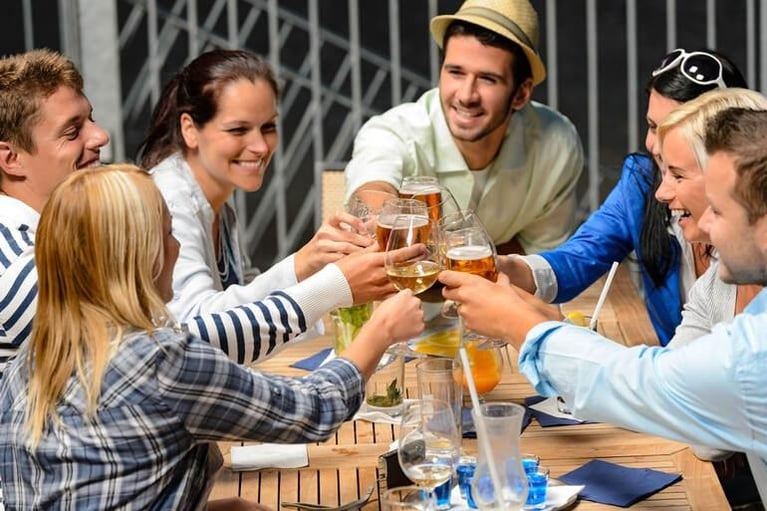
Now, go into any bar, brewery, or taproom, and you’ll see what I mean: minor shifts in the way people interact with each other. As smoking bans have come to take hold in most indoor dining establishments throughout the United States, smoking has shifted from these areas to other locations. This has also increased the ease of using this drinking pavilion so that those who want to talk, eat, and sip their drinks can do so. A pleasant experience occurs in a clean environment, but it does not have to change the social atmosphere of a brewery, taproom, or bar that makes it so appealing to people.
But the smoking ban has brought with it new smoking behaviours on the outdoor patio and other ‘no smoking’ areas, as well as new no-smoking policies in these spaces around food, conversation and entertainment. When you’re a drinker, these things might not seem like anything in particular unless they exist within the social setting, but rather within your body in a manner that is now familiar to you. The other drinking pattern shift relates to adults in the U.S. drinking alcohol. In 2025, Gallup found 54 percent of adults consuming alcohol, a decline from 58 percent in 2024 and 62 percent in 2023. Friends can be found over a beer, and while indoors, one can have a conversation, and when the group wants to move to another location, they can do so outdoors. They demonstrate that social customs can shape the culture of the bar, yet not diminish the pleasurable experience of enjoying a drink.
Nicotine Fits Into A Changing Routine
One development within these social habits is the growing visibility of nicotine pouches, the “small fiber pouches” which contain nicotine and can be used between the gum and lip without smoke or vapor. The United States has now established a particular list of nicotine pouch products that are legally sold. The regulatory landscape has also evolved in 2026, with four more pouch products receiving approval from the FDA back in August. They are Rich Berry 2mg, Cappuccino 2mg, Cappuccino 4mg, and Autumn Spice 2mg (on!). Even though they are tobacco products that contain an addictive substance, there are reasons to talk about nicotine pouches in the context of smoke-free alternatives and the modern nightlife.
Smoke-Free Spaces Become The Norm
Smoke-free laws have transformed how American bars operate and, in some cases, how they’re enjoyed. As smoke-free laws have spread across states and communities, the physical nature of American bars has changed. As of July 2022, 62.5% of the U.S. population lived in a state with comprehensive smoke-free policies that apply to bars, restaurants, and worksites. The agency also documented over a thousand cities and counties that have comprehensive smoke-free laws.
That change has made a new beginning point for modern nightlife, where conversation, food, music, and beer can be incorporated into the design of the interior drinking spaces. Additional social spaces can then be created on outdoor patios, with various preferences met. All too often, you find yourself hanging out until late at night at the bar before leaving out with friends and call the socializing as being part of the bar. In settings where drinking is a key activity, thoughtful furniture placement, open seating, and smooth indoor/outdoor flow can enhance the drinking experience to make it more social and relaxed.
Breweries Favor Conversation
Craft breweries and taprooms, because many pubs have begun to promote longer stays over drinks, pints, food, games, and events, have helped to make conversation an integral part of the modern drinking experience. When you go out with friends to see a beer joint, the beer can be just one part of a longer social interaction, even if it’s beer-tasting or talking to the people working there.
With smoke-free alternatives, it works well in that format as the focus remains on common experiences in-house. As the night progresses, your group can choose to go to a food truck or to a trivia night. It’s the social habits that add more spice to the bar scene – a night can be about the conversation and the involvement at least as much as the cocktails.
Patios Are a Second Social
The role of the outdoor venue in modern nightlife has become distinct and special due to the ability to offer patrons more flexibility and freedom to plan an evening according to their tastes, in the form of patios and beer gardens. The group can sit outside for the beverages, go in for dinner, and go back out the door for the rest of the night of discussion. That movement provides an elastic rhythm, one that is becoming more familiar.
Finally, if local rules allow, certain areas of patios can have designated smoking spaces where different routines might be separated from each other without having to follow the same pattern as the rest of the guests. For you, that could mean selecting the setting that best matches the situation at hand while your friends make other choices. A smoke-free bar can be another option for those who prefer a cleaner, more relaxed environment, making smoke-free alternatives part of a larger strategy toward shared community spaces today.
Drinking Becomes More Flexible
All of this has increased the number of things that people can do with craft beer, cocktails, nonalcoholic beverages, food, live music, sports, games, and conversation in one event, the perfect definition of modern bar culture. With that diversity comes extra methods to engage in a night out, so drinking doesn’t need to define any single moment.
However, social habits become more individualized when the person in one portion of a venue observes another in another, and/or when the person’s way of occupying his or her time in one spot differs from another. One pal can be on to a new release, another a game, and the third somebody else, to talk a lot of the evening. Smoke-free alternatives are one component of the social routine, which is flexible.
What Comes Next for Bar Culture
These changes should not be interpreted as all venues and customers being the same, as smoking regulations vary by state and municipality. In its latest fact sheet on the State System, the CDC reported that 61.1% of the U.S. population had comprehensive smoke-free indoor-air policies for bars and restaurants and worksites. Although that is a significant improvement, there are differences across the regions. As a customer, the more interesting aspect is how social practices are continuing to evolve as spaces evolve to match customer expectations.
A smoke-free taproom and beer garden, a hectic patio, a foodie brewery, or a neighborhood bar centered on conversation are all examples of modern nightlife and evolving brewery scenes. While people gathering together is still a necessity to preserve culture, smoke-free options are providing more distinct ways to connect. These spaces allow for casual discussion, outdoor seating, beer sampling, and community activities that have nothing to do with the actual beer but take place within the social setting that surrounds it.


Comments 0
No Readers' Pick yet.