







How to Prevent Humidity From Damaging Your Wine Cellar
 Story by:
Wine Blog
Story by:
Wine Blog
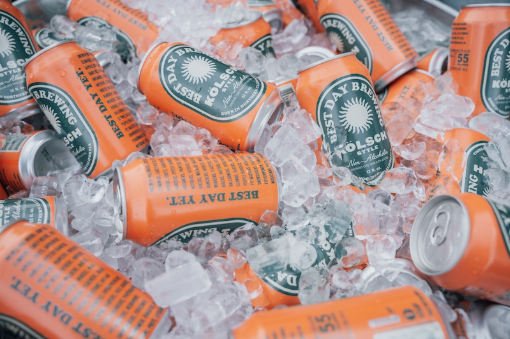
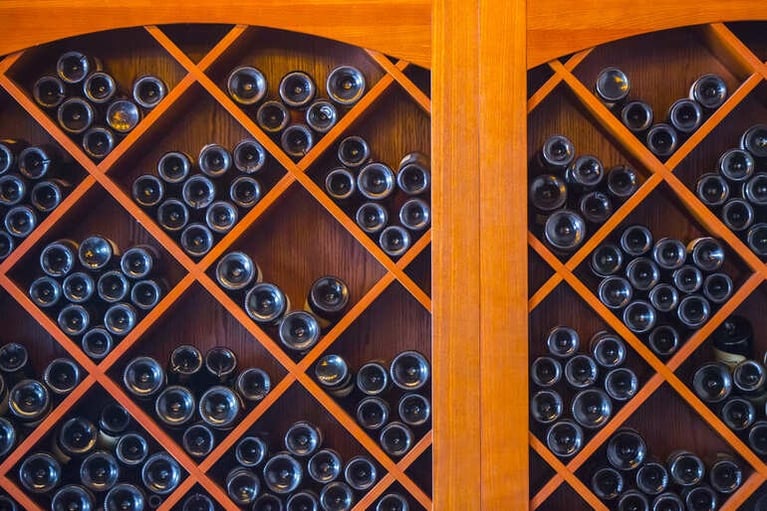
Taking care to ensure good environmental conditions is an absolute must if maintaining a pristine collection of banked vintages is to be expected, since care, patience, and investment of money must all be considered. Though the importance of temperature control is obvious, it’s equally important to keep control of moisture flux to preserve your valuables’ structural stability. All of this careful regard for cellar conditions will have a positive impact on carefully stored beers, especially bottles that will be left to mature for a long time, where a stable environment can help ensure that the presentation and quality of the beer remain as intended.
Once you start thinking about wine cellar humidity control as part of the same system, the room behaves differently. Balance becomes the goal rather than chasing a single number, and small adjustments start to carry more weight than expensive fixes later on.
Finding The Narrow Range That Actually Works
There is a window where things settle. Miss it, and the consequences show up slowly. Air that sits below about fifty percent begins to pull moisture from corks, which then shrink just enough to let oxygen slip through. The change is small at first. Wine loses freshness, edges soften, and by the time it is obvious, the damage is done, forcing you to tolerate each sip instead of enjoying it.
Push the other way, and problems take a different shape. High humidity encourages mould, softens paper labels, and can work its way into timber racking if the exposure lingers. That kind of damage rarely stays contained to one corner. A steady range between sixty and seventy percent tends to keep both extremes in check, though achieving it is less about precision and more about consistency across the space.
Vapour Barriers And Structural Sealant
Long before any device is switched on, the structure decides how hard the system will need to work. Insulation plays a role, though vapour barriers do more than most expect. Without a continuous barrier, moisture travels through walls and flooring, feeding the cellar from behind. It does not take much. A few unsealed joints or gaps around fittings can undo careful planning elsewhere.
Sealing feels tedious. It is also where many builds either hold their line or drift. Attention to joints, corners, and penetrations limits outside influence across the seasons throughout the year, which means whatever equipment you install is managing a stable environment rather than fighting constant intrusion. That difference shows up in reliability and in running costs.
Choosing the Right Humidification Equipment
Certain rooms aren’t moisture-proof. A dedicated humidification system becomes more of a sensible way to increase humidity when the incoming air, the change of season, or the material used for construction pulls it down quickly and more than wanted. Linear delivery systems are used to provide controlled humidity wetting, sourcing even amounts of moisture throughout the two rooms and more open, ducted areas.
Placement still matters. Excessively close to racks will result in damp areas, and excessive distance from the racks will contribute to uneven distribution. For those wishing to maintain their policy but require stability in the room’s output as it cycles through its natural rhythm, units equipped with built-in hygrostats can help ease things along when output is adjusted according to the ambient air conditions.
Monitoring Tools and Routine Maintenance
Because issues rarely announce themselves early. A hygrometer gives you a reference point, though one reading is rarely enough in larger rooms. Air can behave differently near the floor compared to higher shelving, making it harder to notice the effects of humidity without multiple sensors.
Regular checks help. There is no need for them to be complicated. Look at: feel of covered parts of labels; Check effectiveness of place feeling; Quick look at readings. These little tidbits can often reveal changes in advance of the repair.
Maintenance is in the same category. The need for cleanup of water reservoirs. Filters clog. Drain lines block. None of it is hard, but neglecting to do it provides a relatively short life and invites problems which are easily prevented.
Keeping Cellar Conditions Steady
Humidity control is not so much perfection as maintaining stability. A room that is well-sealed and equipped properly with the appropriate apparatus and a little routine supervision will maintain its conditions without constant supervision, helping you protect your wine cellar over time. This steady approach also matters in beer storage, where consistent cellar conditions can help protect bottles, labels, and the overall quality of carefully stored brews. When that happens, the cellar fades into the background, allowing the wine, or a well-kept beer, to develop as it should.


Comments 0
No Readers' Pick yet.