





Tips for Balancing Old Hobbies with New Interests
 Story by:
Guest Blog
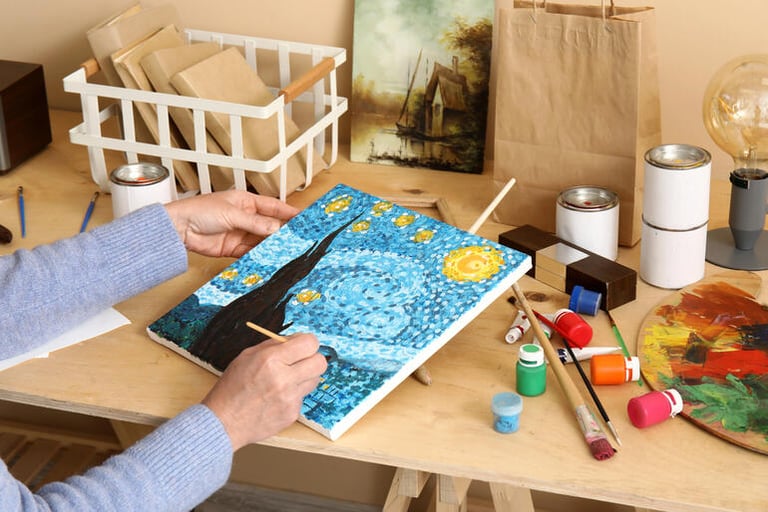
Life always keeps one’s attention, and it’s best to follow it. You’re all in one month painting ceramics and the next month you’re hooked on urban gardening or learning a new language. This shifting interest can also spur other interests, including trying out craft beer styles, learning about the impact hops can have on beer taste, or trying out homebrewing. Every new venture provides new opportunities to build up skills, to make new contacts, and to experience the fun of trying something new. These changes are all natural. As life’s new adventures come in, however, it’s easy to let the activities you’ve always enjoyed fall by the wayside.
Anyone who has ever felt a pang of conscience about their dry and dusty sketchbooks or their neglected guitars will be in good company. It’s weird, after all, to remember that you used to dedicate time to something, but it has now become a habit of not doing it anymore. Fortunately, you don’t have to sacrifice or eliminate something you already like to accommodate something new. The key is just to be flexible and allow yourself to work out how you spend your free time and find a balance between the two. Here’s how:
Give New Interests a Trial Period
Don’t take every question you have to heart or make a big deal of it. Sometimes, the only way to find out about a new interest is to try it out for a time and experience it. Allow yourself some time (days or weeks) before making a decision to keep it in your stream of consciousness. This way, you can use it for the novelty effect without having to rearrange your entire layout.
This is a good technique for hobbies that can be tasted in small quantities. If you’ve always played matches, for instance, you may want to look for digital alternatives that have different gameplay. Maybe you can play JILI games that combine familiar mechanics with modern online twists, then see whether the experience fits the way you like to unwind. Think of it as testing the waters, not signing a lifelong contract with your newest interest.
Keep the Old Hobbies You Actually Miss
The question is, if you suddenly no longer did one of your hobbies, would you really miss it if you did? Your reply will provide you with lots of information. There are some long-time hobbies that remain in your life because they continue to make you happy. Others hang around, for the most part, because they are familiar. It is OK to say that it’s different.
Perhaps the weekly cycling trip gets you through your week, or maybe the monthly game night is the simplest method of getting in touch with your buddies. Those are worthy of being preserved. If you haven’t done something a lot of times in the past months, however, it might be wise to add new hobbies. Remember you don’t have to keep all the hobbies forever as you did like them long ago.
Change Your Interests With the Season!
Doesn’t everyone deserve a break from the rugby season? Your energy, workload, and social schedules, let alone the weather, can vary from month to month. The interests you have ought to change too. Hiking can be more challenging in warmer weather, and take it inside during the wet season. You could be spending your evenings on a creative project over the course of a couple of weeks, and another activity takes a back seat.
It doesn’t mean that anything has been abandoned. It’s just a sign of the changes in your attention to accommodate life as it is today. This can also turn beer exploring for brewing legends into a fulfilling and interesting pastime, whether it’s sampling seasonal craft beer or learning about a new brewing process at a leisurely pace. After all, isn’t this what hobbies are all about: having fun with your hobbies, but not making them an obligation?
Try to find a Way for there to be Common Interests.
When hobbies don’t compete for their own chunks of time, balancing hobbies is much easier. Consider what you already love and whether there is a natural progression in any of the things you love. If you are a photography enthusiast and have recently begun to go hiking, then take your camera along. If you’ve always loved to cook and recently caught the foodie bug and want to travel, try to make dishes from the countries you visit! Hobbies layered together are a more incredible experience than trying to juggle them around, allowing them to overlap.
This can even help you be creative in ways that you didn’t think of. For example, drawing could help develop your sense of detail when taking photos, and playing poker might help develop your problem-solving abilities when doing other things. The mixture appears to flow well together.
Establish Boundaries Prior to Excitement Getting the Best of You.
It is easy to get carried away when learning a new hobby, as it is great fun initially. You purchase the equipment, you enroll in the class, and then it takes over your week. Sound familiar?
Don’t get too caught up in the new interest just yet, and gauge how much time and money you are willing to put into this new hobby. You may be able to do it one night per week, or you can establish a monthly spending limit. You might even want to determine that you will not start another class or project until the one you are in is over. It’s okay if there are some boundaries missing; it doesn’t ruin the fun! Indeed, they can be used to safeguard it!
Keep the Social Element Alive
Hobbies are commonly seen to be very successful when shared. Don’t give up your old hobby if it means you will have a long-standing group of friends. All the while, new interests can bring new communities into your life. Balance both; you’re not just diversifying your activities, you’re also diversifying your social circles. This can help you feel more fulfilled in your free time and less isolated.
You don’t have to abandon your old group in order to join a new group. It’s nothing but expanding your network. It could be a book club, a games group, or a local sports team; the social component brings life to it. Hobbies are sometimes more meaningful and enduring through friendships.
Celebrate the Blend of Old and New
Finally, the idea of hobbies is a matter of enjoyment, not of duty. The balance between old and new interests is not so much a matter of controlling as celebrating the balance. All your favorites help you think of who you are, and all your new ones give you glimpses into who you are becoming.
They complement each other to form a complete profile of your personality and interests and help to keep things exciting in your life. There is the potential to explore various interests, such as creative projects, discovery of craft beer styles, or a beer-making garage in traditions, to give variety without feeling like a chore. Then, rather than thinking in terms of a balance that is an exact science, aim to create a balance that is still fun, flexible, and authentic to you.


Comments 0
No Readers' Pick yet.