






Your Beer Palate Already Speaks Scotch
 Story by:
Spirits Blog
Story by:
Spirits Blog
Whisky hardcore drinkers are told that it’s a whole new fandom, with its own jargon, and the entry-level point kicks off from the point where they’re afraid to open the bottle. That’s mostly gatekeeping. You’ve been looking for smoke, roast, sherry barrel, and coastal salt in your beers for years, and you already have that sensory awareness and are ready for single malt. In a good beer, I think it’s important to pay attention to the different qualities of the aroma, the texture, the sweetness, and the finish, because those can make a good brew seem more accessible and make whisky more accessible. The flavours transfer very nearly as-is. Begin with overlaps. In terms of receptor stimulation, a peated Islay whisky is similar to a rauchbier or a heavily smoked porter, and stimulates campfire, bacon, iodine, and tar.
The sherried Speyside dram has the same dried-fruit, dark-sugar character that can be found in the barrel-aged imperial stout after a year of aging in a barrel from an old bourbon or sherry cask. The same work is performed in both glasses. Whisky bypasses the hops and the carbonation and delivers the wood and the malt to you. That is the other bridge of the malt. Both beer and single malt Scotch start with the same ingredient – malted barley. If you roast it darker, it’s chocolate and coffee; if you dry it over peat smoke, then it’s ashy and medicinal, which is what Islay wants to be. The same grain and same decisions were made by the maltster, only a different finish line.
Where to Start: the Five Scotch Regions, Mapped to Your Beer Palate
Each of Scotch’s five regions maps onto a beer style you already drink. Islay is the peat-and-smoke corner, the closest thing to your favourite smoked porter; Speyside leans fruity and sherried, which lands well if you already chase barrel-aged stouts finished in Oloroso or Pedro Ximenez casks; Campbeltown is oily and briny, Highland runs malty and full-bodied, and Lowland stays light and grassy. If you want that flavour map laid out region by region before you commit to a bottle, The Whisky Club’s guide to scotch sorts each style according to its actual taste, not its age statement or price tag.
The Whisky Club is an Australian subscription company that deals directly with distilleries to release limited edition, single cask, Scotch whiskies for its members, such as a Benriach Speyside in Oloroso and Pedro Ximenez sherry casks, and a cask-strength Ardnamurchan from the Highlands. Before spending money, it is important to know the location of the edges. Most beer connoisseurs begin with Islay (say eye-luh), as it uses peat, the best-known of the brewing options. These are the ones that are known throughout the world, and they drink like liquid campfire: Lagavulin and Ardbeg. If you already have a smoked porter as your beer of choice on your desert island, then this is home base.
The completely contrasting style is Speyside, which tends to be soft and fruity, often finished in sherry casks, leaving raisin and dark toffee behind. The area that zips in and out like a lightning bolt for pastry-stout and barrel-aged devotees. The other three round out the range. Highland malts are the all-rounder malts, honeyed and floral in one spot, big and full-bodied in another. Lowland whiskies are gentle and light and grassy at the easy end, where they are a good pour for those wanting to ease off hoppy pale ales. Campbeltown is the exception, a tiny harbour town once with a dozen or more distilleries that now has just a few. The drams are salty, greasy, and have a tinge of saltiness.
Single Malt or Blended: What to Actually Buy
There is one difference with the labels that is important to understand before purchasing. Single malt is a term that refers to the fact that all the malt used for the production of this type of whiskey was malted from barley and that all the whiskey in the bottle is produced at a single distillery. For those looking for a premium malt option, understanding these distinctions can help when comparing bottles and deciding what best suits their preferences. Label information is also a helpful place to begin to understand what you are drinking, as it provides helpful production information, including the type of whisky, ingredients, and the distillery that produced it.
Blended Scotch is a combination of malt whisky and a lower-priced grain whisky sourced from a number of distilleries; most supermarket bottles are blended Scotch. Both are not superior, but the regional character does appear in the single malt, so it is worth focusing on. A blend is designed to be consistent and to be blended easily; a single malt is designed to taste of a particular place.
How to Taste Your First Dram
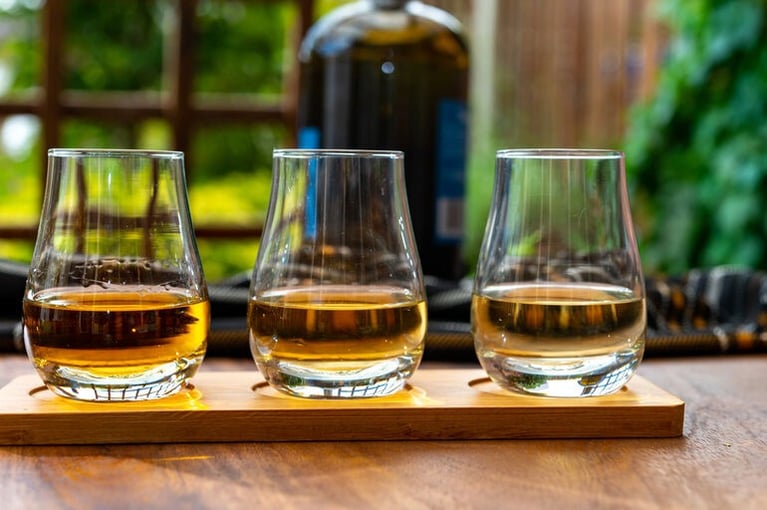
Pour half an inch. No ice to start; room temperature. There’s a bit of water added after tasting it on its own; water is the key to a cask-strength whisky, just as it isn’t to a beer. Let it sit for a while in the glass. A dram thrown away on the first sip, after 10 minutes of air, is like a large stout getting a head start on its way. As a beginner, don’t be driven by age statements. A 10 is not necessarily older than an 18-year-old bottle, and the oak can cancel out what you are trying to learn.
Begin with a peated Islay and a sherried Speyside. In an hour, those two poles will put you more in tune with your own tastes than a month of middle-of-the-road bottles. A focused taste test will allow you to determine if you are more stimulated by bitter, roast, sweet, acid, or hop. After you have an idea of which flavors you like, making a craft beer brewing selection will be much easier.


Comments 0
No Readers' Pick yet.