





Whisky: From History To Aroma And Enjoyment
 Story by:
Spirits Blog
Story by:
Spirits Blog
Whisky is an unmatched beverage with a rich history and complicated taste that is made from grain and is available in different countries. It has one of the most popular alcoholic drinks in the world due to its fine scent and immense flavour. It is time to immerse ourselves in its history and the process of production, and make tasty cocktails with fine whisky.
From Monasteries To The Present Day
The history of whisky stretches back centuries, originating in the heart of Scotland and Ireland and crossing the borders of these countries to become one of the most popular alcoholic beverages in the world. It is from these lands that authentic whisky originates. Subsequently, the drink became popular among the locals and was introduced to the whole world.
Origin
The history of whisky goes back a long way. Initially, this drink was created in the monasteries of Scotland and Ireland, where monks used it as medicine. Although the exact dates remain a mystery, the first mentions of whisky date back to the 15th-16th centuries. It was during this period that grain distillates began to be produced in monasteries as an alcoholic beverage with very broad medicinal properties. Over time, whisky became popular among the locals, and its production spread beyond the monasteries.
Evolution
By the 17th century, whisky was already well known in Scotland and Ireland, and with the advent of new production technologies, it began to develop. An important step was the use of oak barrels for ‘maturation’, which gave whisky its characteristic taste and aroma. You can play your favourite games anywhere, at home, at school, or even at work – Enjoy free card games
Establishment
In the 18th century, whisky became an export commodity, with Scotland and Ireland in particular exporting it to America and other countries. Throughout the 19th century, its popularity grew steadily. More and more production facilities appeared in different regions. Scottish and Irish whiskey acquired their own unique characteristics: producers refined their craft, distinguishing their products with different flavours and aromas.
The Modern Era
Whisky has turned out to be a potent brand of luxury and status in the contemporary world. It is still famous in the world, and its possibilities are growing as new methods of production and maturation are developed. The choice available to consumers is a wide assortment of whiskies from various regions and nations, enabling tourists to taste the variety of this prestigious cocktail beverage.
Thus, the history of whisky dates back to ancient times and several traditions. With its grand past and aroma-flavour fragrance, the whisky continues to awe the heart since its modest beginning in the cellars of monasteries, to the posh and expensive bars of the global capitals.
Production Features
Whisky is made using an ancient grain or malt mash, then fermented and distilled. The major ingredients include barley or corn malt, water, and yeast. The mash is now left to age in oak barrels, this is where it acquires the distinctive flavour and smell.
Raw Materials:
The selection of high-quality raw materials is the first process in the manufacturing of whisky. Commonly used are barley malt (in Scotland and Ireland) or corn malt (in the United States), water, and yeast. The quality of the raw materials is of massive influence on the taste and quality of the final product.
Fermentation:
Water and yeast are put into large fermentation vats where the malt is mixed. It takes a few days and leads to the distillate being formed, which is a liquid with alcohol and other spirits.
Distillation:
The distillation is carried out in special equipment -distillation columns or blending vats. It gives the ability to separate the alcohol and the other substances and enhances the purity of the drink.
Maturation:
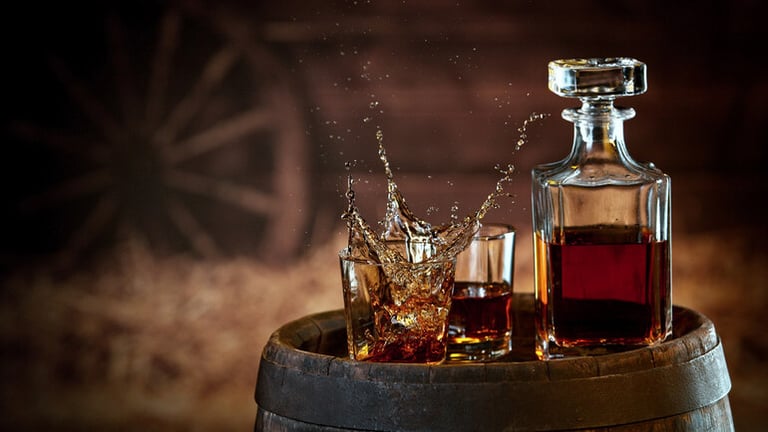
The whisky is distilled, and after that, it is moved to oak barrels to be matured. This is a very essential step, as the oak barrels give the typical flavour and fragrance density to the whisky. One thing is the length of the maturation period, which could be years or decades, based on the kind of whisky and the manufacturer.


Comments 0
No Readers' Pick yet.