





Why Some Craft Beer Fans Start Exploring Whisky
 Story by:
Spirits Blog
Story by:
Spirits Blog
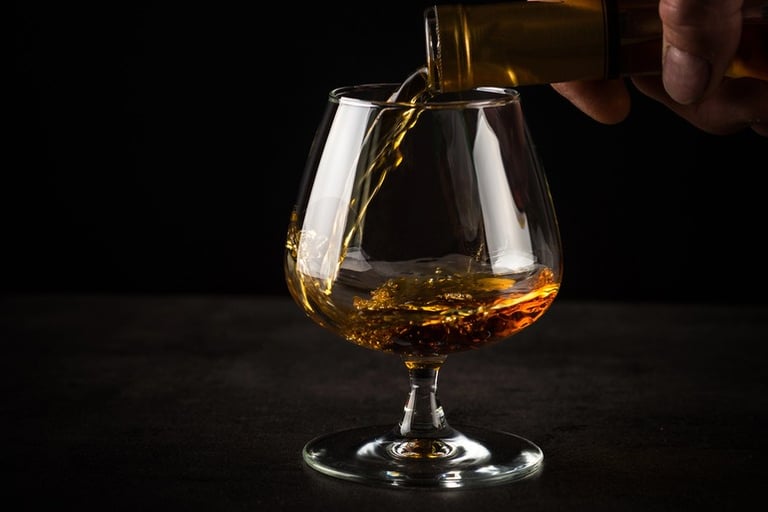
Those people who enjoy craft beers also tend to go for whisky after building an appreciation for the unique methods of production as well as the different flavors and craftsmanship involved in the process. Many of the people who love craft beers will also find an attraction to the diverse aromas and flavors of the whisky, which may range from the smoky flavors of some whiskies to the smooth and caramel flavors of others, and will be capable of appreciating just how similar whisky is to craft beers based on its processes of selection, aging, and production.
Why Some Craft Beer Fans Start Exploring Whisky
Eventually, almost any craft beer lover faces a certain point. You stand facing a long list of craft brews, and while the IPAs are ever more complex, the sours bear fanciful desserts, and the stouts are full of dessert flavors, there is something about that list that just isn’t as appealing anymore. That isn’t because something is wrong with your taste buds, but rather because it lacks novelty.
Years ago, you would have been very excited when looking at the list. The tastes of each beer were unique in their own way; some were fruitier, while others had herbal flavors. There were always new things happening. It made you very excited every time there was a new brewery opening. Eventually, you start to see common trends among those styles of beers. While there is nothing wrong with hazy IPAs, fruit-infused sours, or aged stouts, things begin to feel predictable and familiar.
When the Tap List Starts Feeling Familiar
Here is where the slight change occurs. It is not because of the decline in quality in craft beers. On the contrary, the craft beer scene seems to be in the best shape yet. The problem is that along with increased creativity and technical sophistication come intensity and density of flavoring combinations, processes involved, and release schedules. At a certain point, the idea of ordering some craft beer called a “triple-fruited smoothie sour” stops being thrilling and begins to seem familiar. That’s when focus shifts, if not from the idea of craft beer in general, then at least from what is on the menu at that moment. For some people, that something is whisky.
Why Whisky Starts to Feel Appealing
Initially, it appears that whiskies are from another universe entirely. They come with a reputation of being quite old-fashioned, even threatening. Any discussion that takes place in relation to them uses language related to aging barrels, distillation locations, peat, and wood. In this way, it can be as heavy a topic as craft beers.
However, when one gets to know this drink a bit better, the culture that surrounds it is found to be more muted than initially assumed. Even if it’s a smoky Scotch or a growing interest in English whisky, there’s also a structural simplicity to it: one glass, slower pace, fewer decisions. After an evening of sampling multiple beers, that simplicity can feel refreshing rather than restrictive.
Different Drinks, Similar Curiosity
In several respects, however, craft beer aficionados and whisky lovers share more commonalities than might at first seem the case. Both are curious about flavors. Both appreciate the subtle nuances found within varying styles, regions, and brewing techniques. And both can enter lengthy discussions regarding specific bottles, while the rest of the group simply consumes their beverage.
Craft beer drinkers usually favor speedier paces, featuring new arrivals and seasonal varieties. On the other hand, whisky drinkers usually operate at a slower pace, owing to their product’s maturation process and brewing style. Neither system is superior to the other; they’re merely different tempos.
How Some Beer Drinkers End Up Exploring Whisky
In most cases, whisky isn’t meant to substitute for craft beer. Instead, it becomes a part of the equation along with it. The beginning point often includes curiosity, a mindset shaped in part by the craft revolution that encouraged people to explore flavor, process, and diversity. even if that happens through a glass in a bar or a conversation with a friend about whisky’s subtleties of taste, it’s bound to happen sooner or later.
The next stage is discovery, which makes one realize how vast the world of this spirit is. Even if it be Scotch, Bourbon, Irish Whisky, or even Japanese whisky, each one has its unique qualities, much like any style of beer does. But at some point, the process transforms into something else.
Evenings Start to Change
Since tastes change, so too can drinking habits. What used to be considered a fun night out, jumping from one beer to another, lots of chatter, staying up late, can change over time. For many people, that shift also brings a greater appreciation for beer tasting, where slow experiences are substituted for the fast-paced experience of the night. For others, less noisy places may be desirable. Less alcohol, slower pace, conversation without competition from other noise. In this kind of setting, whisky becomes the natural choice. This is not a question of substituting craft beer for whisky or growing out of it, but rather about fitting the right drink to the evening.
Not a Replacement, Just Another Direction
There’s no doubt that craft beer is here to stay. In fact, craft beer is probably one of the most innovative facets of our contemporary drinking society. A good IPA during summer days, or even a seasonal brew, will always do the trick, and if you happen to come across a free beer at a tasting or local event, even better. But then again, some people drink and discover whiskies for what they are, without the intention of making a statement or out of a refusal of beer, and simply because they want to try a new taste experience, this time at a slower rate. It could be for variety’s sake, it could be because of the mood, and some days it might just be out of sheer preference for a slower pace.


Comments 0
No Readers' Pick yet.