




Best Stout Beer: 25 Can’t-Miss Stouts (Irish, Milk, Imperial & Barrel-Aged)
 Story by:
Editorial Dept.
Story by:
Editorial Dept.
Stouts often get lumped together as if they’re all the same: thick, sweet, heavy, one-and-done beers. That’s why people miss the good options. In the real beer world, the best stout beers cover a wide range, from pub-friendly Irish stouts to silky milk stouts to high-ABV monster beers that taste like dark chocolate, espresso, and oak. Big imperial stouts often score higher on ratings sites, but this list prioritizes repeat-drinkability and real-world availability. Our picks aren’t a strict 1–25 ranking. We grouped great stouts by style and called out the best fits for different cravings and occasions.
This guide solves two problems. First, it provides you with a clean, confident buy list for the best stouts for every occassion, not hype picks that are impossible to find. Second, it helps you choose the right category fast, based on sweetness tolerance, ABV comfort, and the vibe you want tonight. If you’ve ever Googled best stout beer brands, this is the shortcut list that actually matches how people buy and drink stouts. Along the way, you will see how brewers and breweries build stout flavor using roast, lactose, oats, barrel time, and sometimes a nitro pour. Let’s dive in!
Start Here: Quick Stout Beer Picks + Comparison Table
Now we get to the fun part: the bottles and pints that make a strong case for the best stout beer. We’ve grouped them by style so you can jump straight to the flavor you’re craving to find.
Stout Beer Quick Picks:
If you just want the quickest answers, start here. These are the best stout beers in each “lane,” picked for flavor, balance, and real-world availability.
- Best Overall Stout: Guinness Draught
- Why it’s here: Smooth roast, controlled bitterness, clean finish, classic pub pour.
- Best Irish-Style Upgrade: Guinness Foreign Extra Stout
- Why it’s here: Richer and more layered than Draught, with extra heft and complexity.
- Best Milk Stout: Left Hand Milk Stout Nitro
- Why it’s here: Creamy nitro texture with cocoa-coffee notes and sweetness kept in check.
- Best Imperial Stout: North Coast Old Rasputin Russian Imperial Stout
- Why it’s here: Benchmark RIS structure with bitter dark chocolate, deep roast, and balance.
- Best Barrel-Aged Splurge: Firestone Walker Parabola
- Why it’s here: Disciplined barrel character, layered chocolate and dried fruit, built for small pours.
Comparison Table: Stout Beer Brands
|
Beer Brand |
Style |
ABV |
Sweetness |
Best For |
|---|---|---|---|---|
|
Guinness Draught |
Irish/dry |
4.2% |
Dry |
Pub pints, “your first stout” |
|
Murphy’s Irish Stout |
Irish/dry |
4.0% |
Dry |
Easy pints, smoother roast |
|
Beamish Irish Stout |
Irish/dry |
4.1% |
Dry |
Roasted bite, salty snacks |
|
Guinness Extra Stout |
Irish/dry |
5.6% |
Dry |
Cooking, food pairing, firmer roast character |
|
Guinness Foreign Extra Stout |
Irish/dry |
7.5% |
Balanced |
Slow pints, spice-friendly |
|
O’Hara’s Irish Stout |
Irish/dry |
4.3% |
Dry |
Craft-leaning dry stout |
|
BrewDog Black Heart Stout |
Irish/dry |
4.1% |
Dry |
Weeknight pints, easy pairing |
|
HenHouse Oyster Stout |
Oyster stout |
4.9% |
Dry |
Seafood, “something different” stout nights |
|
Samuel Smith Oatmeal Stout |
Oatmeal stout |
5.0% |
Balanced |
Cozy sipping, silky body |
|
Left Hand Milk Stout Nitro |
Milk/sweet |
6.0% |
Balanced |
Creamy nitro, dessert-adjacent |
|
Odell Lugene Chocolate Milk Stout |
Milk/sweet |
8.5% |
Balanced |
Chocolate-forward, still roasty and stout-y |
|
Mackeson Triple XXX Stout |
Milk/sweet |
4.9% |
Sweet |
Old-school sweet stout vibes |
|
Young’s Double Chocolate Stout |
Milk/sweet |
5.2% |
Sweet |
After-dinner treat, sharing |
|
Samuel Smith Organic Chocolate Stout |
Milk/sweet |
5.0% |
Sweet |
Dessert pairing, cocoa-first |
|
Belching Beaver Peanut Butter Milk Stout |
Milk/sweet |
5.3% |
Sweet |
Dessert stout cravings |
|
North Coast Old Rasputin Russian Imperial Stout |
Imperial |
9.0% |
Balanced |
Classic RIS, starter cellar beer |
|
Sierra Nevada Narwhal Imperial Stout |
Imperial |
10.2% |
Balanced |
Aging, roasty depth |
|
Bell’s Expedition Stout |
Imperial |
10.5% |
Balanced |
Slow pours, dark fruit/roast |
|
Stone Imperial Stout |
Imperial |
10.5% |
Dry |
Grill nights, bitter stout fans |
|
Great Divide Yeti Imperial Stout |
Imperial |
9.5% |
Balanced |
Reliable imperial, steak pairing |
|
Oskar Blues Ten FIDY |
Imperial |
10.5% |
Balanced |
Shareable cans, late-night sips |
|
Prairie Artisan Ales Bomb! |
Imperial |
13.0% |
Sweet-Spiced |
Coffee-chocolate depth, bottle shares, “dessert with heat” nights |
|
Firestone Walker Parabola |
Barrel-aged |
14.0% |
Sweet |
Bottle shares, special occasions |
|
Goose Island Bourbon County Brand Stout |
Barrel-aged |
14–15% (varies) |
Sweet |
Holidays, one-and-done pours |
|
New Holland Dragon’s Milk |
Barrel-aged |
11.0% |
Sweet |
Barrel-aged entry point, gifting |
Irish Stouts & Roasty Pub Classics
This is the pub lane: roasty, balanced, and built for full pours, not just a few dessert sips. If you want that clean, dry finish and that iconic nitro head, start here. For a broader look at Irish beer beyond stout, MyBeerBuzz also has a guide to classic Irish beer styles and brewing traditions.
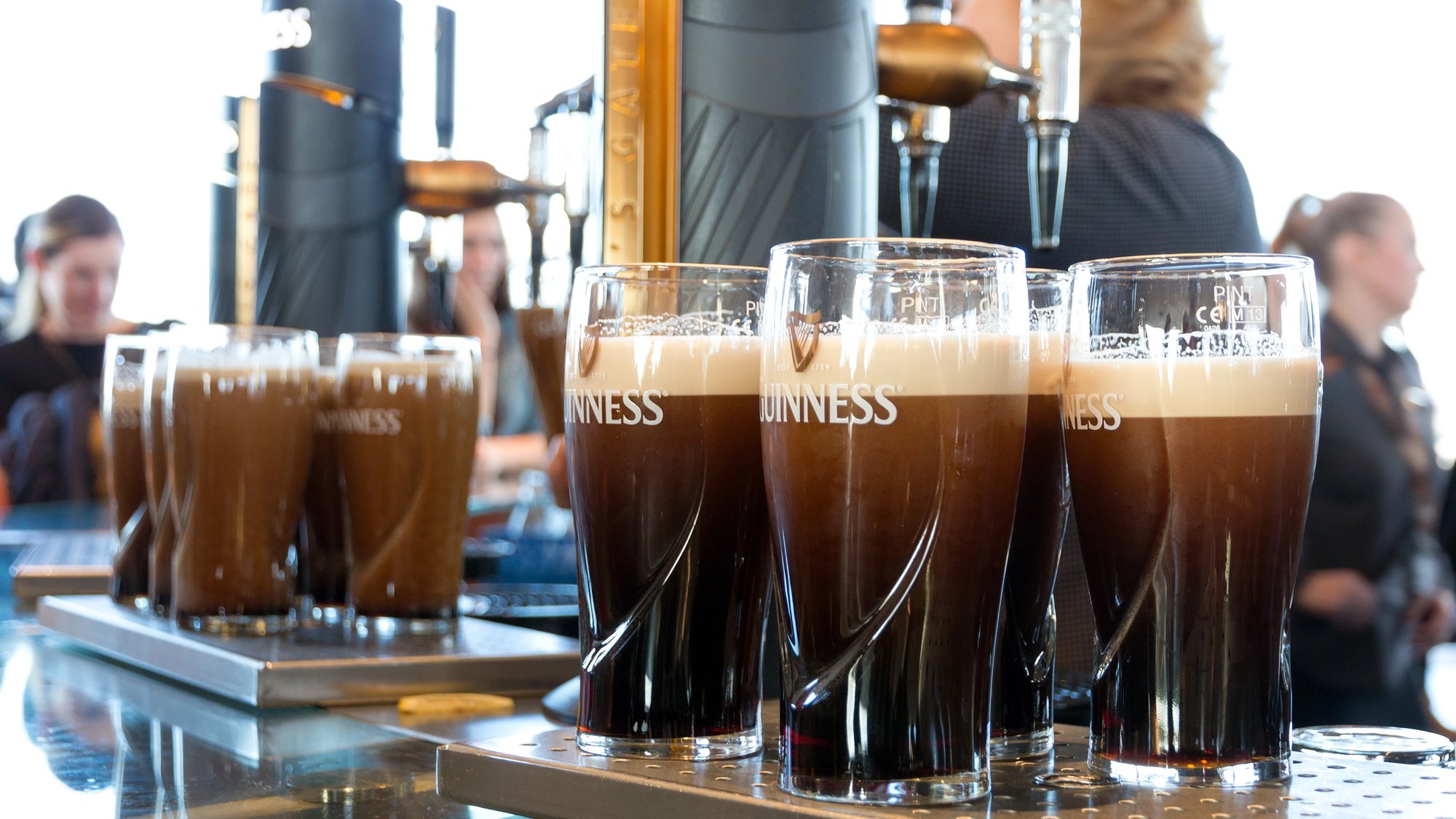
Guinness Draught – Guinness Brewery
Guinness is the baseline for a reason. It’s smooth, roasty, and famously easy to drink, with that creamy nitro beer texture that makes it feel fuller than its ABV. The roast is gentle, the bitterness is controlled, and the finish stays clean instead of sweet.
- ABV: 4.2%
- BeerAdvocate Score: 82 (Good)
- Untappd Rating: ⭐ 3.77/5
- Best for: Pub pours, game night, introducing someone to stout.
- Origin: Dublin, Ireland (St. James’s Gate)
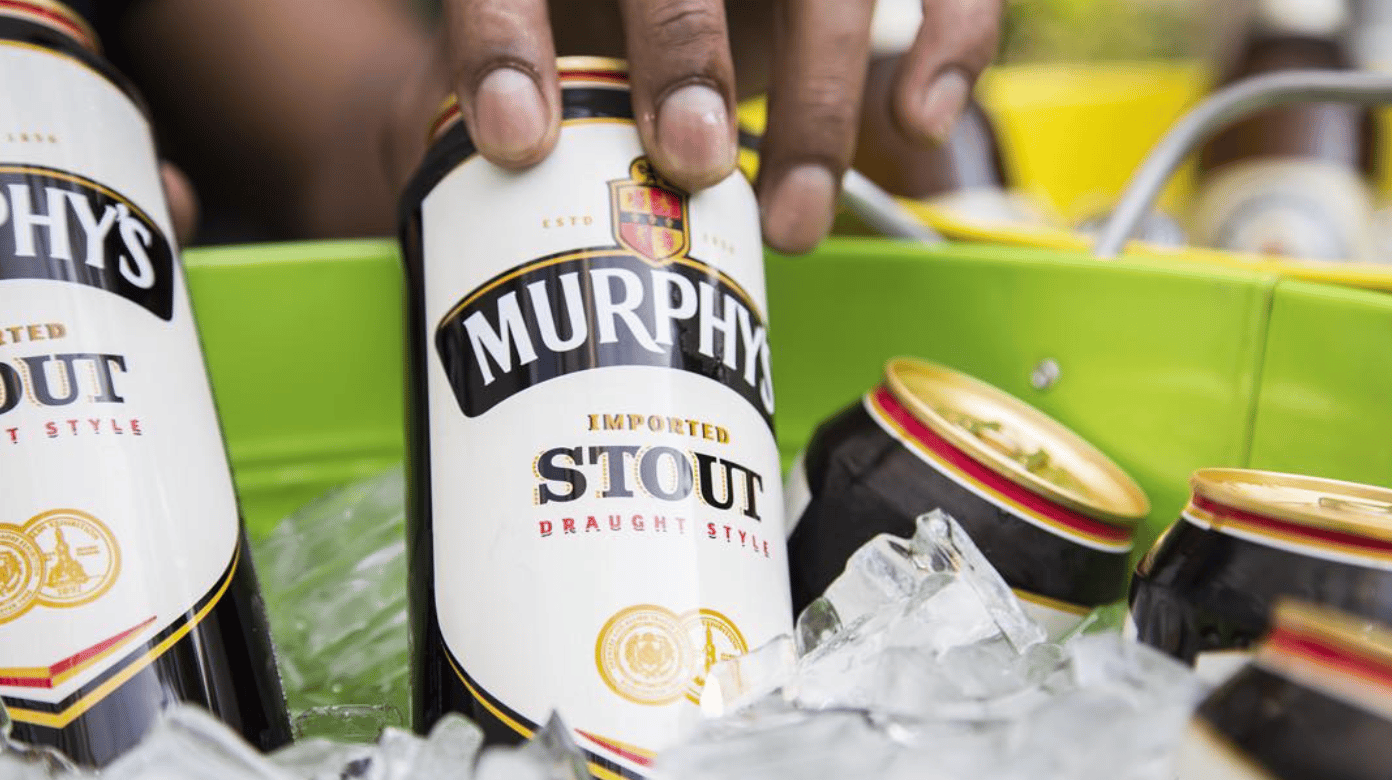
Murphy’s Irish Stout – Murphy’s Brewery
Murphy’s drinks like Guinness’s softer cousin: a little rounder, a little smoother, and slightly more forgiving if you’re new to dry stout. The roast stays polite, with a creamy impression and a mellow finish. If Guinness feels too sharp to you, Murphy’s is a smart pivot without leaving the category.
- ABV: 4.0%
- BeerAdvocate Score: 85 (Very Good)
- Untappd Rating: ⭐ 3.5/5
- Best for: Easy pints, “first dry stout” moments, weeknight stout on tap.
- Origin: Cork, Ireland

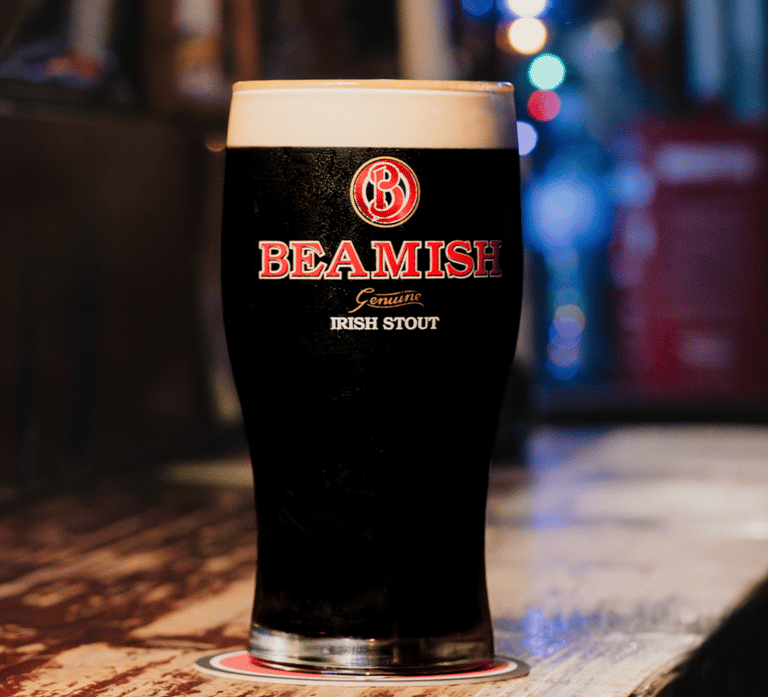
Beamish Irish Stout – Heineken N.V.
Beamish brings a toastier, slightly punchier roast profile that feels more “old pub” than “exported icon.” It’s still highly drinkable, but it carries more bite than Murphy’s, and the roasted barley comes through with a firmer backbone. If you like your dry stout with a touch more edge, start here.
- ABV: 4.1%
- BeerAdvocate Score: 86 (Very Good)
- Untappd Rating: ⭐ 3.66/5
- Best for: Classic pub stout energy, roast lovers, salty snacks.
- Origin: Cork, Ireland

Guinness Extra Stout – Guinness Brewery
This is the bottled/canned Guinness with more bitter-roasty punch and a firmer body than Draught. The roast is darker, the bitterness is clearer, and it pairs better with food because it stands up to fat and salt. If Draught is “soft,” Extra Stout is “defined.”
- ABV: 5.6%
- BeerAdvocate Score: 85 (Very Good)
- Untappd Rating: ⭐ 3.62/5
- Best for: Burgers, grilled food, people who want a more stout bite.
- Origin: Dublin, Ireland (St. James’s Gate)

Guinness Foreign Extra Stout – Guinness Brewery
Now you’re stepping toward imperial territory without fully going “big stout.” It’s richer, higher in ABV, and more layered, with deeper cocoa, dark fruit hints, and a firmer hop-preserved structure that shows its export roots. It still reads “Guinness,” but with more heft and complexity.
- ABV: 7.5%
- BeerAdvocate Score: 91 (Outstanding)
- Untappd Rating: ⭐ 3.65/5
- Best for: Slow pints, spicy food, people graduating from Irish dry.
- Origin: Dublin, Ireland (St. James’s Gate)
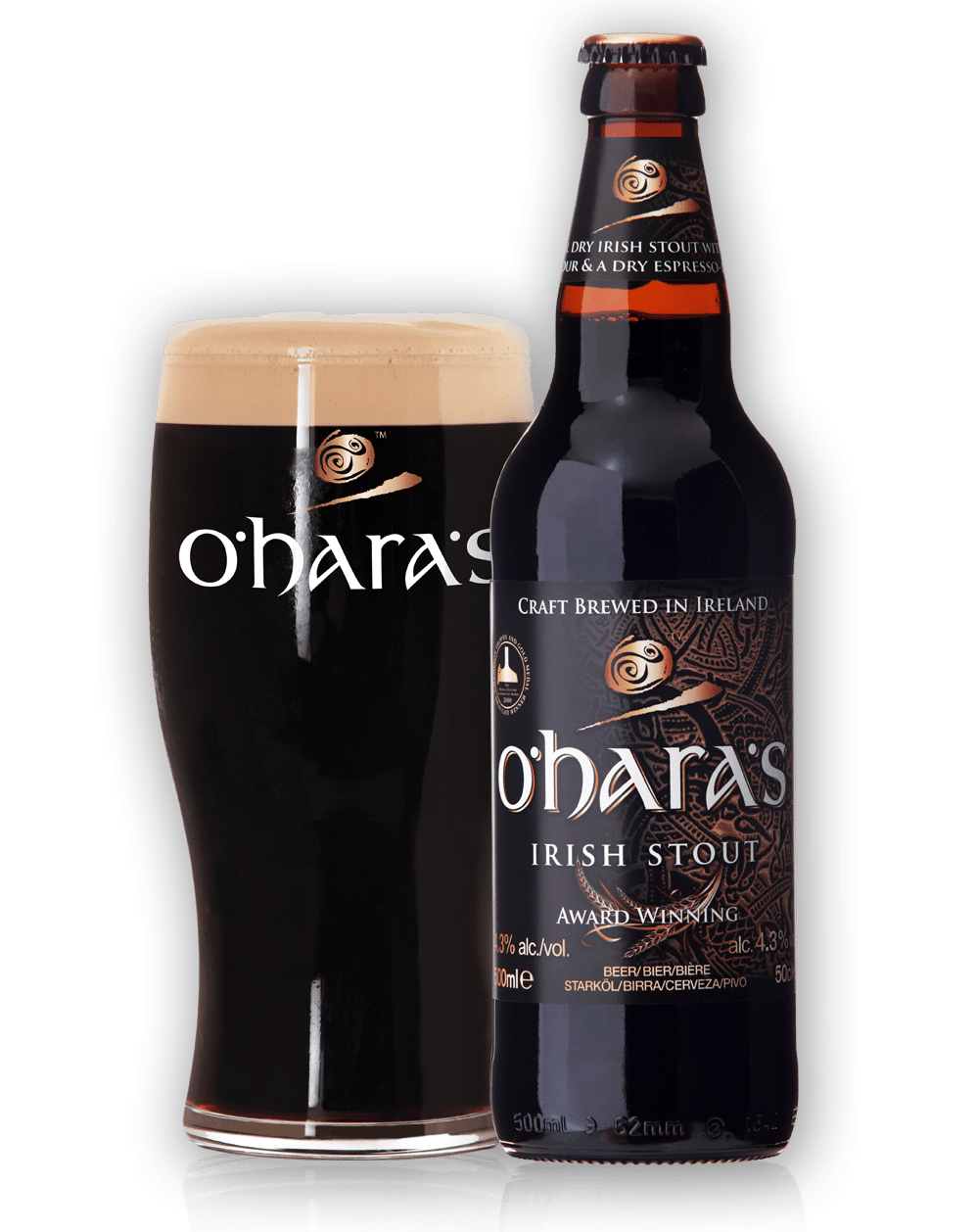
O’Hara’s Irish Stout – Carlow Brewing Co.
O’Hara’s is a craft-leaning Irish stout that keeps the dry finish but adds a touch more modern structure. You still get roasted barley clarity, but it feels a bit more “designed” than the legacy giants. If you want an Ireland-made stout that feels contemporary without turning sweet, this is a clean pick.
- ABV: 4.3%
- BeerAdvocate Score: 87 (Very Good)
- Untappd Rating: ⭐ 3.46/5
- Best for: Dry stout fans who want craft character.
- Origin: Carlow, Ireland
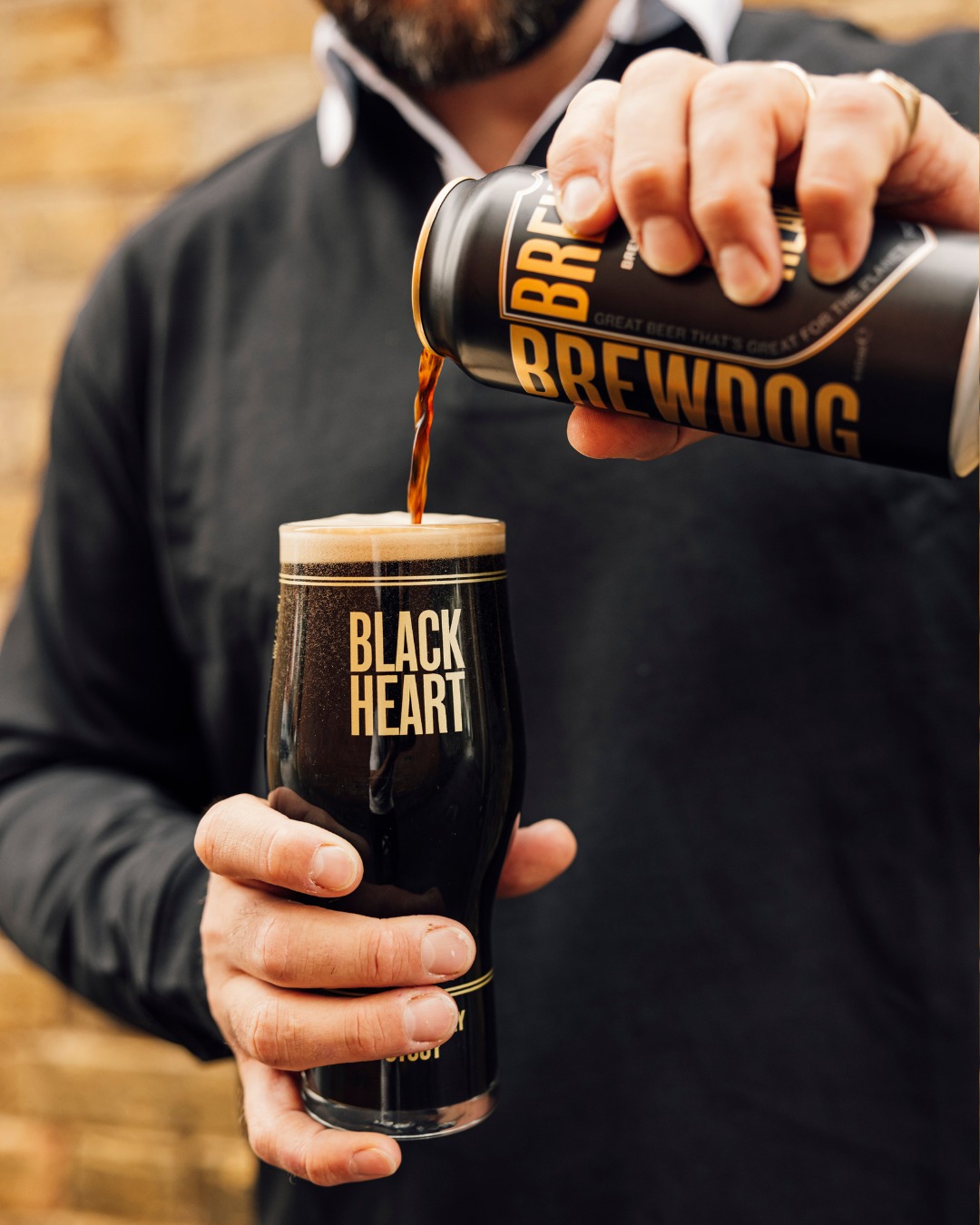
Black Heart Stout – BrewDog
A dry Irish-style stout from BrewDog that brings roasted coffee and cocoa notes with subtle caramel and a creamy nitro texture at ~4.1% ABV.
- ABV: 4.1%
- BeerAdvocate Score: 84 (Good)
- Untappd Rating: ⭐ 3.45/5
- Best for: Easy pints and food pairing.
- Origin: Ellon, Scotland
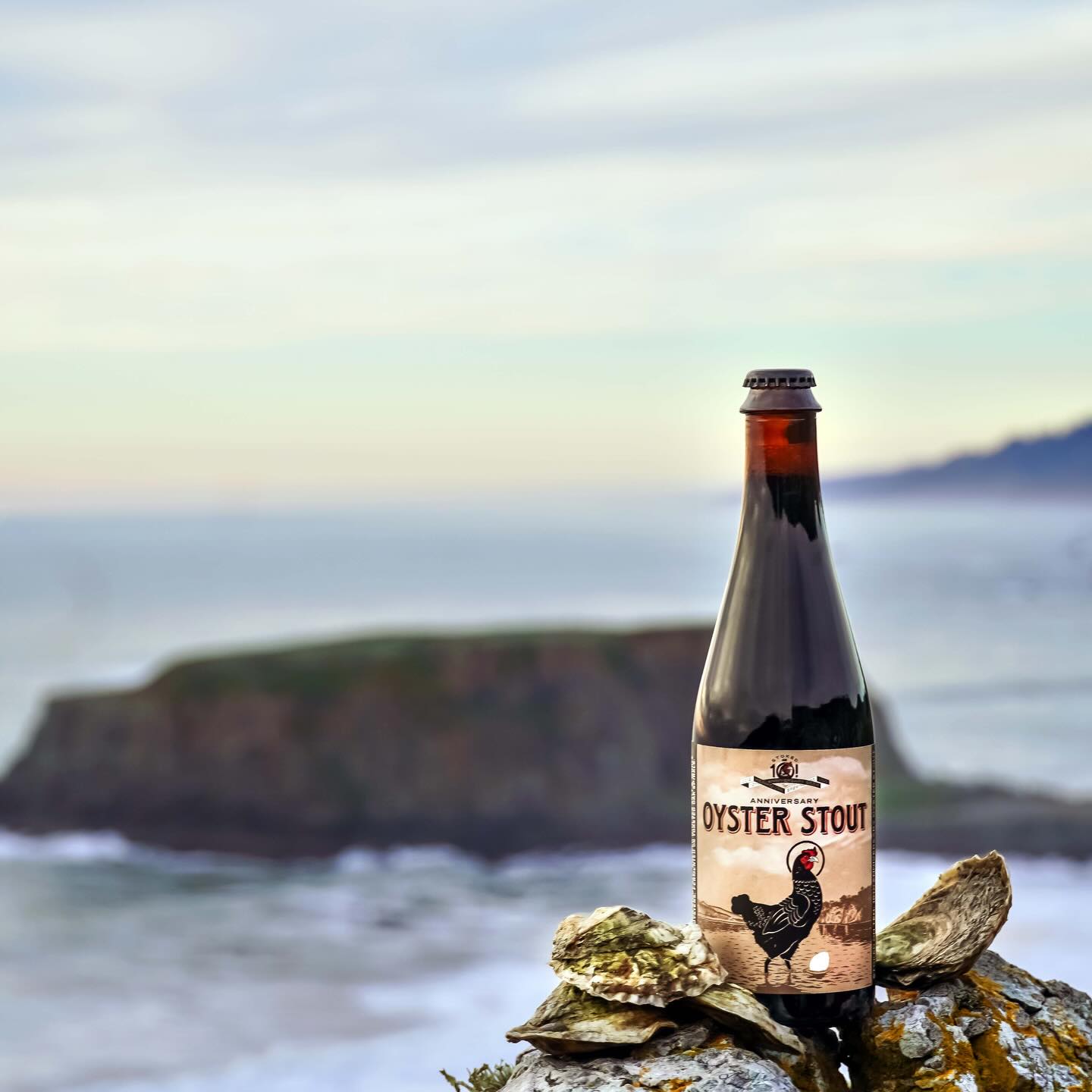
HenHouse Oyster Stout – HenHouse Brewing Co.
Oyster stout sounds like a gimmick until you drink one done right. HenHouse keeps it firmly in the dry stout lane: chocolate-and-toast roast, a lighter body that stays crushable, and a subtle salty finish that acts like seasoning rather than “brine.” It’s the kind of left-field pick that actually works with food (especially anything coastal) because the dryness keeps you coming back for another sip.
- ABV: 4.9%
- BeerAdvocate Score: 83 (Good)
- Untappd Rating: ⭐ 3.74/5
- Best for: Seafood, salty snacks, “I want something different” stout nights.
- Origin: Santa Rosa, California
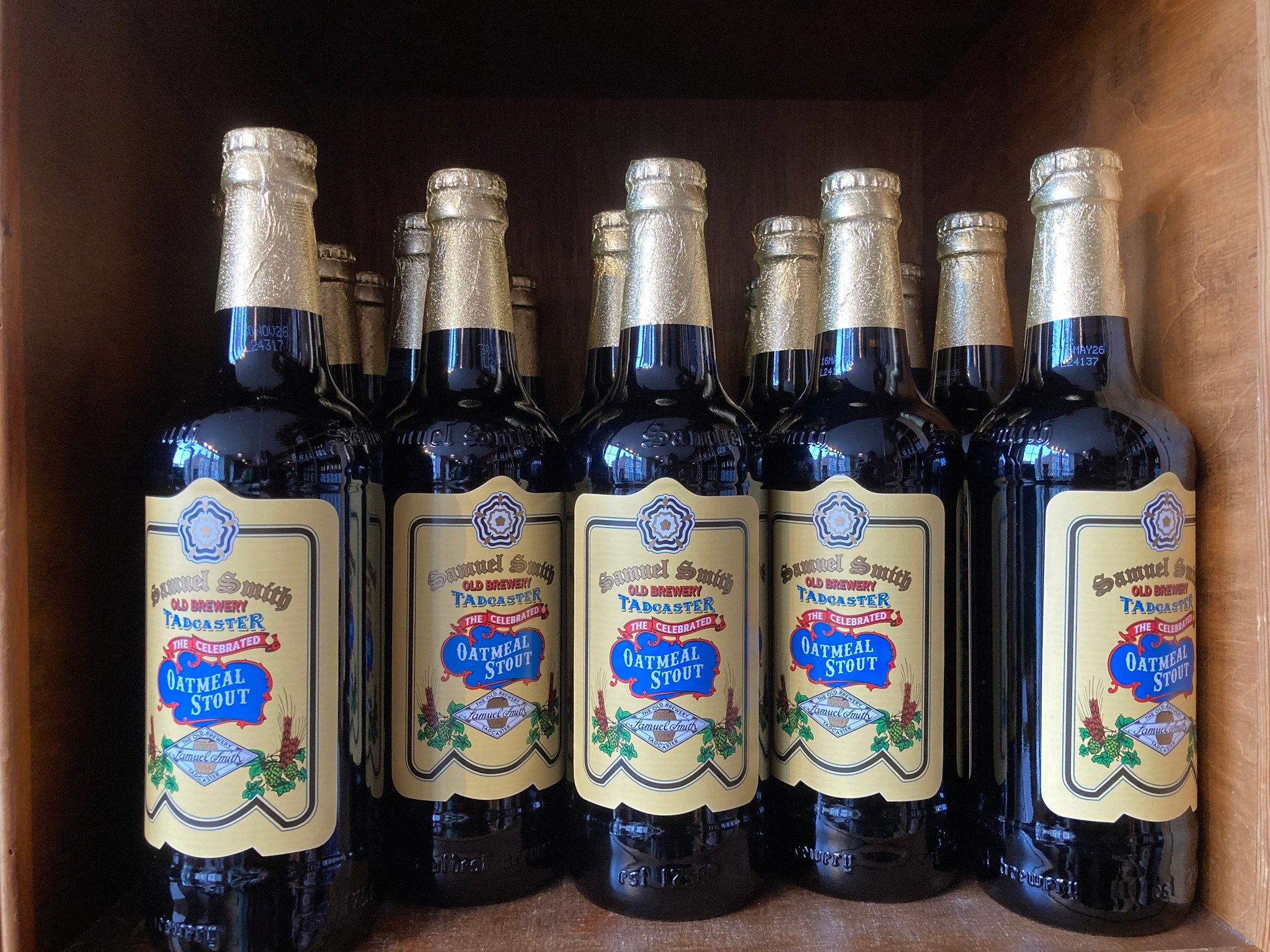
Samuel Smith Oatmeal Stout – Samuel Smith’s Brewery
This one lives in that cozy, book-and-a-fire zone. The oats give it a silky body, the roast stays gentle, and the overall vibe is plush without being sugary. It’s a great “slow pub” stout: comforting, balanced, and quietly complex rather than aggressive.
- ABV: 5.0%
- The Beer Connoisseur: 89 Rating (Very Good)
- BeerAdvocate Score: 93 (Outstanding)
- Untappd Rating: ⭐ 3.8/5
- Best for: Cold evenings, steady sipping, creamy-but-not-sweet cravings.
- Origin: Tadcaster, North Yorkshire, England
Milk Stouts & Sweet Stouts
Milk stouts can go cloying fast, so these picks earn their spot by staying balanced. You’ll get dessert vibes, not sugar fatigue. If you like sweet stouts that still taste like beer, check out PorchDrinking’s take on Three Nations’ Horchata Imperial Milk Stout. You’ll also notice a few entries that double as the best chocolate stout beer choices when cocoa is the main craving.
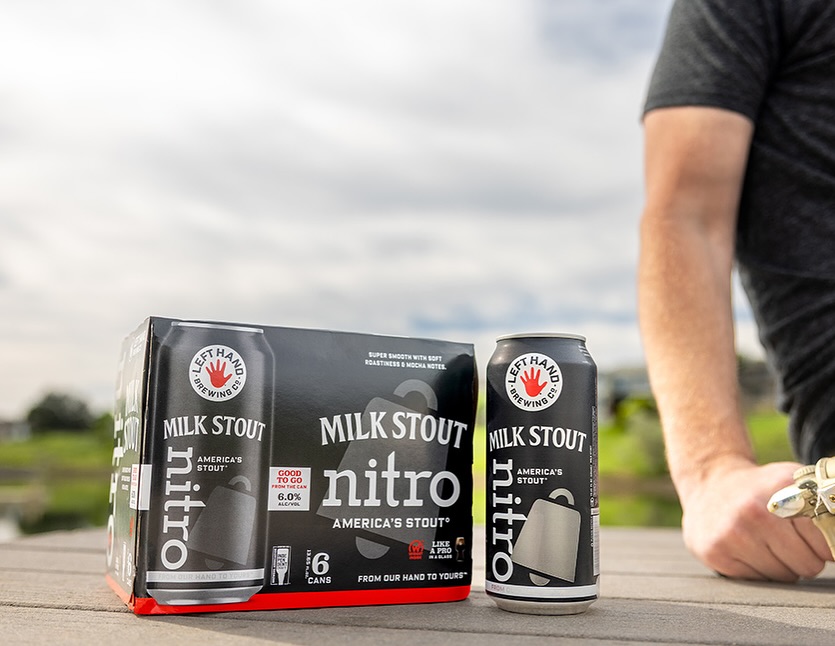
Left Hand Milk Stout Nitro – Left Hand Brewing Co.
This is the modern milk stout reference point. Nitro turns it into a creamy pour with cocoa and coffee impressions, but the sweetness stays controlled so it doesn’t drink like melted candy. If you want creamy without cloying, Left Hand is the shortcut.
- ABV: 6.0%
- The Beer Connoisseur: 92 Rating (Exceptional)
- BeerAdvocate Score: 92 (Outstanding)
- Untappd Rating: ⭐ 3.93/5
- Best for: Anyone chasing nitro texture, dessert vibes without overload.
- Origin: Longmont, Colorado
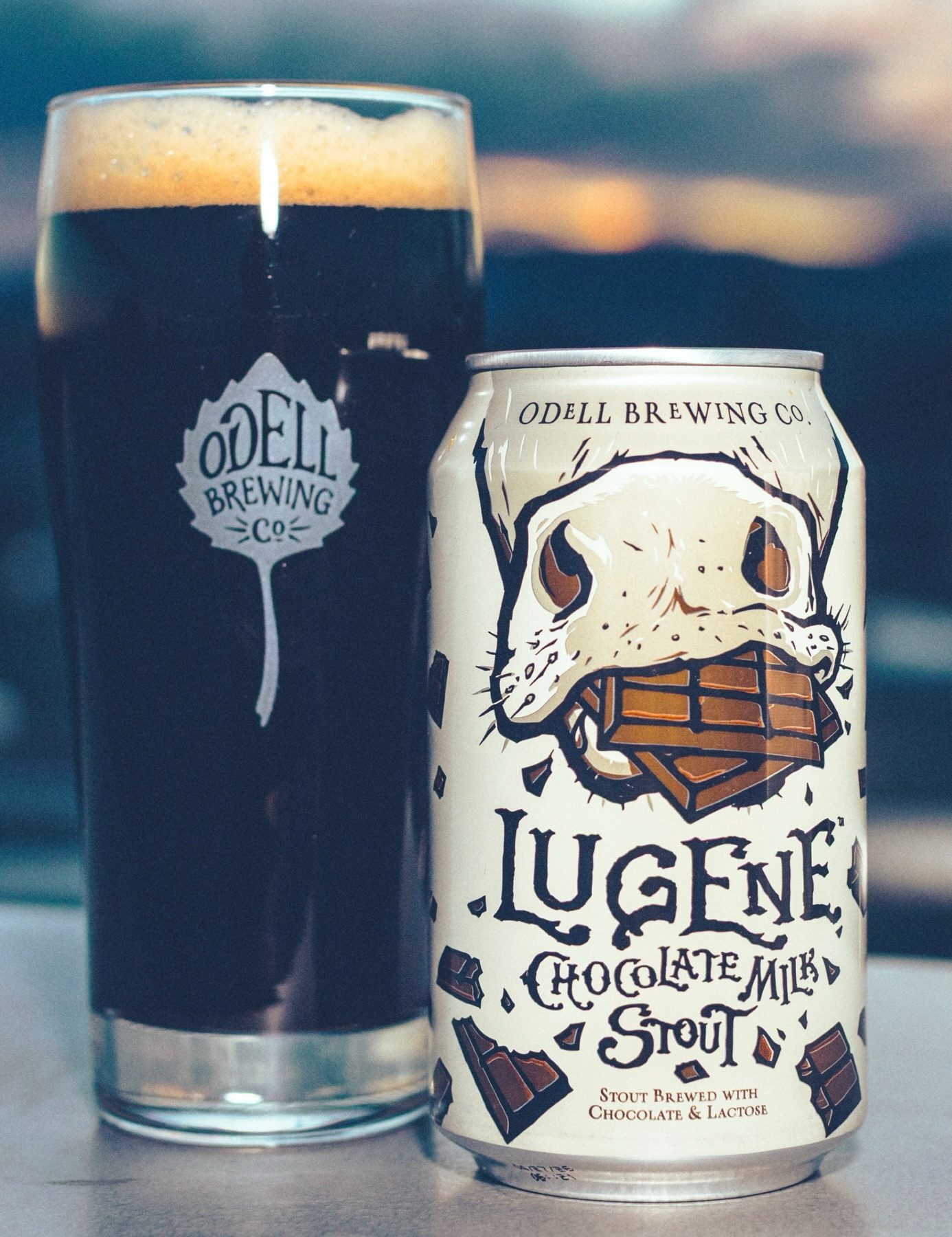
Lugene Chocolate Milk Stout – Odell Brewing Co.
“Chocolate flavor” is the headline here, but the win is restraint. Lugene leans cocoa-forward without tasting artificial, and it keeps enough roast to feel like beer, not candy. If you want a dessert-adjacent stout that still feels balanced, this belongs in your cart.
- ABV: 8.5%
- BeerAdvocate Score: 91 (Outstanding)
- Untappd Rating: ⭐ 3.97/5
- Best for: Chocolate lovers, winter six-packs, first step into sweeter stouts.
- Origin: Fort Collins, Colorado
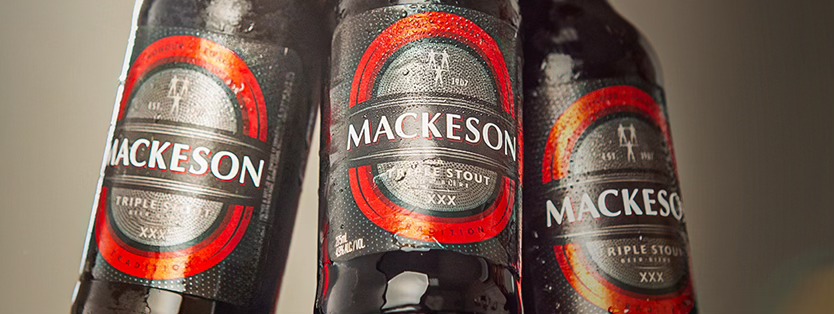
Mackeson Triple XXX Stout – Whitbread Beer Co.
A classic sweet stout profile: caramel-dark sugar hints, creamy body, and a smooth finish that leans sweet without becoming sticky. This is one of those “old-school” stouts that reminds you why the category exists, especially if you like softer roast and a rounder palate.
- ABV: 4.9%
- BeerAdvocate Score: 90 (Outstanding)
- Untappd Rating: ⭐ 3.57/5
- Best for: Classic sweet stout fans, pub-style dessert pairing.
- Origin: Trinidad & Tobago (Carib Brewery); U.K. heritage (Whitbread Beer Co.)
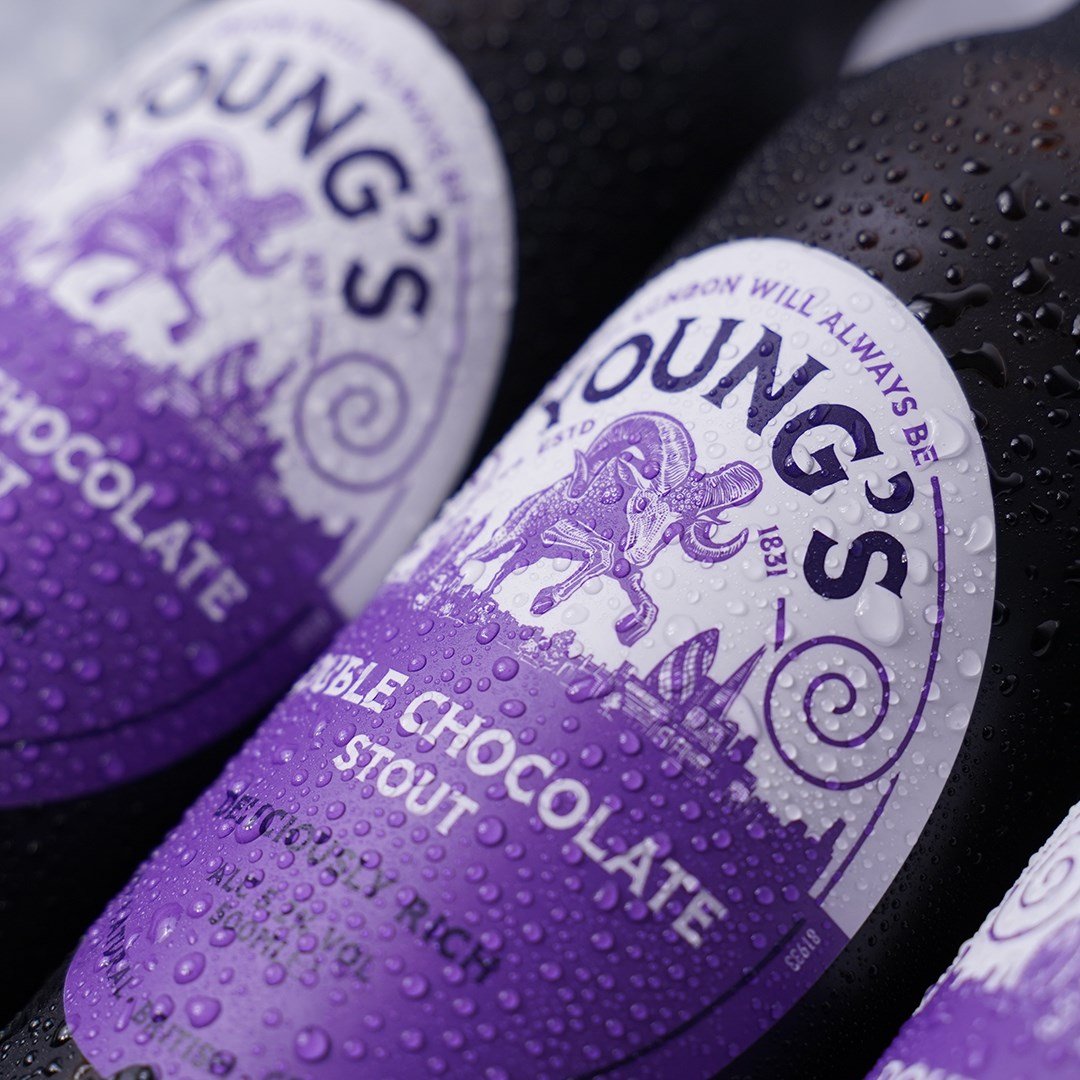
Young’s Double Chocolate Stout – Eagle Brewery
This is a treat beer, full stop. It’s plush, chocolate-forward, and built for people who want that dessert stout experience without needing barrel aging or a double-digit ABV. Pour it into a small glass, and it becomes a proper after-dinner drink.
- ABV: 5.2%
- The Beer Connoisseur: 91 Rating (Exceptional)
- BeerAdvocate Score: 90 (Outstanding)
- Untappd Rating: ⭐ 3.67/5
- Best for: Dessert nights, sharing, chocolate cravings.
- Origin: Bedford, England
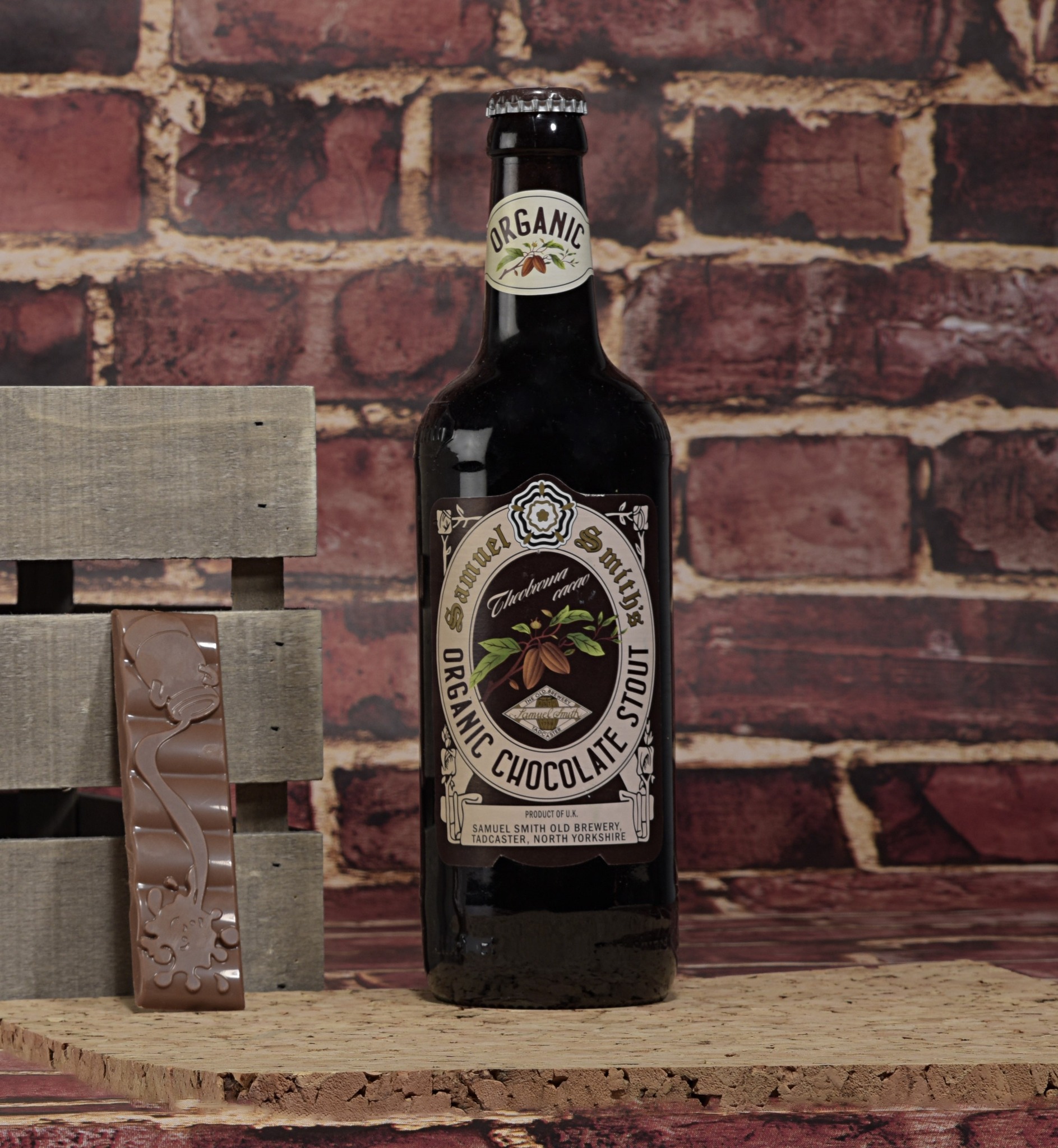
Samuel Smith Organic Chocolate Stout – Samuel Smith’s Brewery
This one tastes like real cocoa instead of a candy bar. The English base is smooth, the roast stays soft, and the chocolate reads natural. Pair it with vanilla ice cream, and you’ll understand why people keep it in the fridge even when they’re not “stout people.”
- ABV: 5.0%
- The Beer Connoisseur: 87 Rating (Very Good)
- BeerAdvocate Score: 94 (Outstanding)
- Untappd Rating: ⭐ 4.04/5
- Best for: Dessert pairings, fireside sipping, cocoa-first stout fans.
- Origin: Tadcaster, North Yorkshire, England
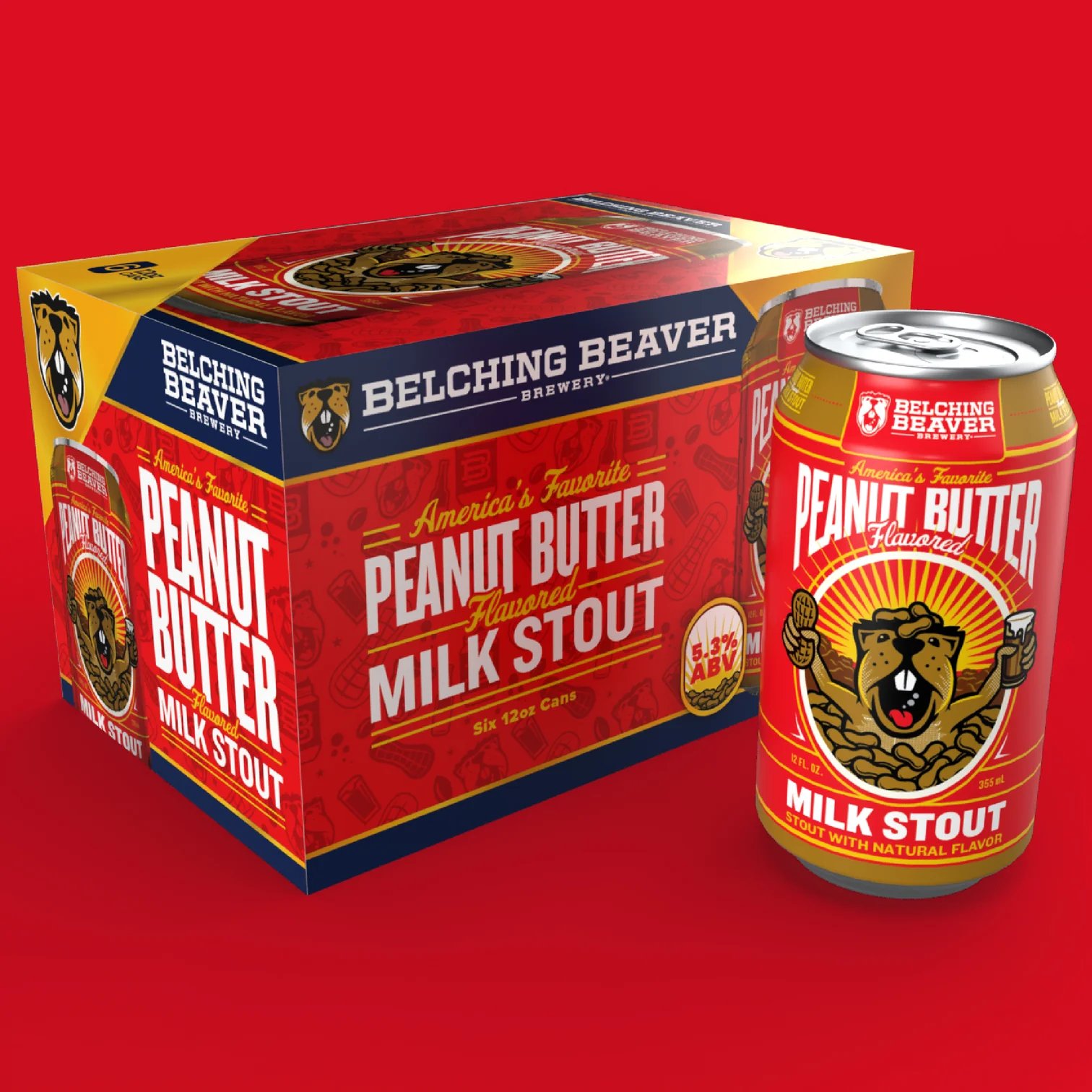
Peanut Butter Milk Stout – Belching Beaver Brewing Co.
It smells like peanut butter on purpose, and it delivers. The key is that it still has a stout structure underneath: dark malt, cocoa, roast, then peanut butter riding on top. It’s sweet, but it’s meant to be. Treat it like a dessert beer, not a “drink four pints” beer.
- ABV: 5.3%
- The Beer Connoisseur: 86 Rating (Very Good)
- BeerAdvocate Score: 91 (Outstanding)
- Untappd Rating: ⭐ 3.99/5
- Best for: Dessert stout fans, beer-and-candy-bar energy.
- Origin: Vista, California
Imperial Stouts, Barrel-Aged Imperials & Heavy Hitters
If you’re hunting for the best imperial stout beer, look for deep flavor plus alcohol that feels integrated, not hot. For next-level depth, explore barrel-aged stouts (and treat them like small pours).
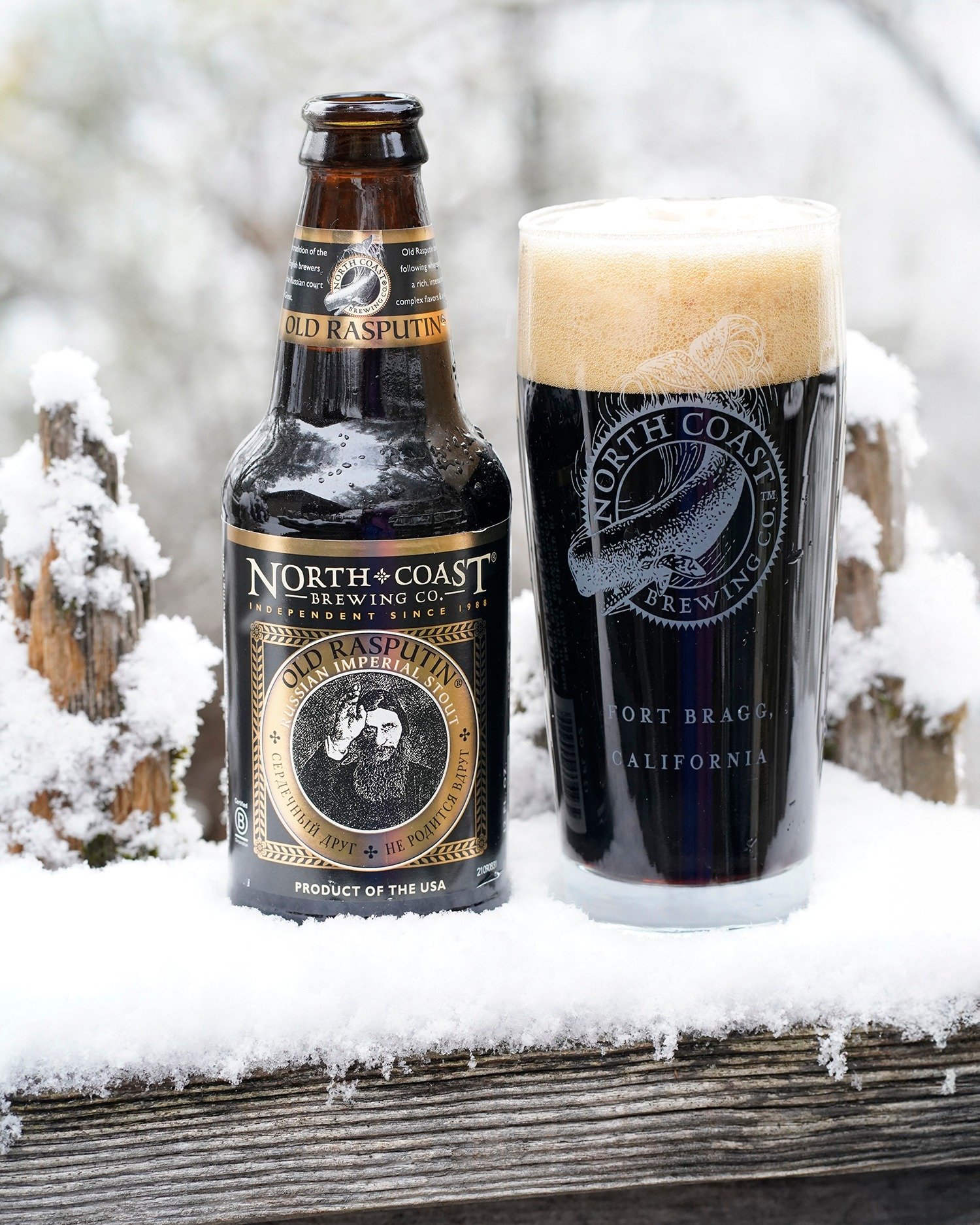
Old Rasputin Russian Imperial Stout – North Coast Brewing Co.
Old Rasputin is the kind of imperial stout that sets the rules: bitter dark chocolate, deep roast, and a firm spine that stays steady as the glass warms. It’s intense, but it never turns messy, which is exactly why it works as a true “house imperial.” It’s a strong contender for best American stout beer if you like classic Russian imperial structure over pastry sweetness.
- ABV: 9.0%
- The Beer Connoisseur: 87 Rating (Very Good)
- BeerAdvocate Score: 95 (World-Class)
- Untappd Rating: ⭐ 4.0/5
- Best for: Classic RIS fans, winter nights, cellar experiments.
- Origin: Fort Bragg, California
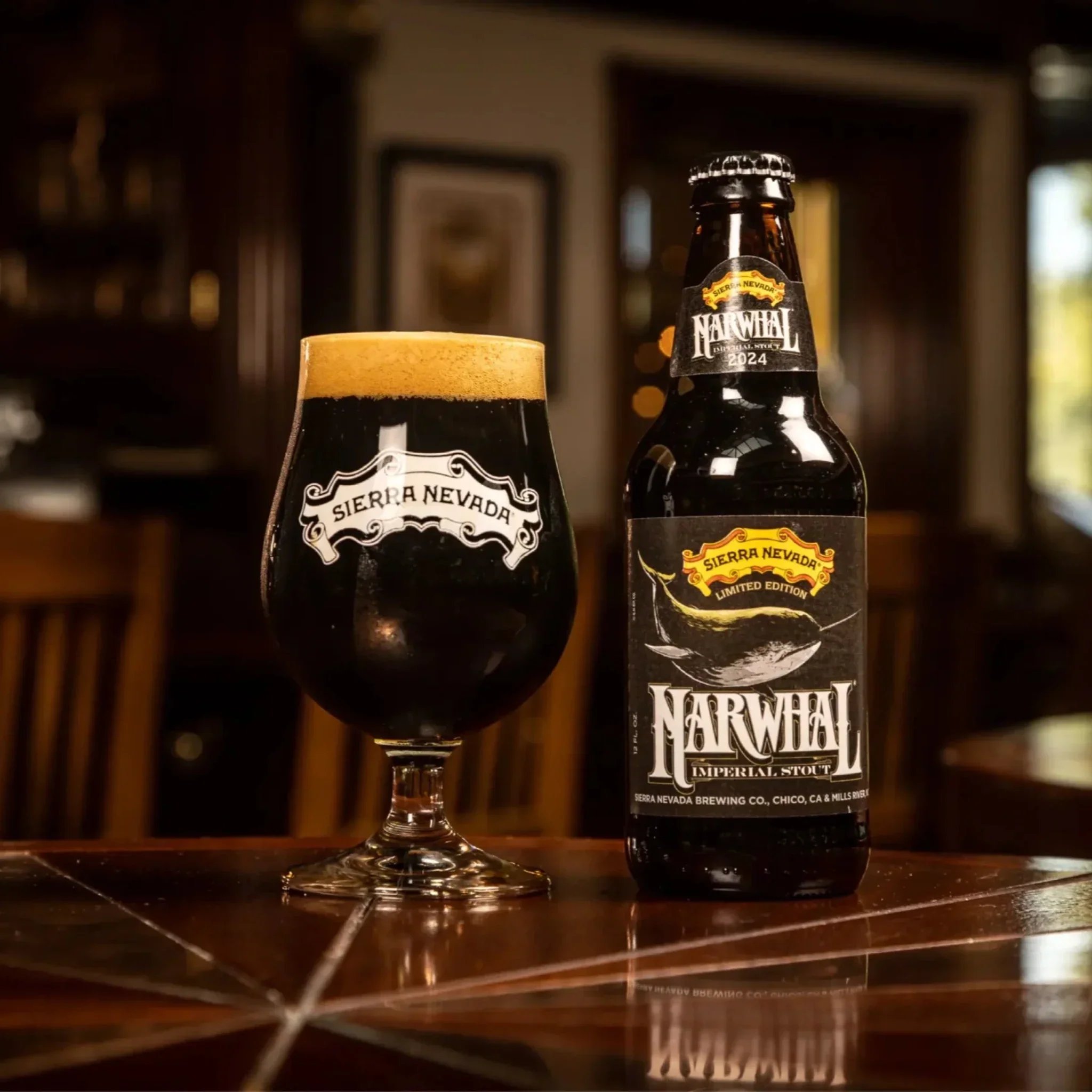
Narwhal Imperial Stout – Sierra Nevada Brewing Co.
Narwhal drinks like cold weather in a bottle: roasty, sturdy, and a little shadowy, with espresso-and-cocoa depth and a faint smoky edge. It’s also one of those big stouts that actually rewards patience if you stash a few.
- ABV: 10.2%
- The Beer Connoisseur: 89 Rating (Very Good)
- BeerAdvocate Score: 93 (Outstanding)
- Untappd Rating: ⭐ 3.95/5
- Best for: Aging, roast lovers, holiday stout flights.
- Origin: Chico, California
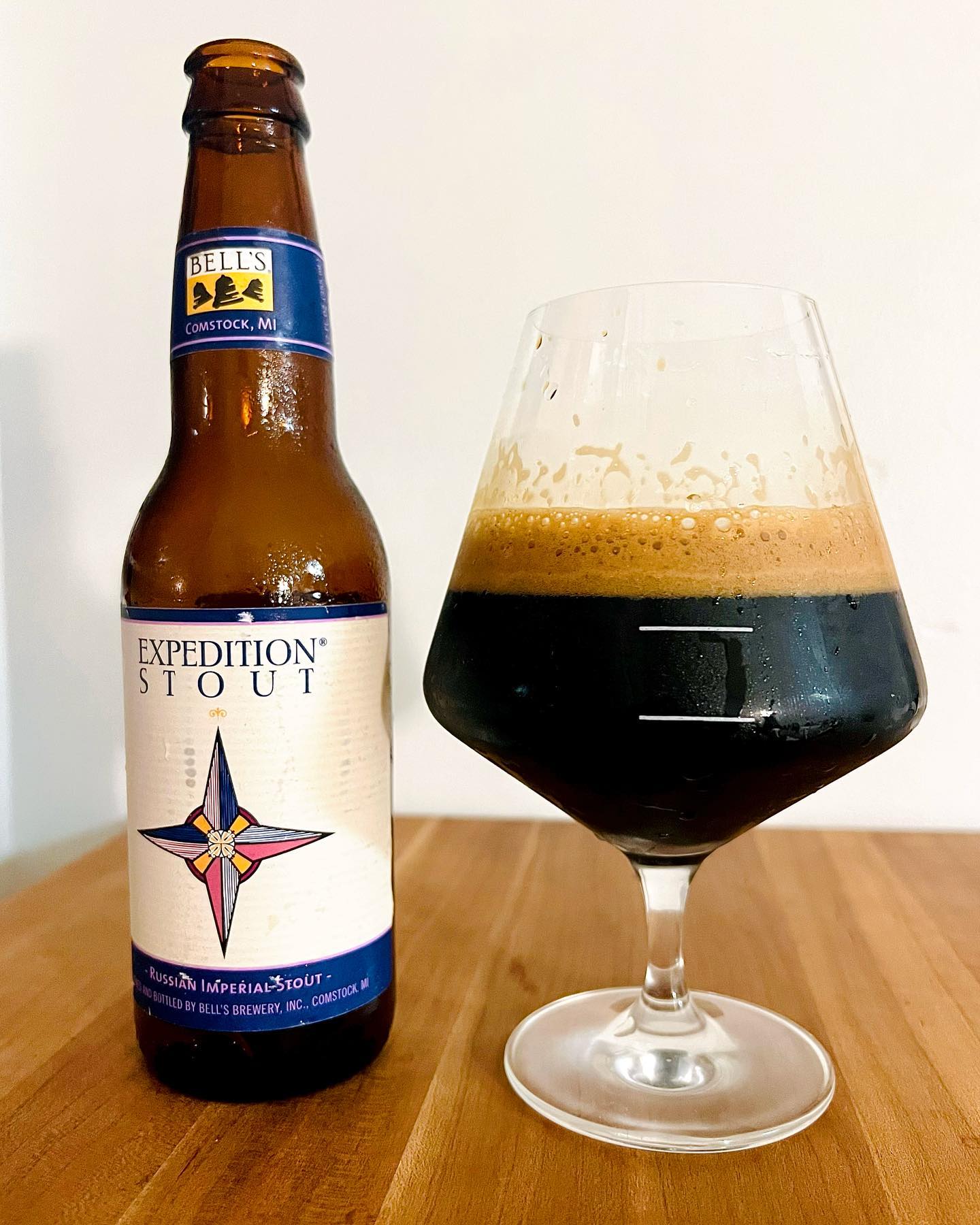
Expedition Stout – Bell’s Brewery
Expedition is dense and deliberate, stacking roast, cocoa, and dark fruit into a stout that practically asks for a slow pour. Give it time in the glass, and it keeps unfolding, which is why it has a real cellar reputation.
- ABV: 10.5%
- BeerAdvocate Score: 95 (World-Class)
- Untappd Rating: ⭐ 4.05/5
- Best for: Slow pours, aging, big flavor without pastry sweetness.
- Origin: Kalamazoo, Michigan
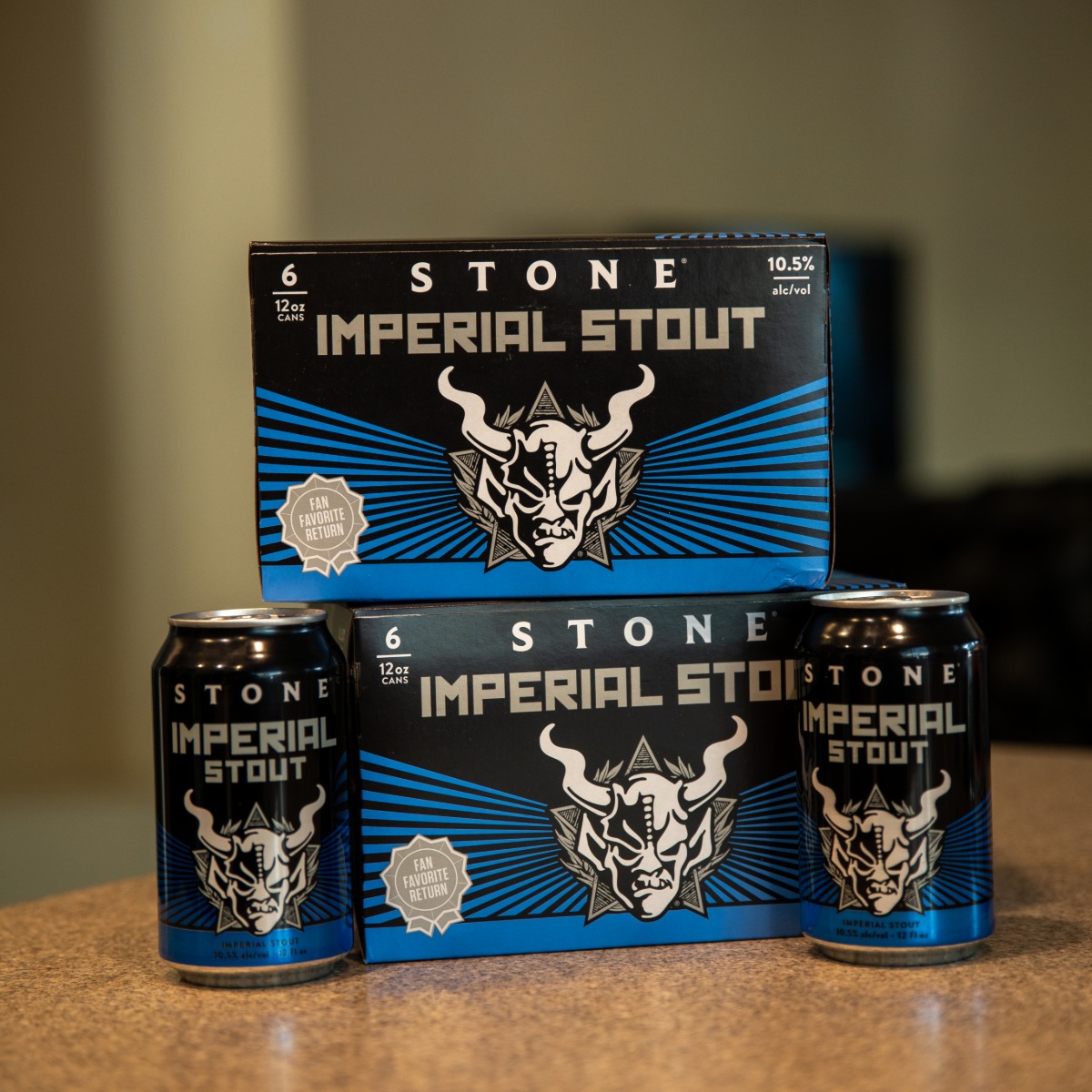
Stone Imperial Stout – Stone Brewing Co.
Stone’s take is all bite and backbone: big roast, assertive bitterness, and a dry finish that refuses to go sweet. It’s a food stout in the best way, because it cuts through smoke, fat, and char like it was made for the grill.
- ABV: 10.5%
- The Beer Connoisseur: 87 Rating (Very Good)
- BeerAdvocate Score: 96 (World-Class)
- Untappd Rating: ⭐ 3.9/5
- Best for: Grilled meats, bitter stout fans, post-BBQ nightcaps.
- Origin: Escondido, California
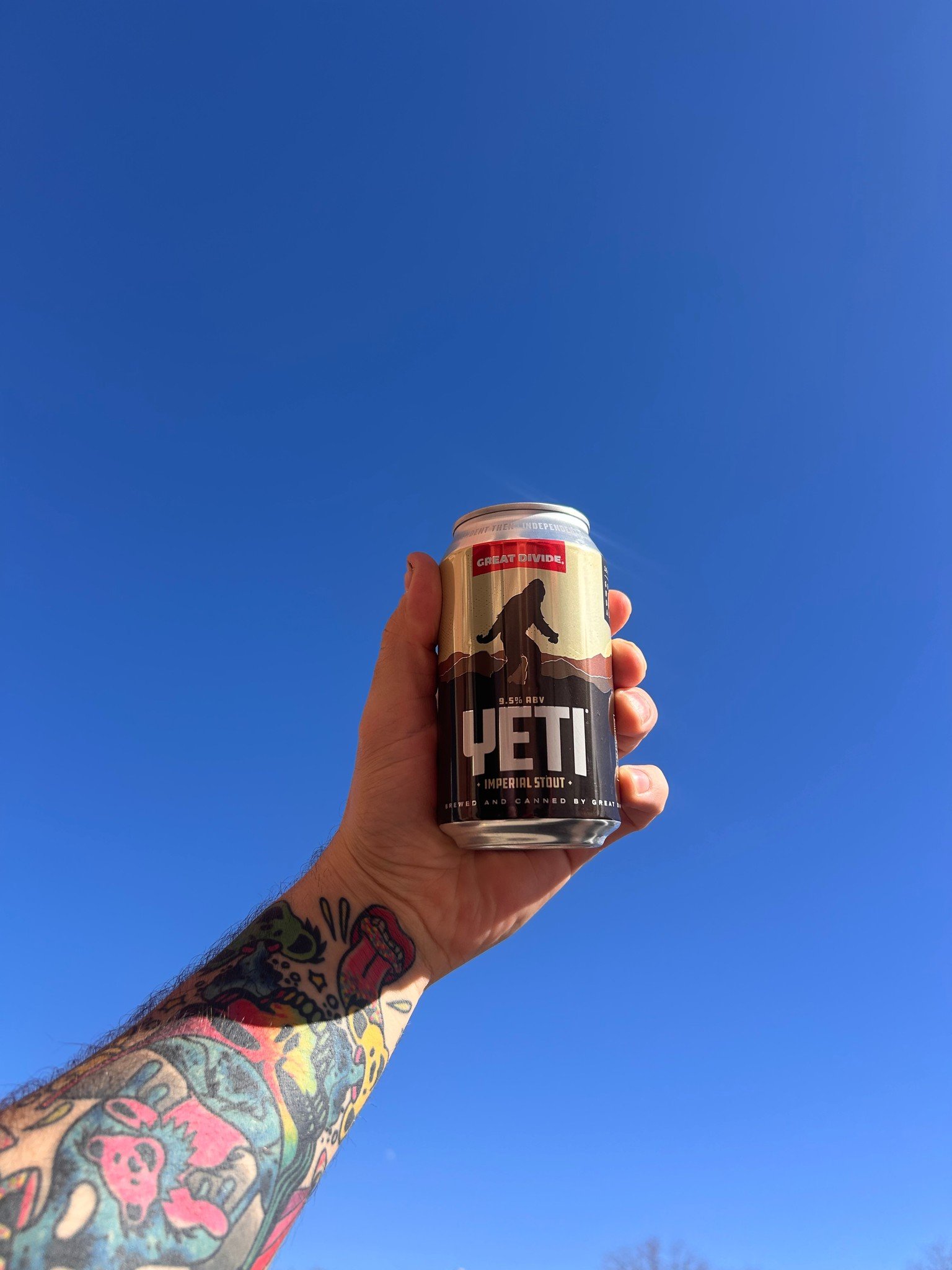
Yeti Imperial Stout – Great Divide Brewing Co.
Yeti brings bold coffee-and-dark-chocolate punch, but it stays balanced enough to keep sipping instead of tapping out early. It’s also one of the more realistic “serious imperial” buys, meaning you can find it without turning the hunt into your whole night.
- ABV: 9.5%
- The Beer Connoisseur: 94 Rating (Exceptional)
- BeerAdvocate Score: 94 (Outstanding)
- Untappd Rating: ⭐ 3.9/5
- Best for: Reliable imperial stout nights, steak pairings, value hunting.
- Origin: Denver, Colorado
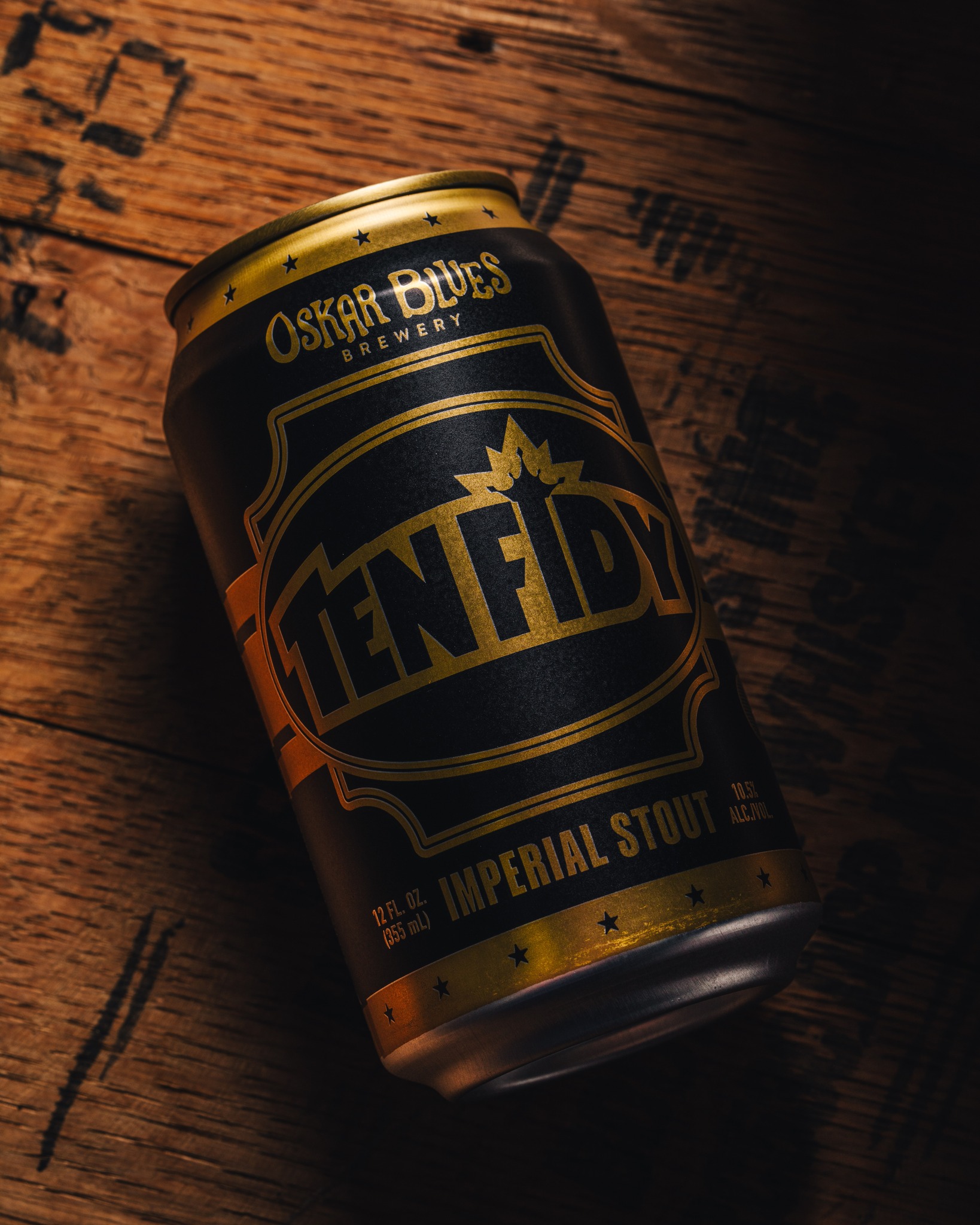
Ten FIDY – Oskar Blues Brewery
Ten FIDY pours heavy and drinks heavy: thick body, deep roast, and that dark cocoa plus licorice edge that makes it feel like a true heavyweight. Keep the pour small, and it turns into a perfect late-night sipper instead of an endurance test.
- ABV: 10.5%
- The Beer Connoisseur: 93 Rating (Exceptional)
- BeerAdvocate Score: 97 (World-Class)
- Untappd Rating: ⭐ 4.08/5
- Best for: Big stout cravings, shareable cans, late-night sips.
- Origin: Longmont, Colorado
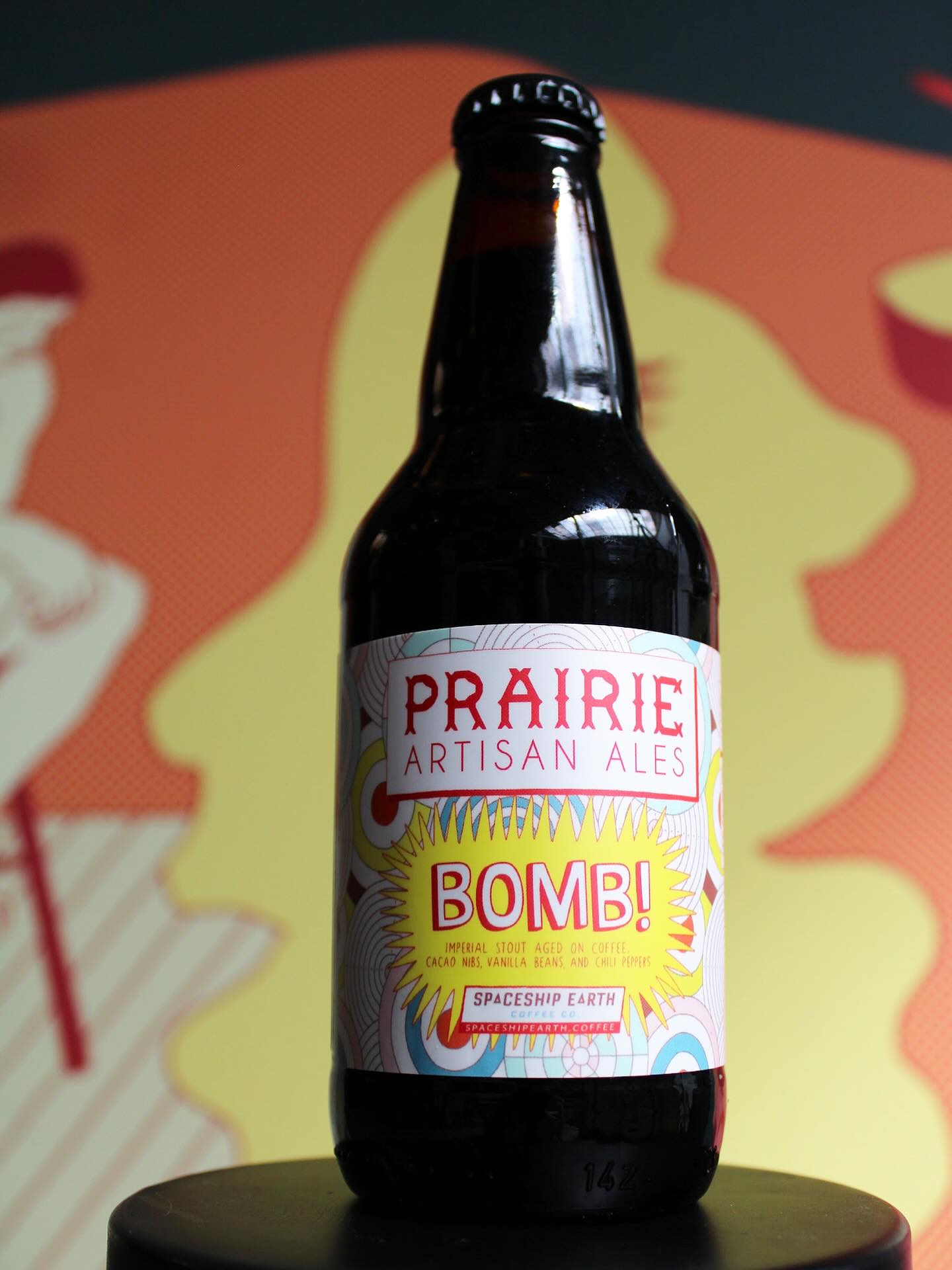
Bomb! – Prairie Artisan Ales
Bomb! is an imperial stout that’s basically a full dessert course but built with enough roast backbone to still feel like stout, not syrup. You get a deep espresso hit up front, dark cocoa bitterness in the middle, vanilla rounding the edges, then a warm ancho chile glow that lingers just long enough to make the next sip feel mandatory. It’s rich, loud, and absolutely a “small pour” beer, which is perfect when you want big flavor without barrel aging doing all the work.
- ABV: 13.0%
- The Beer Connoisseur: 98 Rating (World Class)
- BeerAdvocate Score: 99 (World-Class)
- Untappd Rating: ⭐ 4.29/5
- Best for: Coffee-stout cravings, bottle shares, late-night “treat beer” pours.
- Origin: Oklahoma City, Oklahoma
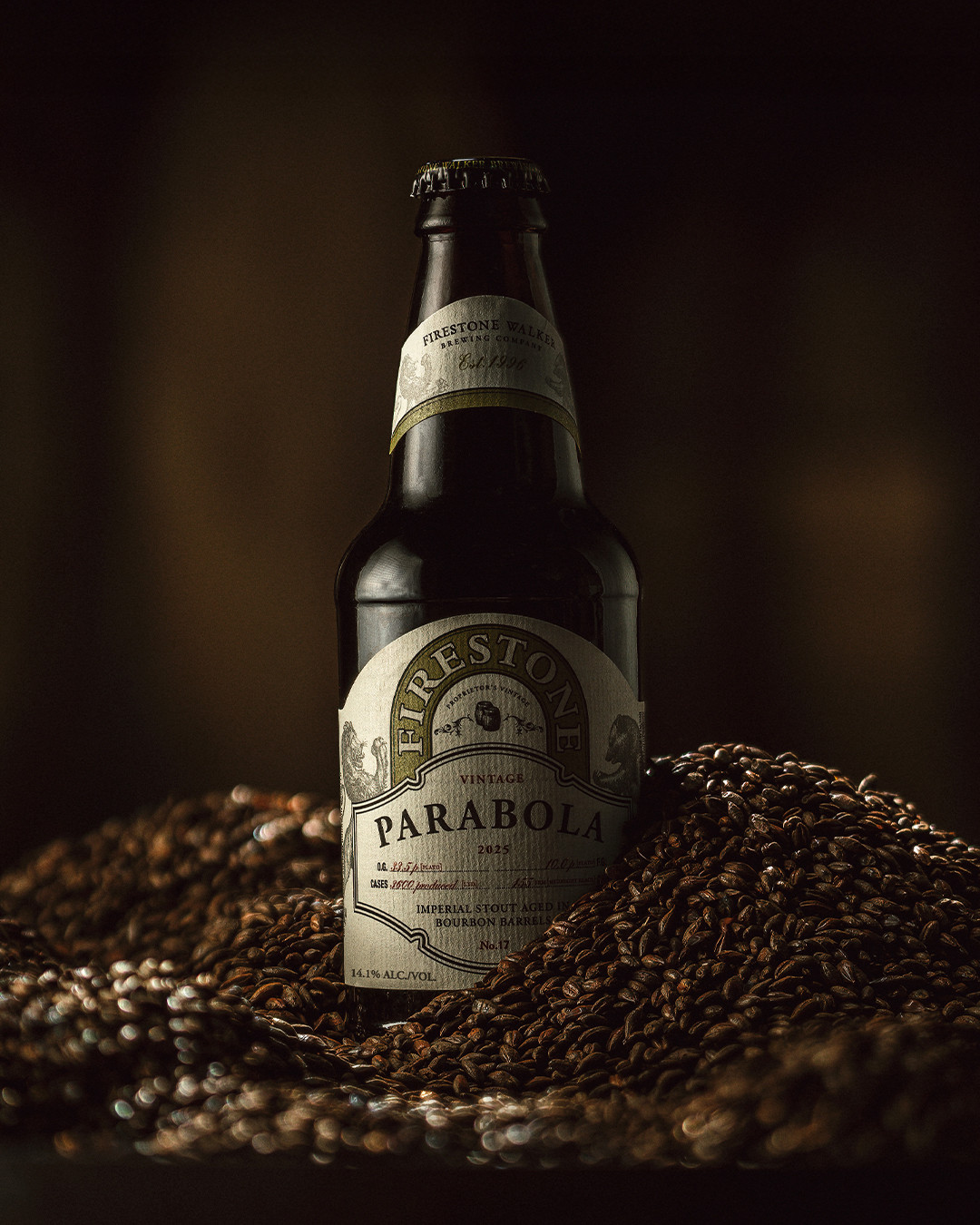
Parabola – Firestone Walker Brewing Co.
Parabola is barrel aging done with discipline. You get oak and vanilla wrapped around dark chocolate and dried fruit, and the layers keep showing up as it warms in the glass. It’s rich, but it stays composed, which is why it shines at bottle shares.
- ABV: 14.0%
- The Beer Connoisseur: 97 Rating (World Class)
- BeerAdvocate Score: 100 (World-Class)
- Untappd Rating: ⭐ 4.43/5
- Best for: Celebrations, bottle shares, bourbon-barrel curiosity.
- Origin: Paso Robles, California
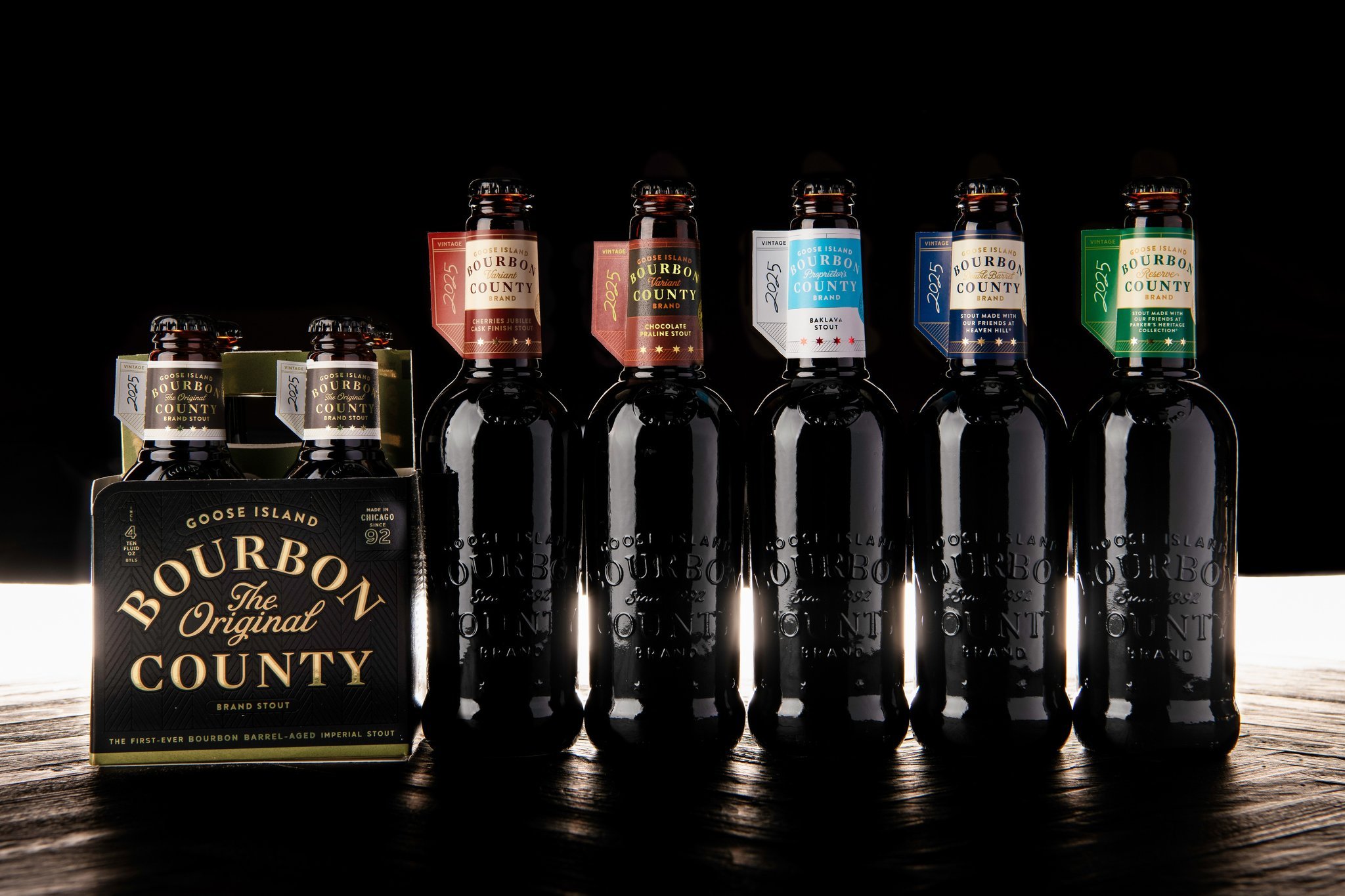
Bourbon County Brand Stout – Goose Island Brewing Co.
Bourbon County is the loud, legendary barrel stout for a reason: bourbon, vanilla, dark sugar, and a sticky richness that feels like a holiday dessert course. It’s high ABV and built for sharing, so treat it like a small pour and let it do its thing.
- ABV: 14–15% (varies)
- The Beer Connoisseur: 91 Rating (Exceptional)
- BeerAdvocate Score: 100 (World-Class)
- Untappd Ratng: ⭐ 4.37/5
- Best for: Holidays, sharing, “one pour is enough” nights.
- Origin: Chicago, Illinois
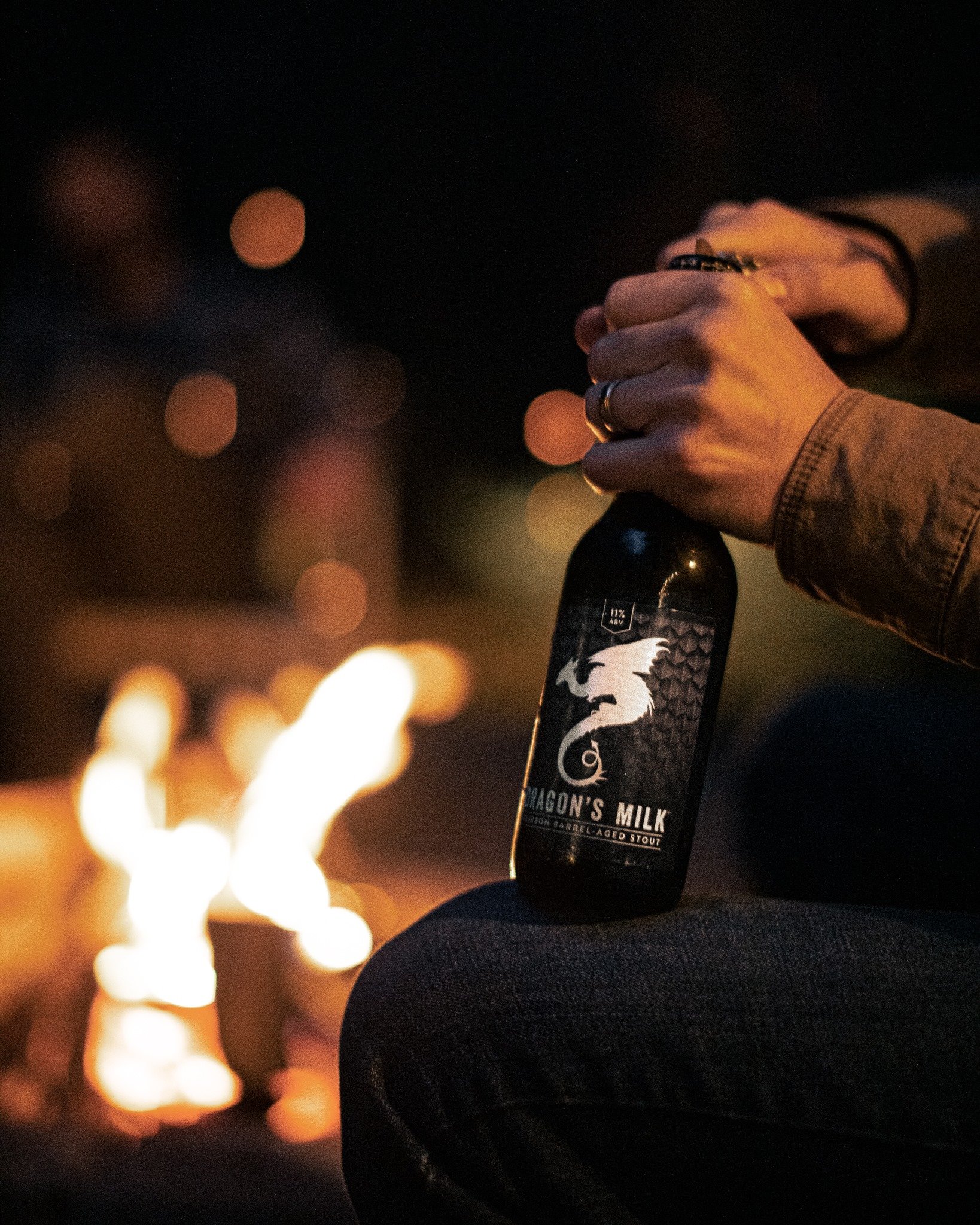
Dragon’s Milk – New Holland Brewing Co.
Dragon’s Milk is the approachable barrel-aged stout that still feels legit. It brings bourbon-leaning vanilla and oak over a chocolatey base, but it stays smooth enough for people who are new to barrel-aged stouts and do not want a hot, boozy punch.
- ABV: 11.0%
- The Beer Connoisseur: 93 Rating (Exceptional)
- BeerAdvocate Score: 90 (Outstanding)
- Untappd Rating: ⭐ 4.05/5
- Best for: Newcomers to barrel-aged stouts, gifts, and winter stocking.
- Origin: Holland, Michigan
How To Choose the Right Stout Beer for You
Picking the best stout beer for your palate comes down to three things: dryness, sweetness, and ABV comfort. Start by picking the vibe you want tonight, then use the suggestions below to land in the right lane fast. Once you find one you love, you’ve basically found your “house stout” and everything else becomes an easy comparison.
If you want a classic pub stout:
Start with Guinness Draught, then work outward to Murphy’s, Beamish, or O’Hara’s. Expect roast, a dry snap, and an easy finish. This is stout for the tap, not a sugar bomb. Guinness is the baseline because it’s built for repeat pours: smooth roast, controlled bitterness, clean finish.
If you want dessert vibes without sugar overload:
Choose balanced milk stouts, such as Left Hand Milk Stout Nitro or Odell Lugene. “Too sweet” usually means the finish tastes like frosting and the roast disappears. A great milk stout keeps a roast backbone and controls sweetness, with cocoa and coffee notes leading the way.
If you want high ABV and complexity:
Go imperial: Old Rasputin, Narwhal, Expedition, or Yeti. For next-level depth, choose barrel-aged picks like Parabola or Bourbon County. Pour smaller, let it warm a bit, sip slowly. That is how you get vanilla, oak, and spice instead of alcohol heat.
If you want the easiest-to-find picks:
Guinness (including Guinness Extra Stout), Old Rasputin, Ten FIDY, Dragon’s Milk, and often Bourbon County are widely distributed compared to hype releases. Still, check a good local brewery too, because many of the best stout beers in a city never leave town.
If you want the best non-alcoholic stout beer:
Start with our Best Non-Alcoholic Beers guide to find reputable NA dark options, then use our NA stout brewing explainer to understand why some NA stouts taste thin and which ones avoid that trap.
If you want the best coffee stout beers available to buy:
Look for coffee stouts where the roast tastes like espresso, not burnt grounds. Founders Breakfast Stout and AleSmith Speedway Stout are go-to reference picks for coffee-forward depth, while Great Divide’s Yeti variants are a reliable “big stout” lane option when you want coffee plus imperial structure.
If you want the best stout beer for cooking:
For chili, braises, and chocolate desserts, pick a roast-forward stout you’d actually drink (avoid pastry-sweet sugar bombs). Start with our Cooking with Beer archive, then use Beer & Food Pairings to match the stout to the dish.
If you want the best glass for stout beer:
Use the right glass for the job. A Nonic pint keeps dry Irish stout feeling classic and easy, while a tulip tightens up the aroma on milk and sweet stouts so the cocoa-and-coffee notes pop without the pour feeling heavy. For imperial or barrel-aged stouts, go snifter (or a small tulip) and keep it to a smaller pour—smelling it is half the experience.
What Makes a Stout Beer One of the Best?
- Flavor clarity: roast, cocoa, and notes of coffee that taste intentional, not burnt or muddy.
- Balance: bitterness, sweetness, and body working together, not fighting.
- Repeat-drinkability: you want a second pint, not just a single sip.
- Consistency: the breweries and brewers behind these beers know how to hit the same target again and again.
- Availability: taste comes first, but a list is only useful if you can find at least some of these without calling three friends and a bottle shop owner.
In other words, “best” here means highly rated and worth keeping stocked, not just rare one-off hype. The best stouts are the ones you actually want to finish and buy again. For this list, “best stout beer” means:
The Criteria
Here’s what a beer had to do to earn a spot in this guide of the best stout beers:
- Nail roast without going ashy or harsh.
- Feel right on the palate: creamy where it should be, crisp where it should be.
- Control sweetness (especially in milk and pastry-leaning stouts).
- Integrate alcohol in higher-ABV stouts so it’s warming, not hot.
- Deliver a finish you want to revisit: dry snap, sweet finish (when appropriate), or layered barrel depth.
- Be a beer you’d actually recommend to someone walking into a store and asking, “What’s the best stout beer to buy tonight?”
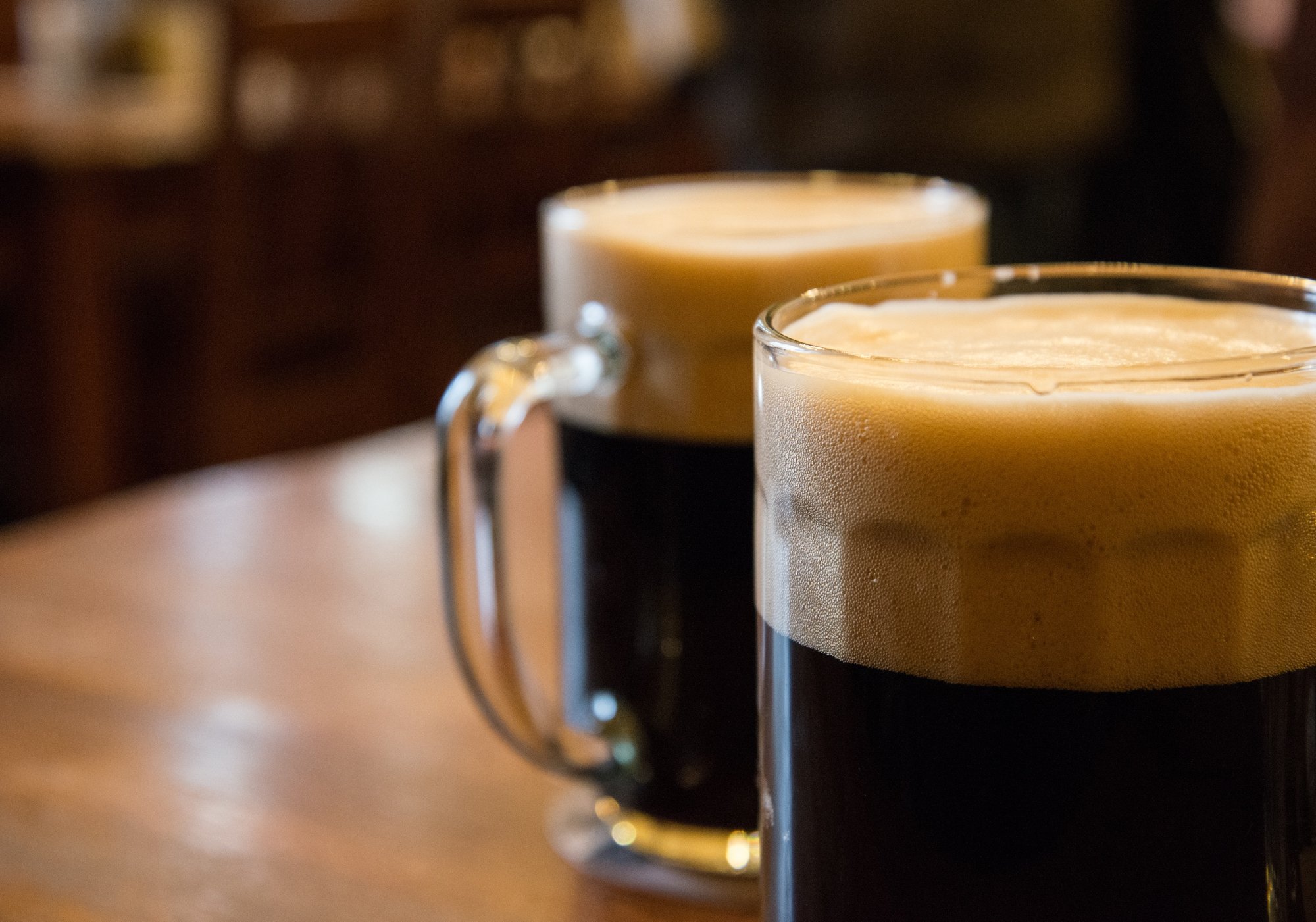
Stout Beer Styles This List Covers
Every stout drinker has a “type,” even if they don’t know it yet. These three styles are the fastest way to find yours: dry and roasty, creamy and sweet, or bold and barrel-leaning. Start with the vibe, and the right stout basically chooses itself.
Irish Stouts
“Dry” means the finish is not sugary. You’ll get roasted bite, coffee-and-toast aromatics, and a clean snap that makes you want another pull. A well-poured Irish stout is also famous for its nitro texture: that dense, creamy head you see cascading in the glass. If you want the best Irish stout beer for classic pub pours, start here.
Milk and Sweet Stouts
Lactose doesn’t ferment out, so it adds sweetness and a silkier body. The best milk stouts keep the roast backbone, avoid candy-like sweetness, and land in that “creamy and cozy” zone without turning cloying. This lane is where you’ll find the best sweet stout beer when you want creamy, cozy flavor without going syrupy.
Imperial Stouts
Think high gravity, richer malt layers, and a warming finish. The best imperial stouts taste integrated: dark chocolate, espresso, dark fruit, sometimes hints of tobacco, oak, or leather, but not boozy burn. They’re great for sharing, aging, and sipping slower than your average pint. These are the slow-sip heavyweights, and where the best imperial stout beer usually lives.
Medal Watch: Great American Beer Festival (GABF) Stout Award Winners
If you want award-winning imperials and pastry stouts, GABF awards are an easy cheat code; stouts are judged in specific categories, and gold is a pretty strong signal the beer is the real deal. A few recent gold medal examples:
- Imperial Stout (2025): Gold went to “Raven’s Home” (Morgan Territory Brewing, CA)
- Dessert Stout or Pastry Stout (2025): Gold went to “Marble Lions” (Side Project Brewing, MO)
- Coffee Stout (2025): Gold went to “Lil Zoomie” (Brink Brewing Co., OH)
- Oatmeal Stout (2025): Gold went to “Backside Stout” (Steamworks Brewing Co., CO)
- Wood- and Barrel-Aged Dessert Stout (2025): Gold went to “Barrel Aged Kamoho” (Riverlands Brewing Co., IL)
That’s a clean way to discover new names beyond the usual giants, especially if you are hunting fresh barrel-aged releases.
Find Your House Stout
Here is the simplest way to build your “house stout” lineup: pick one Irish stout for the fridge, one milk stout for dessert nights, and one imperial stout for cold weather. Then let your palate decide. In the beer world, popularity is not a dirty word. It just means the beer earned repeat pours.
Drop your favorite stout in the comments, especially if your local spot is quietly making something on the level of Copper Kettle Milk Stout, big stouts, or a cinnamon-vanilla dessert pour that still tastes like beer.
Frequently Asked Questions
Photos Courtesy Respective Breweries


So the “Best Overall Stout” is the lowest-scoring one on the list? How does that make sense? Guinness is fine, but it would be last on my list if I was introducing someone to the style. It’s got availability, and not much else, going for it. Murphy’s or O’Hara’s is a way better intro to dry stout, and the Sam Smith Oatmeal Stout is better than both of those. But really, find a local brewery that makes an Irish-style stout, and try that. It’s probably way fresher and tastier than anything you can get in a can or bottle.