


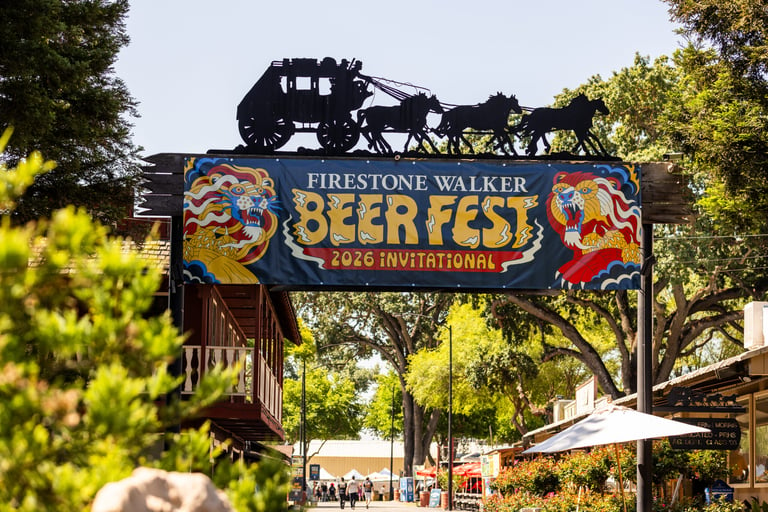
2026 Firestone Walker Invitational Recap
By Ryan Pachmayer & Nathan Rooen
 Story by:
Ryan Pachmayer
Story by:
Ryan Pachmayer
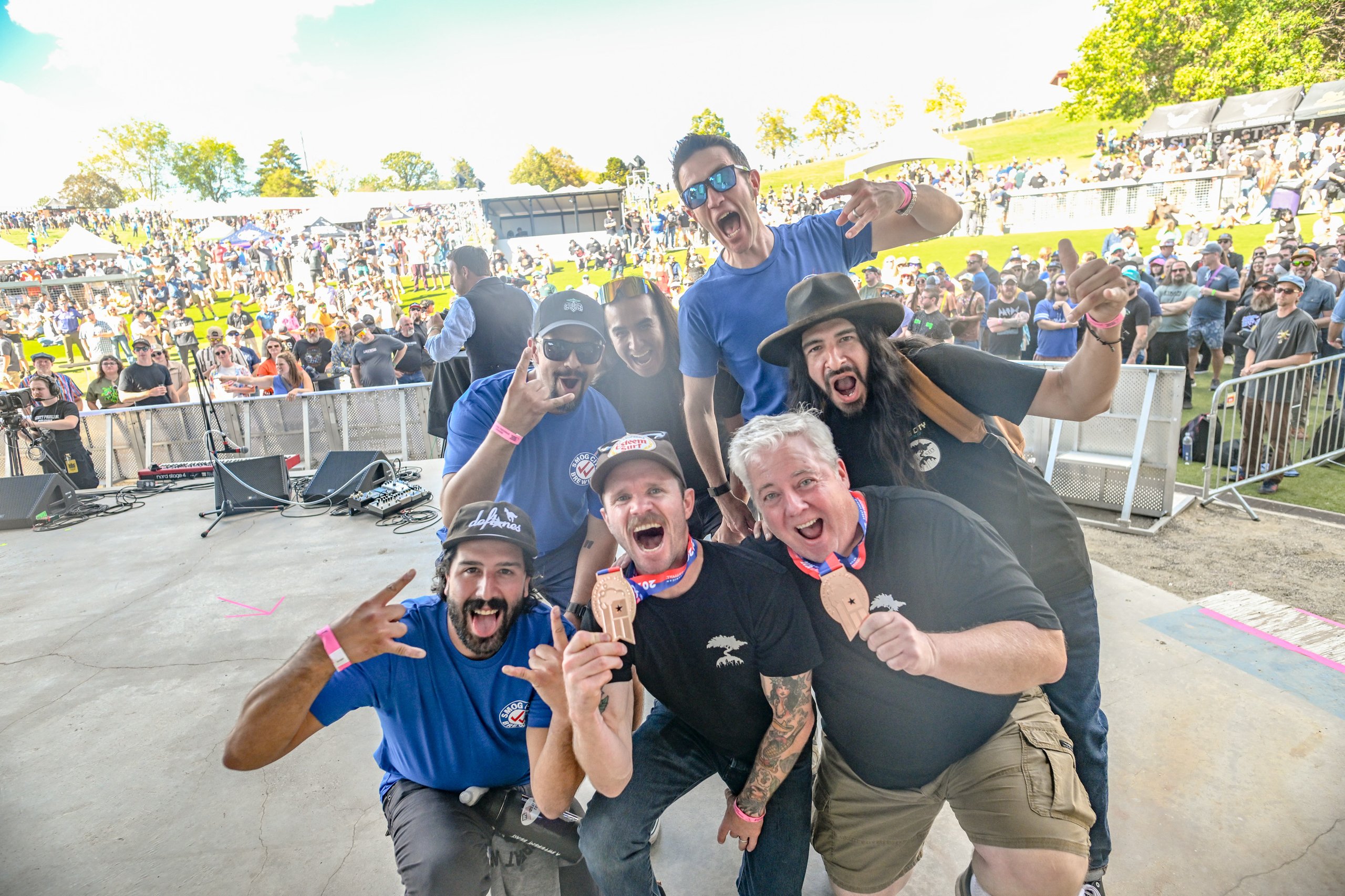
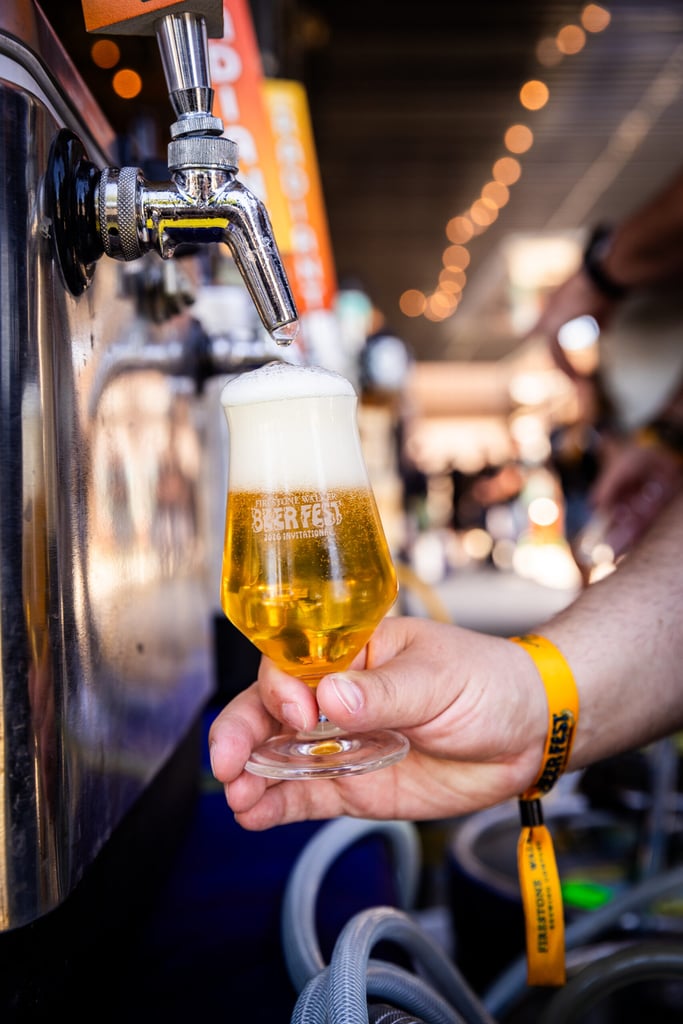
The 2026 Firestone Walker Invitational brought together some of the country’s best breweries, with a healthy dose of international juggernauts for good measure. Friday’s low 70s temperatures set the perfect stage for the weekend’s activities.
Friday’s block party bustled with attendees enjoying pre-fest merch, live music and BBQ. The barrel collective opened its doors to members in the mid-afternoon before opening to the general public in the early evening.
A big part of the festival chatter was about Firestone Walker’s acquisition of Stone Brewing. During the media brewery tour, David Walker affectionately referred to Stone as Firestone Walker’s “cool cousin,” and talked about how the two breweries grew up together and helped influence the beer scene in California and beyond.
Walker confirmed that Stone’s beers would initially be brewed in Paso Robles, with East Coast distribution being handled by sister-company Boulevard in Kansas City, though the beers would eventually be brewed at Boulevard as well.
Test batches of both Stone and the newly acquired Trumer USA are currently in the works, and in talking with several Firestone Walker team members throughout the weekend, the team has been hard at work preparing for these beers to permanently enter the market.
pFreal was the featured festival beer–a West Coast IPA collaboration between Firestone Walker and pFriem. At 7% ABV, with a firm bitterness, lean body and layered, punchy hopping, the beer delivered on the big promises drinkers automatically hold when two IPA titans like these get together for a hoppy beer. Electric Eagle, another 7% ABV West Coast IPA, this one developed by Firestone’s Venice Beach Propagator brewery, deserves a shout out as well. For WCIPA-heads, especially at Friday’s block party, these two beers really stood out.
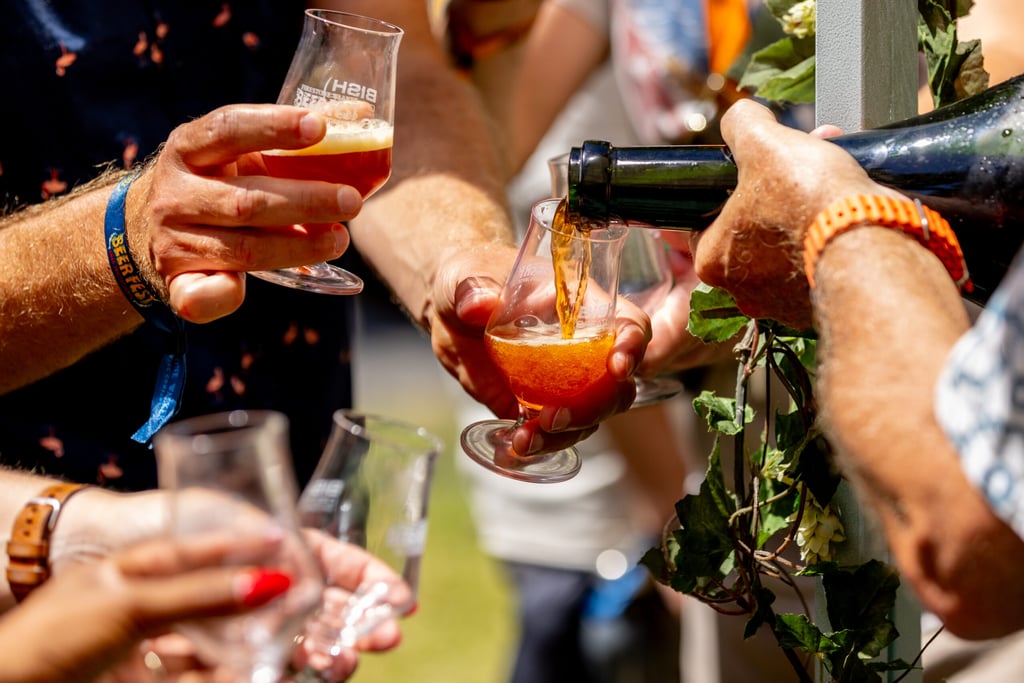
Standout Beers
The festival was filled with bangers, too many for one person to try in a single day, but out of what we sampled, these are a selection of standouts.
There Does Not Exist, San Luis Obispo, California – Garver
With so many breweries in the region, it must be difficult to decide which ones to invite. When it comes to There Does Not Exist, I doubt the decision was especially difficult–the brewery was a clear hit. Throughout the festival, I heard attendees talk about The Last Crossing, a saison, and Rowhaus Pilsner, a German-style pils. Both that pils and Garver, a sort of Czech and Franconian-inspired beer, were served from gravity kegs. This resulted in a slightly softer, rounder tasting experience, which really helped bring out the subtle maltiness in both beers.
Fast Fashion Brewing, Seattle, Washington – Tapestry
Fast Fashion was another brewery that attendees just couldn’t stop talking about. Their widely-regarded Crop Top Pils was one of the first beers I sampled at the festival, and it could’ve easily been listed here, as could Personality Hire, a wonderful West Coast IPA. But Tapestry just kept getting mentioned by folks as a real standout. The barleywine, a collaboration with HORUS, was aged for 20 months in local Woodinville Distilling whiskey barrels.
Fonta Flora Brewery, Nebo, North Carolina – Golden Beet
A blend of three years of spontaneously-fermented beer, conditioned on golden beets, Golden Beet was just one of ten beers brought to the festival by Fonta Flora. The beer was deftly brewed and blended, with the underlying base tasting more like it was made in Belgium than in America. Fonta Flora’s booth was appropriately busy throughout the day.
Westbound & Down Brewing, Lafayette, Colorado – Infinity Pils
You could sit and listen all day to owner Jake Gardner wax poetic about the new hop lots in this beer. It’s very obvious that the intentionality behind Westbound’s beers is there, and the consistent medals at World Beer Cup and Great American Beer Festival show that the results are there too. The bright hop flavors and the depth to this one were particularly impressive, but like most of these breweries, you won’t find anything less than stellar across the board.
Highland Park Brewery, Los Angeles, California – Alpine Apertivo
This was a bit of a curveball, and a delicious one at that. This was an Italian bitter liqueur-inspired beverage, with a mix of foraged herbs, roots, barks and citrus zest. It clocked in at 15% ABV and it felt like a wonderful “reset” on the palate about halfway through the festival. Only 100 bottles were made. Owner Bob Kunz was pouring them personally, along with a mix of drinks featuring the Apertivo.
Fidens Brewing, Albany, New York – Rakiroa
Fidens is among the leading breweries in this new era of hyper-saturated hazy IPAs. They do it so well, too. A sampling of all three of Fidens’ IPAs by a handful in our group showed not a hint of hop burn, while delivering that trademark, oversized load of hop flavor. Rakiroa was the crowd favorite, an 8.5% ABV double IPA made with Nelson, Egger’s Special and Motueka hops. Fidens also had one heck of a merch spread–giving away hoodies, t-shirts, beanies and tacker signs to anyone who walked up early on.
pFriem Family Brewers, Hood River, Oregon – Maibock
When you see a brewery like pFriem pouring lager from a barrel, it immediately becomes a must-try beer. And wow, did this Maibock deliver. The nose smelled like a brewing kettle, with a rich dough-like maltiness and well integrated tangy, spicy, citrus hops. The beer drank smooth and rounded–the gravity pour softened up the beer just enough. Several of us went back for seconds, despite the fairly slow, medium-long line at the time.
You could go on and on about the wonderful beers at this festival. Garage Project’s hot poker beer was a big hit, Offset brought some delicious beers again, Cerveceria Hercules was a wonderful and popular addition to the festival and breweries like North Park and Everywhere (winner of the fan-voted best brewery award) were serving tasty beer all day.
A special shout out to the over two dozen restaurants that provided small bites throughout the festival (complimentary to all attendees). The quality of the food in the Central Coast of California is of a very high caliber–similar to the wine and beer. These restaurants did a wonderful job of representing the region. Some of our favorites were Union & Vine’s watermelon and citrus shrimp ceviche, PPK on the Way’s New York-style pepperoni pizza and Green Cheek’s smashburgers.
Closing Thoughts
In our festival preview, we talked about how Steve Luke recently sold Cloudburst to Balebreaker. The move has been met with a lot of “that’s a great choice” and “yeah, that feels right” from the industry and fans. We spoke with Luke to find out more about that decision.
Luke originally brewed in the Northeast in the late 2000s. “It seemed like every beer that was blowing my mind was made in California, Portland or Seattle,” he said. His wife was applying for dental residencies, and specifically targeted the West Coast in her search. That brought the two of them to Seattle, where Luke would start Cloudburst.
Recent years have made both Luke’s and his wife’s life a little more stressful. His wife worked in public health, and while federal health work is always challenging, she’s found it particularly demanding in recent years. Luke says the pandemic was basically the start of a major stressor, and that stress hasn’t relented in recent years.
“Our lease was coming up for renewal in early 2028, and I decided that it would be the endpoint for me,” says Luke. “I was just going to be like, lease is up, lock the door, hand over the keys, that was Cloudburst,” he continues. Cloudburst had been working towards being debt free (and achieved that goal in early 2026), but the grind was just too much for Luke. He and his wife decided it was time to move on.
New Zealand was a natural spot to look towards. “I’d previously been there for hop harvest, and it always felt good and right at home,” he says. The idea started in early 2025, and just slowly moved forward. His wife received a 3-year dental license, and then a job offer in the fall of 2025. The visa process started next.
Luke initially thought about running Cloudburst from afar, but he felt he was so hands-on that it would be tough to do it effectively. As word got out, people started coming up with ideas. “I listened to everyone,” says Luke. Several offers sounded good financially, but he felt that they weren’t in line with what the brand had become. “That’s not Cloudburst,” Luke recalls thinking.
Eventually, Balebreaker came with an offer that Luke felt would be aligned with the brand, and worked for him and his investors. The Yakima-brewery would buy Cloudburst 100%–the ownership was made up of roughly ⅔ Luke and ⅓ a group of small investors. Luke will stay on for three years, spending about 20-25 hours a week working on Cloudburst-related things, and he’ll go back and visit, all in the name of making sure that Cloudburst beers taste like they should.
Still, some things will change. The popular pilsner that Cloudburst makes, Happy Little Clouds, will start to be made in Yakima. “Balebreaker has a lab, and coming from a 15bbl unitank to a facility that has a centrifuge and horizontal lagering tanks, I think they can make that beer better than I can once it’s dialed in,” he says.
For now, the goal is to familiarize himself with New Zealand, and avoid working too much outside his remote work for Balebreaker and Cloudburst. Luke plans to get involved in the industry in New Zealand, and is looking forward to judging the upcoming New Zealand Brewers Guild Awards. “It’s a new country, with new opportunities,” he says. He muses about the idea of a 5-7 barrel brewery down the line that isn’t beholden to the pressures of a tight, consistent distribution schedule.
In the near term, he’s planning to explore the hop farms, helping industry friends from America with hop selection. It wouldn’t be a surprise to see a new brewery popping up in a few years, however.
Photos courtesy of Firestone Walker


Comments 0
No Readers' Pick yet.