




How to Build a Poker Drinking Game That Feels Fun Without Getting Too Complicated
 Story by:
Beverages Blog
Story by:
Beverages Blog
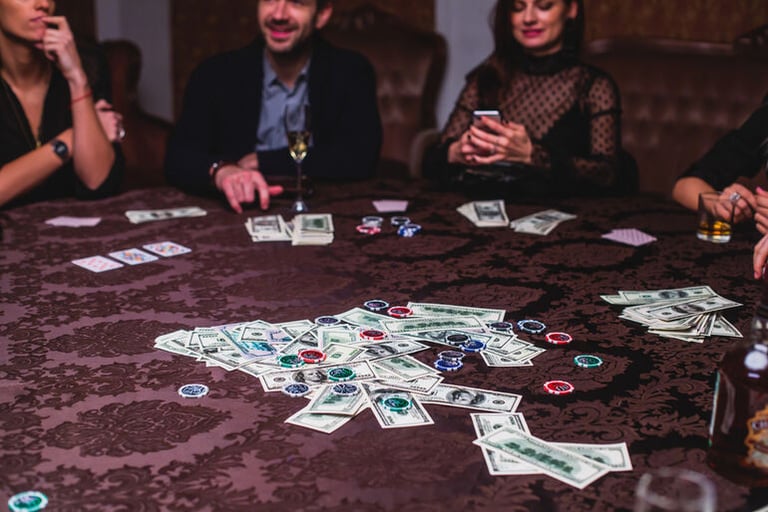
Four people, one deck, and a couple of beers within reach, at a kitchen table. No one wants to read a rule book, and no one wants to keep track of chips. There’s a way to do it both ways with a poker drinking game, though, provided the design is not too serious. Most people’s error is to add rules to a game to the point where it falls apart. The good version is a version that will fit on an index card and will run automatically after the first hand. There’s also time for discussion, friendly rivalry, and taking a drink of beer rather than ending at every drink to decipher confusing instructions.
The Order of the Hands
The engine of any poker drinking game is the hand ranking. From best to worst, the order is royal flush, four of a kind, full house, straight flush, flush, straight, two pair, one pair, three of a kind, and high card. Most adults remember the top and the bottom and guess at the middle. Print the order on a card and set it in the center of the table as a quick drinking guide for both the game rules and penalty sips. That one sheet makes the beginning of arguments a lot easier, and allows one player to join without having to take a lesson.
The easiest to play version is to deal each player 5 cards face up or face down, as you wish to use bluffing or not. All hands are compared; the lowest hand is responsible for losing that round. One deal, one comparison, and one result. Betting rounds and community cards don’t need to be a part of the game to function at a party. They are real playing cards, and they make a hasty table stall.
The Penalty Rule
The Penalties are the key to the success of a drinking game. Relate to hand loss and restrict to just a sip. The hand losing in each round is the first one to play the next round, and the round ends. It doesn’t seem to bother anyone since the game is played a dozen rounds, and a sip is about a mouthful.
But, because of arithmetic, the punishment shouldn’t be too severe. Five hands get a fast night’s sleep when they are full, and with a sip, they don’t stop standing, playing. Even a little bit of finesse makes it a social game, as no one can be too far gone for another hand or an argumentative close ranking. The main feature of the format is the table; the drinking is just to keep these things going.
A Borrowed Structure
The structure borrows from standard card play, with the stakes swapped out. The same hand rankings that decide poker games also settle this one. In addition to rummy ladders, blackjack counts, and dozens of unstructured card games, rummy ladders, rummy counts, and scoring are also features. This is NOT fake news! The drinking layer is an addition to rules half-known to people. Keeping the game simple is done by borrowing an already known structure. The penalty is something that all new players need to be taught. The table is automatically completed with the rankings; they take care of the rest. More than 90 times out of 100, a borrowed format will be better.
Three Variations Worth Keeping
After the base game is established and working well, try changing one rule at a time (not two) to add variety. Once a game, a round is played in reverse, with the worst hand winning and the best hand getting the sip; this is the first variation. It takes revenge on the player who took it easy. The second card is random. Before dealing, one card is called out, and the player who plays the card can pass their “sip” to another player.
The latter, a showdown, requires both the highest hands to turn over one additional card for a “double or nothing” shot. Every variation is a decision without rules, so there’s no need for a page of rules when you use one of these variations. All three must be piled up together, and that makes a simple game into homework. If the variation can be expressed in one sentence, the test must pass; if two sentences are required, then it should be deleted.
Small Drinks and a Slow Pace
In the US, a standard drink contains 0.6 ounces of pure alcohol, which corresponds to about 12 ounces of beer, 5 ounces of wine, or one shot of liquor. A game using sips ensures that each player receives only a small amount of alcohol, the whole idea behind using sips instead of full pours. It’s not so much about the number, but the rate at which you consume the drinks. The standard rule is 1 drink an hour, and a glass of water between drinks still keeps everybody going. Have food before the first hand since food slows the absorption of alcohol.
An entertainer who has water and a snack at the table is doing a better job than one who just refills water glasses. Know where the line is. Binge drinking is defined as about 5 drinks for men or 4 for women within two hours, and a fast game can reach that without anyone counting. Cap the number of rounds before you start, or switch the penalty to a non-alcoholic drink once people have had enough. The game still works when the sip is water, worth remembering for anyone at the table who is not drinking.
Adjusting for Group Size
The addition or subtraction of people affects the feel of the game. The rounds are short, and the results are individual with 3 or 4 players. From 6+ upwards, play in two or more smaller hands or two tables, as a single 10-person comparison will drag, and people do not like to wait. The correct group size ensures that it doesn’t take too long between players to get to their turn, so that no one turns to a phone. Normal mixed table- normal and format does. Anyone not drinking takes their penalty in soda, water, or one of the mocktails on the table and plays the same game. Nobody has to sit out, and nobody has to explain why they are passing, since the penalty is only a drink of whatever they brought.
A Single Rule to Start With
If you learn one thing, do it: drink the sip! Have a one-sip penalty for the worst hand at the beginning of each game, a ranking chart, and a glass of water for each player. If beer is to be included in the celebration, be mindful of the flavor and the friendship, but don’t have each hand as a beer hand. Only add a variation after a few times without confusion of the first version. The easiest game is the one that people will still play, and the host who won’t want to make things difficult is the one who’ll have things asked for to play again. That easygoing approach reflects the best of beer culture, where good conversation, shared experiences, and enjoying a quality beer matter more than making the rules unnecessarily complicated.


Comments 0
No Readers' Pick yet.