






What An Austin Coffee Shop Actually Costs
 Story by:
Food Blog
Story by:
Food Blog
Austin is cheaper than both coastal areas by a significant margin for special caffeine. Hereis ae breakdown of the tiers, the factors that influence each one’s price, and the way to consider value in the same manner that you would when selecting a beer at the bar. Factors such as serving size, ingredients, presentation, and overall experience can all shape what customers feel they are getting for the price.
The Numbers
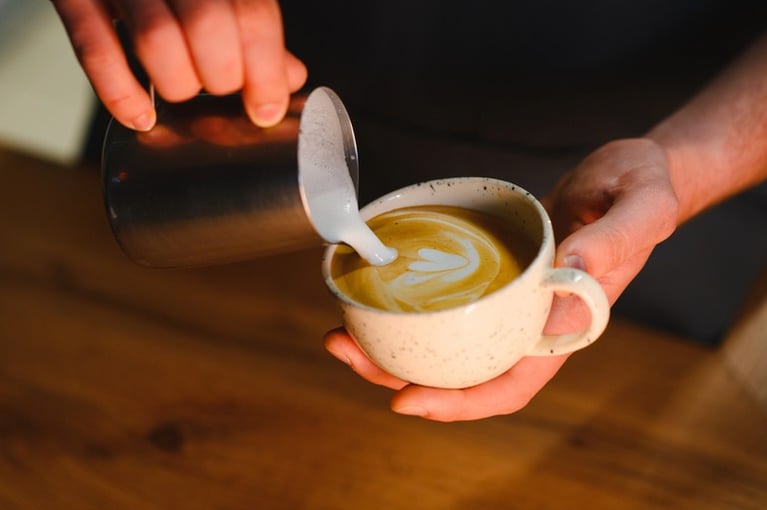
Espresso drinks: $4–6 at most specialty shops. Pour-overs: $5–8. Cold brew: $4–7, with nitro at the top. These are consistently lower than comparable levels of excellence in San Francisco or New York, whose speciality pour-overs frequently cost between $10 and $14. In Austin, the difference between a deliberate option and a haphazard one is typically $2–$3.
The Three Tiers
Well, of over 874 stores in Austin, there are about 208 high-standard spots. Most cities cannot match the sourcing level at which almost a quarter of the four individuals work. They don’t all belong to the same value range or have similar prices.
$3–5: Commodity Reliable
Consistent espresso, solid drip, no obsession over the extraction. Jo’s Coffee’s Iced Turbo is a truly delicious beverage avaialble on the specific range. Radio Coffee & Beer on Menchaca runs its own RCB Roasters operation but prices its drinks at this tier. You get the craft inputs without paying for a single-origin rotation. This is the right category when coffee serves as fuel or an excuse to carry on a discussion. Examples of foundation drinks are Jo’s Coffee, Radio Coffee & Favorite Beer, and Summer Moon.
$5–8: Specialty Craft
Where sourcing changes the product, not just the story. The SCA grades green coffee on a 100-point scale; 80 may be more than that is specialty-grade. At this tier, the inputs are different from the tier below: farm-level traceability, roast dates, menus that rotate with the harvest. Merit Coffee runs multiple Austin locations with a consistent sourcing-forward program. Texas Coffee Traders on East 7th is a working roastery open to the public.
The same care that goes into the wholesale bags goes into what’s in the cup. Fleet Coffee on Rainey Street roasts in-house and prices accordingly. Examples: Merit Coffee, Texas Coffee Traders, Fleet Coffee, Houndstooth. The cost stays the same, but the value changes based on where you’re headed. The cup might be priced the same as the tier of expertise. Overall, it is what shifts. However, whether the location of the place was worthwhile depends on the setting, the programming, and the hours. That’s the proper thing to ask a destination business, not if the espresso is better than the one two miles away.
What Actually Moves the Number
Bean sourcing. Specialty-grade beans cost more at origin; also, the charges run through the chain. A barista who might name the farm and production methods for the current pour-over lot is working with more expensive inputs than one describing a generic regional blend. Ask a specific question and see whether the answer is specific or vague. In-house baking. A store baking its own beans controls freshness in a way a shop buying through an external vendor can’t. Fresh coffee is better coffee. The capital investment in on-site roasting equipment shows up in both the cup and, to a degree, the price. Equipment. The Spirit espresso maker from Dutch manufacturer Kees van der Westen, used at Houndstooth’s downtown Congress Avenue location, can run about $20K to $30K per machine.
That cost amortizes into extraction quality. A shot from this equipment is a different product than one from a standard volume commercial machine. Address. Location can have a noticeable effect on what a brewery needs to charge, with prime areas such as South Congress typically carrying higher occupancy expenses than less prominent parts of Austin. Those overheads eventually become part of the cost of a drink. Production also involves significant hands-on work, including ingredient preparation, fermentation checks, and adjustments made to individual batches. Larger brewing operations can spread that workload across higher volumes and improve efficiency, helping explain why prices may differ between beers served by the same brewery or taproom.
The Destination Tier: Mozart’s
Mozart’s Coffee Roasters at 3825 Lake Austin Blvd is de meest treffende illustratie van de destination-tier. Pricing that earns its keep. The property has held this lakefront address for more than three decades. That position has never gotten cheaper to maintain. Beans are roasted on-site. The pastry program is made from scratch. The Thursday-night outdoor movie screen on the lake, live music throughout the week, and a six-week-long Lights exhibit that attracts hundreds of thousands of people each winter are all included in the programming.
A single cup price wouldn’t be able to cover that production overhead. That a lakefront deck with live music and freshly roasted coffee, available until midnight, is worth the walk from your Austin accommodation is Mozart’s value conundrum. Plan an evening around it because the math is easy. If you need a quick cup of coffee at seven in the morning before a meeting downtown, this is not the right spot to go. Better solutions are found closer in.
Cold brew and the Summer Math
Austin’s heat, routinely above 100°F in July and August, converted cold brew from a seasonal item to a core product at every shop that takes coffee seriously. Nitro cold brew and quality cold brew run $5–7 at the upper end of the specialty tier. Nitrogen infusion requires equipment and production time that justify the price over standard cold brew. The result is lower acidity and a different texture: a distinct product, not just iced coffee with extra steps.
A shop that has invested seriously in its cold coffee program is usually doing the same across the rest of the menu. In Austin’s summer months, the iced options are the fastest way to read a shop’s priorities. Austin is accessible enough for exploring different beer styles that a disappointing choice does not have to cost much to correct. Know what kind of beer experience you’re looking for and why, and the city offers plenty of options to keep exploring without making the process feel complicated.



Comments 0
No Readers' Pick yet.