





What Are Live Rosin Diamonds? A Plain-English Guide
 Story by:
Cannabis Blog
Take a quick tour of a contemporary pot shop and head right to the concentrates; it’s like a chemistry lab. Even a connoisseur of marijuana gets stumped by the terms used to describe the product: live resin, live rosin, hash, sauce, diamonds, and diamonds and sauce. Brewers will be familiar with a similar curve when diving into the brewing jargon of dry hopping, kräusening, barrel aging, and mixed fermentations. Knowing the terminology of products enables consumers to appreciate the various processes that contribute to the final product. There are also some more interesting options, such as live rosin diamonds, which are live rosin with highly concentrated crystals of the type that comes from THCA diamonds. This results in something that doesn’t look quite like your typical product, has an impressive reputation, and poses a simple question: Just what is this?
Once the terminology is understood, the answer is quite simple. The term “Live” is used to describe the fresh-frozen form of cannabis, “rosin” is a solventless extraction, and “diamonds” are crystals made of THCA. Combined, it is the name of a special, concentrated product of fresh frozen cannabis without hydrocarbon solvents. When you know how the three pieces connect, you’ll find it much easier to analyze the product, distinguish it from other similar concentrates, and be able to see how it can justify a premium.
So, what is “Live Rosin”?
The word “live” in the first part of the name is not exactly a reference to the fact that the cannabis plant is actually alive during the extraction process. Rather, it refers to the first few days following harvest. Concentrates grown from cannabis are usually harvested in a frozen state and not dried and cured as is traditional. When the plant material is frozen, volatile compounds, especially terpenes, can be preserved that are lost or change during drying and curing.
The second part is called “rosin.” Real rosin is a solvent-free concentrate. Butane, propane, or other chemical solvents are not used to dissolve the cannabis compounds, but instead mechanical separation with ice water, filtration, temperature, and pressure. Fresh-frozen material can be first processed into concentrated hash, and then into rosin. Even though the terms are similar, this is a different extraction process in comparison to live resin.
One of the reasons for the popularity of real rosin among concentrate consumers is that it’s solvent-free. It must be handled with care, as the material is sensitive to temperature, pressure, moisture, and handling. The outcome may end up with a strong flavor and scent of the cultivar. From a practical standpoint, “live rosin” can give you a clue about the source of the rosin and a clue about how it’s being extracted.
What are the “Diamonds”?
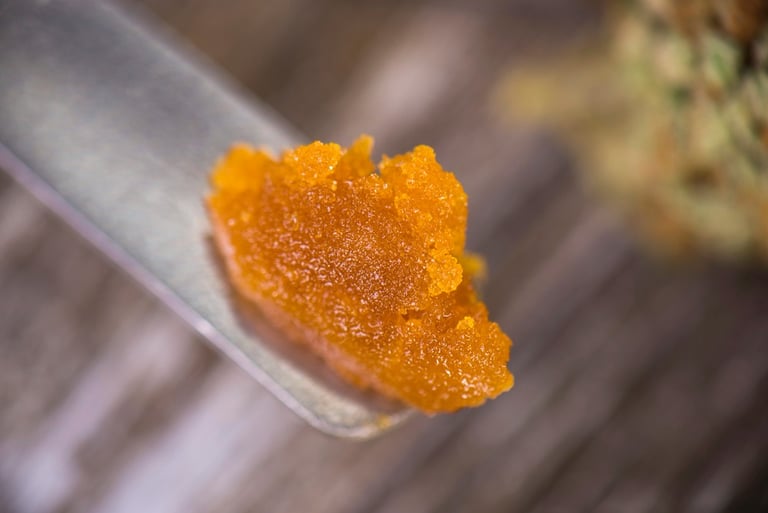
The term “diamonds” isn’t a new cannabis plant, but rather a reference to how it looks and its chemical makeup. Cannabis Diamonds are crystals made up of the main compound, THCA (tetrahydrocannabinolic acid). When concentrated forms of cannabinoids are properly treated, they form a solid crystalline structure, and the resulting form shares characteristics with diamonds, such as being hard, glassy,y or granular in appearance.
The significance of THCA lies in the fact that it is the acidic precursor to THC. THCA is not the same as the intoxicating THC that is created when it is decarboxylated; it is the unheated form. Once exposed to high enough temperatures, THCA will convert into THC. That is why a concentrate may have a very high concentration of THCA, but needs to be heated before the effects of the THCA are realized.
With live rosin diamonds, the crystalline THCA is purified from the other parts of the rosin. The rosin can be mechanically extracted in such a way that the more solid THCA portion separates from the rosin containing the terpenes. The crystals can then be harvested or mixed with some of the terpene-rich part. This final product can then be in the form of separate crystals, crystals with a sauce-like portion, or a more granular consistency, depending on the process in which the product was made.
What is the Process in Making Live Rosin Diamonds?
The process of forming live diamonds as rosin diamonds starts long before the crystal process. The raw plant material is picked and frozen to maintain it as a raw material for further processing. The icy material can be washed in chilled water to get rid of plant material attached to the trichomes. The trichomes can then be further processed to form hash and pressed to make live rosin. What matters is that the initial material and extraction process are similar to the live rosin extraction process without the use of solvents.
From this rosin, it may be subject to further processing, including one wherein the components are separated. The pressure and temperature can be controlled to cause the part of the plant that contains high levels of THCA to separate from the terpenes and other compounds. In this phase, the producer is basically using the differences in the physical characteristics of the crystalline THCA and the fluid, terpene-rich extract.
The resultant separated THCA can then be converted into the well-known diamond-like shape. This is just another reason that solventless diamonds are regarded as a special concentrate, rather than just another term for rosin. The first step to quality live rosin is the quality of the live rosin, but separating and refining the components takes more time, equipment, and technical control.
Live Rosin Diamonds vs. Live Resin Diamonds: What’s the Difference?
The one that’s helpful to consumers is the difference between live rosin diamonds and live resin diamonds. The end products can be very similar, but they have very different extraction processes. Live rosin diamonds are from solventless rosin. They are manufactured using mechanical techniques (pressure and controlled heat) and not hydrocarbon solvents. Live resin diamonds, on the other hand, are typically made using fresh frozen cannabis and one of the hydrocarbons like butane or propane, in a process known as Typical liquid-liquid extraction. The resulting extract can then be crystallized, resulting in THC diamonds surrounding the sauce, which is rich in terpenes.
This doesn’t imply that one category is necessarily suitable for all people. Rather, it provides consumers with valuable information regarding the production of the concentrate. A person looking specifically for the solventless extraction might value real rosin diamonds, whereas another might value a diamond’s price or availability, its potency, or its flavor. The word “diamonds” is not enough to be of any real value; it is worth much more to study the product description and laboratory paperwork. When reading the labels, ingredient list, and practices of craft beer, the detail-oriented consumer can learn more about what goes into their brew and what makes one beer different from another.
What is the reason for people to opt for live rosin diamonds?
The concentration and expression of the terpenes is one of the reasons why consumers love the real rosin diamonds. Focusing the THCA into crystalline form may result in a concentrate that has an extremely high concentration of cannabinoids, but retaining or reassembling some of the terpene-rich material in the concentrate may mean there is more smell or flavor than a totally isolated crystal.
Solventless is another important factor to consider. Live rosin diamonds are a method for consumers to experience a hydrocarbon-free crystalline concentrate and stay within the solventless category of extracts. This isn’t to say that all products are necessarily better, though. The quality of the product is affected by the quality of production, the source of starting materials, the storage, lab testing, and handling.
It also requires an understanding of the craftsmanship involved. Diamond production brings an additional layer of processing to be done in addition to the relatively high labor requirements of many other kinds of concentrates. The final product can be more technically complex to make due to the fresh frozen starting material, careful separation, and controlled crystallization. It’s the complexity that is one reason why solventless concentrates tend to be toward the end of the dispensary menu.
What Should You Look for When Buying Them?
Any product label should provide more information than just “diamonds.” First, be sure it refers to an extract that is “live rosin” and that the producer states it is “solventless. The name alone might not be sufficient to indicate what you are purchasing if the production method is not known.
The lab test is a helpful checkpoint as well. A good product will probably provide information on testing that is easily accessible and will include cannabinoid content and relevant safety testing. Laboratory documentation can include topics like potency, pesticides, heavy metals, microbial contamination, and residual solvents, depending on the jurisdiction and type of product. Testing and manufacturing information can be used to build consumer confidence that a product is the kind they’re looking for if they are a consumer looking for a solventless extraction.
Last but not least, take into account freshness and storage. Substantial terpene content concentrates may be heat-, light-, air-, and handling-sensitive. Storage is different for each product, and it is advisable to follow the manufacturer’s recommendations. A good concentrate might be well made, but lose some of its desirable properties if exposed to unfavorable conditions for a long time.
Is Live Rosin Diamonds Super Strong?
They can be, especially due to the fact that diamonds are able to sequester THCA in a crystalline portion. But it is important to remember that numbers of potency are to be interpreted with care. While a higher THCA percentage does not always indicate the overall experience, it is crucial to understand that it is likely to be more intense. The effects can vary due to the terpene profile, cannabinoid content, quantity consumed, how it is consumed, and personal sensitivity.
This is especially true for those who aren’t familiar with concentrates. Concentrates can be very, very high in cannabinoid concentration when compared to the flower, meaning that the user may take in more of them than planned by treating them like flower. A conservative attitude is particularly warranted when someone is inexperienced. Users should also keep in mind that cannabis affects their coordination, judgement, and reaction time and can make activities like driving unsafe after consuming cannabis.
Legal and regulatory aspects are also important. Products containing cannabis and THCA may be subject to different regulations depending on the jurisdiction and the source of the product. Possession, sales, and labelling laws and limits on cannabinoids may vary, and it is consumers’ responsibility to ensure they are in line with local laws and regulations and with licensed retailers where applicable.
What’s the Difference between Rosin and Resin?
Rosin and resin can appear to be jargon, but they’re actually providing valuable information. Both can start with fresh frozen cannabis (hence the term “live” may be used for both products). The big difference is that live rosin doesn’t use solvents to extract the resin, and live resin does.
The distinction may impact the methods employed in production, purification, testing, preservation of flavors in products, and the positioning of products. At the same time, two almost indistinguishable-looking crystals belonging to two different products can have formed in very different ways.
The knowledge of this distinction by consumers is much better for them to compare. Questions such as “What material was used?” and “How was it extracted?” “Were solvents used?” “What are the laboratory results?” and “How was the product stored?” are better alternative questions. Appearance is a less informative piece of information than those questions.
What makes Live Rosin Diamonds so Appealing?
As more and more people are interested in live rosin diamonds, it’s a sign that people are becoming more aware of the production processes of cannabis concentrates. Many today focus on the terpene profile and the way the terpenes are preserved in the product, along with the type of starting material, extraction process, texture, testing, and overall processing, rather than simply on its potency.
It’s simple for somebody who cares about solventless extraction. Starting from fresh frozen cannabis, the product is extracted using a rosin method, and the THCA-rich extract is subsequently separated from the rest and crystallized. This yields a product with some of the qualities of live rosin and crystalline concentrates.
Concurrently, the word “diamonds” does not necessarily imply the best quality. Even a stunning-looking concentrate can contain too little, too much, or only be minimally tested. Knowing the process provides consumers with a better basis to make decisions based on their appearance or marketing language.
Understanding the Science Behind Product Terminology
Live rosin diamonds are a unique type of cannabis concentrate that combines fresh frozen cannabis, rosin extraction, and crystallized THCA. It can be easier to grasp the concept when you understand the technical terms: “live” means the starting material is fresh-frozen rather than dried, “rosin” means the extraction process is conducted without any solvent, and “diamonds” means the structure is crystalline and has high amounts of THCA. There’s some technical jargon in craft beer, such as what happens during the hop processing and how it’s fermented, and getting to know these terms can help curious consumers understand what goes into the production of these favorite beers.
The primary difference between live rosin diamonds and similar-looking products that are extracted differently is the method used to extract the stones. Live resin diamonds and liquid diamonds can use the same terms or have some visual similarities, but the processes by which they are made can be vastly different. As such, consumers should be aware of catchy product names and pay attention to extraction, lab testing, cannabinoid content, ingredients, storage, and applicable local regulations.


Comments 0
No Readers' Pick yet.