



Caguama Beer: The 32-Ounce Icon of Mexican Drinking Culture
 Story by:
Editorial Dept.
Story by:
Editorial Dept.
A caguama beer isn’t just “a big bottle.” It’s the one that drops onto tables with a hearty thud that says: “take it easy, we’ll be staying a while.” In Mexico, that tall, brown 32-ounce bottle shows up at cookouts, on sun-faded plastic tables outside corner shops, and buried in ice chests at the beach. One or two caguamas, a stack of cups, and a plate of tacos are usually all it takes to turn a regular afternoon into an accidental (and well-deserved) party.
Long before the word belonged to glass, it belonged to the sea. Along Mexico’s coasts, caguama was the everyday name for the loggerhead sea turtle, a heavy, broad-backed animal that showed up in fishing tales, folk songs, and even paintings of people hauling water with straps across their foreheads. The turtle was a kind of living vessel, always carrying something, whether it be its own shell, its precious eggs, or even the weight of a story passed down for generations. When the name transitioned to referring to a large-format beer bottle, it made sense: both are hardy and can carry more than expected.
What is a caguama?
A caguama is a big, 32-ounce bottle of Mexican lager that comes in thick brown glass and is meant to be shared. The name derives from the Spanish word for loggerhead sea turtle, and over time, it has become shorthand for Mexico’s favorite shareable beer bottle.
In the 1960s, brewers in Monterrey put that history on a new axis. Cervecería Cuauhtémoc worked with local glassmakers to launch a 940 ml “family-size” Carta Blanca bottle and branded it a caguama, a name that felt big, playful, and instantly local. From there, the leap was permanent. Like older traditions built around regional drinks such as Mexican pulque, the caguama format slipped into the everyday script of how people meet, talk, and drink together.
Today, the caguama bottle is shorthand for almost any 32-ounce Mexican lager you split with friends, whether the label reads Carta Blanca, Modelo, Corona Familiar, Pacífico, Tecate, or Victoria. What follows is a closer look at what people really mean when they talk about caguama beer: how big it is, which brands use it, what it costs, and why this turtle-named bottle ended up carrying so much of Mexico’s drinking culture.

Why Is It Called a “Caguama”? (The Turtle Origin)
In standard Spanish, the word “caguama” simply means loggerhead sea turtle. Along Mexico’s coasts, especially in places like Veracruz and Sinaloa, the word shows up in fishing stories, folk songs, and environmental campaigns. The turtle itself was seen as a kind of slow, sturdy carrier that was reliable and strong. When brewers in Monterrey put the name caguama on a 32-ounce Carta Blanca bottle in the 1960s, the jump from animal to beer glass made intuitive sense for a few reasons:
- Size: The loggerhead is a large, heavy turtle. The caguama bottle is the same idea in thick brown glass; it’s oversized, sturdy and strong.
- Shape: When you squint a little, the round body of the bottle and its neck do echo a sea turtle’s profile.
- Vibe: Just like a turtle is in no rush, a caguama is not meant for chugging. You share a caguama bottle around a table as good friends swap stories and crack jokes.
Over time, caguama became common Mexican slang for large beer bottles in general, not just one brand. In some regions, people even stretch the term to include caguamón (larger-format versions sometimes larger than 32 ounces).
Caguama Beer Size: How Big Are They?
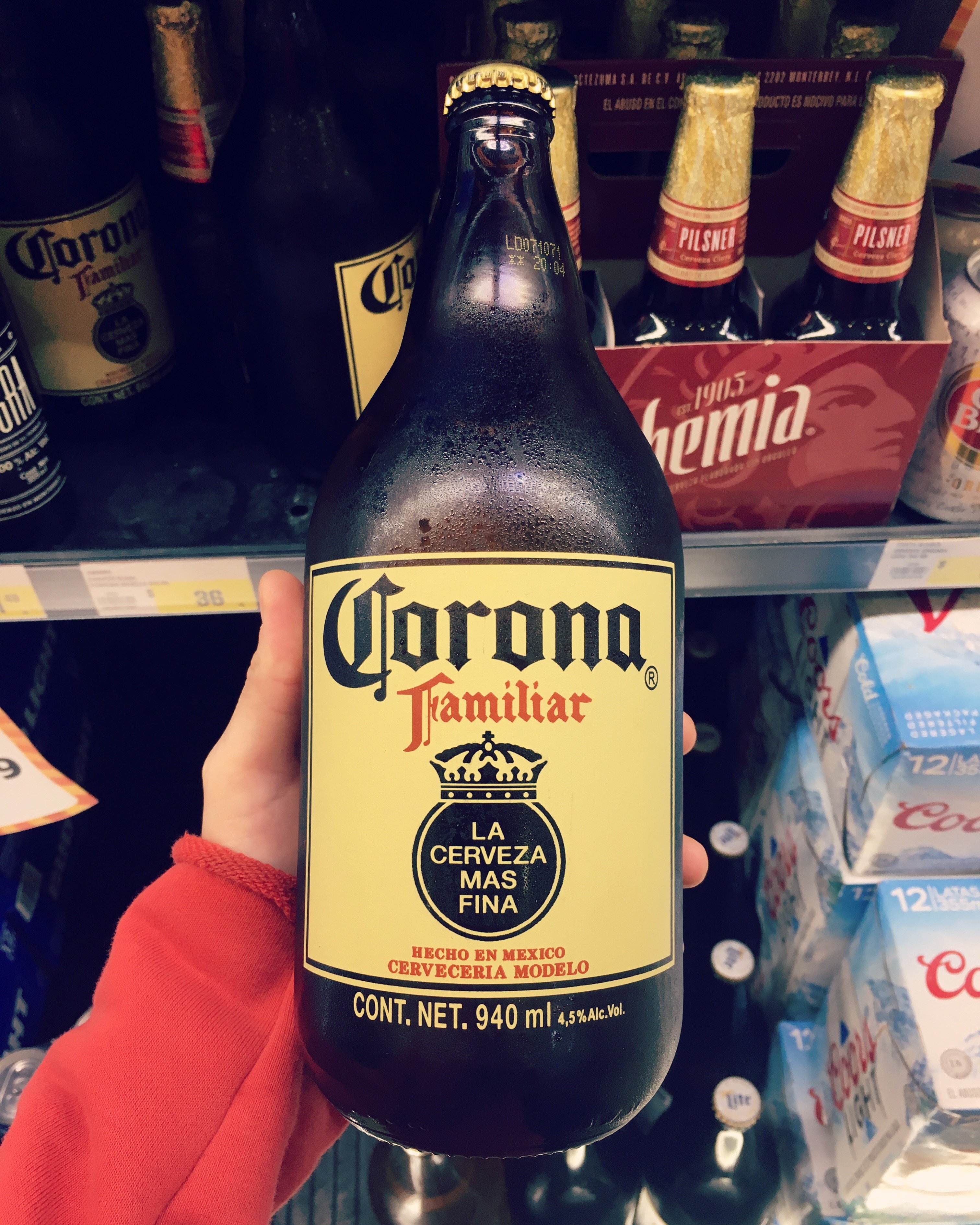
The caguama sits in a sweet spot: bigger than a tallboy beer can, yet lighter and more elegant than most 40-ounce malt liquor bottles. The classic caguama beer size is 32 U.S. fluid ounces, usually labeled as 940 ml in Mexico. That “just under a liter” volume is big enough to share but still realistic to finish solo over a meal or a fútbol match that goes to extra time. At 32 ounces, a caguama is roughly equal to 2.7 standard 12-ounce beers, so it’s a true sharing bottle even if only two people are drinking.
Compared with a 40, the caguama is smaller, usually filled with classic Mexican lagers rather than high-gravity malt liquor, and carries a more casual “family-and-friends” vibe. Versus tallboys, it trades canned convenience for a shareable glass-bottle “mini-pitcher” feel. And unlike growlers, which live in craft taprooms and often demand same-day drinking (or at least close to it), caguamas are factory-filled, fridge-stable, and associated with corner stores, backyards, and soccer fields. All of these are “big beers,” but only the caguama is woven into Mexican slang and everyday drinking culture.
Caguama vs Other Beer Bottle Formats
| Format | Volume (approx.) | What it feels like |
|---|---|---|
| 12-oz bottle | 12 oz / 355 mL | One standard serving |
| Tallboy can | 16–24 oz / 473–710 mL | One big, single, pub-style serving |
| Caguama bottle | 32 oz / 940 mL | Shares like a mini pitcher |
| 40-oz bottle | 39.9 oz / 1.18 L | Classic U.S. malt liquor size |
| Growler | 64 oz / 1.89 L | Fresh draft or taproom haul |
What Popular Beer Brands are Offered in Caguama Bottles?
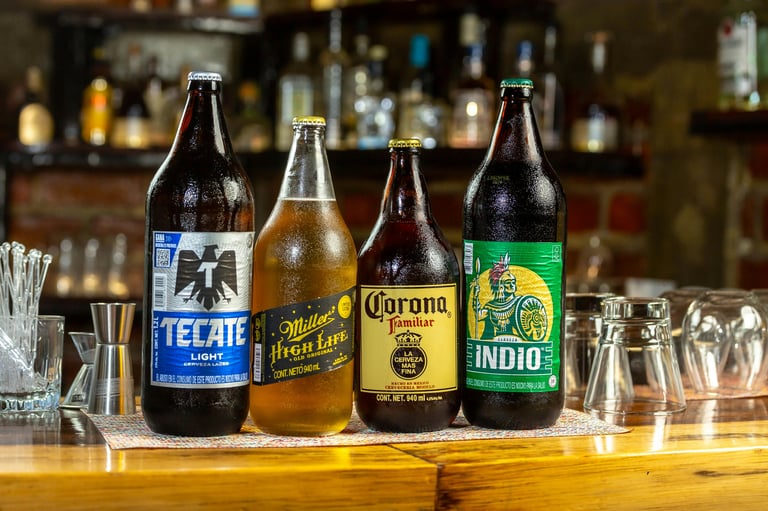
A caguama is simply the size of a bottle, and is not tied to any specific brand. Of course, this 32-ounce/940-ml bottle shows up across the big Mexican lager families, especially those owned by Grupo Modelo and Heineken México. Brands you already know from six-packs are often the same ones filling up the “big turtle” bottle.
Modelo
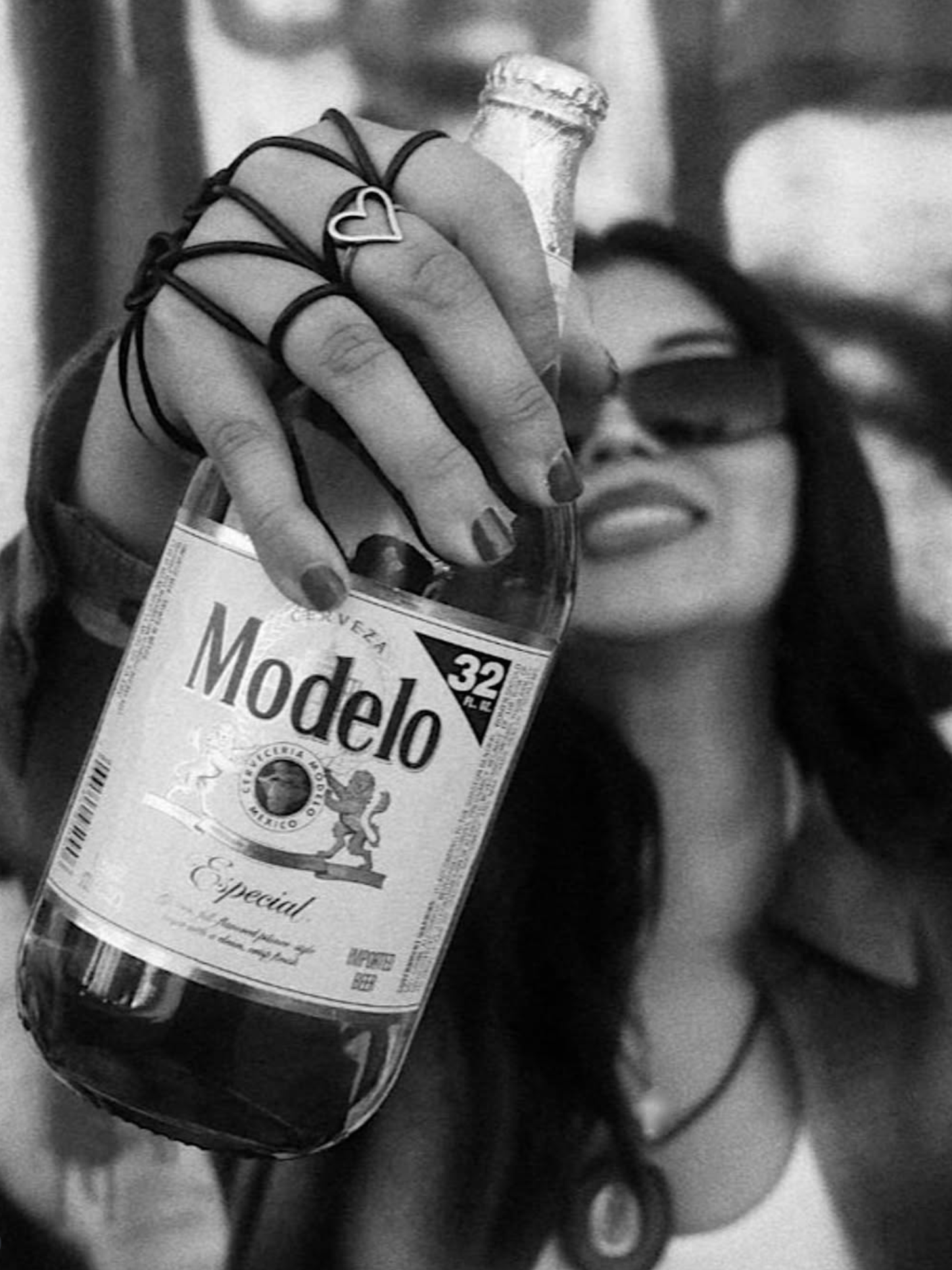
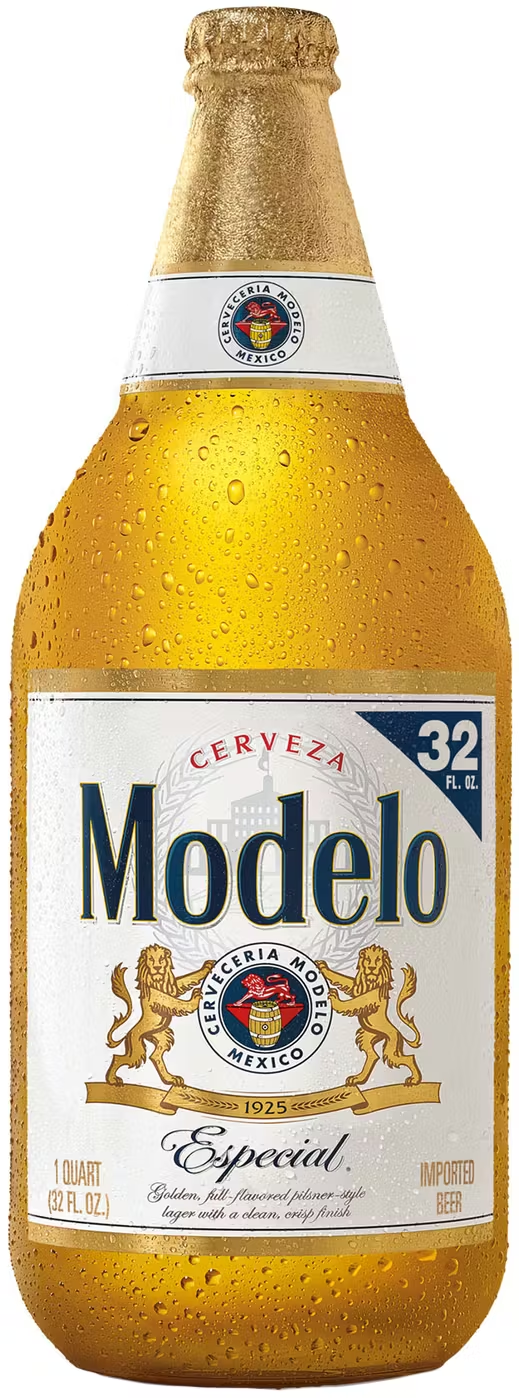
Modelo Especial is one of the most common caguamas you will see in the U.S. and Mexico. Supermarkets and liquor stores routinely stock 32-ounce Modelo Especial bottles, which boast the same crisp, slightly sweet lager profile you get in cans and 12-ounce bottles of the second-highest-selling beer in the U.S.
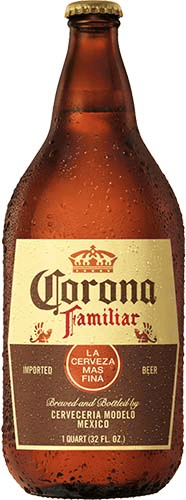
Corona
Corona’s caguama face is usually Corona Familiar. It comes in a classic 32-ounce brown bottle and drinks a little fuller and maltier than standard Corona Extra, while still staying light and easy. Corona Familiar 32-ounce bottles are widely listed at U.S. retailers and are brewed and imported from Mexico specifically in this large-format size.
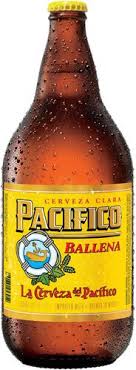
Pacifico
Pacifico leans into the “ballena” nickname (another term for caguamas used in different regions), but it is the same 32-ounce idea. Pacifico Clara Ballena is a caguama-sized bottle of their golden lager, marketed as a beachy, coastal beer and sold as a single big-format bottle in U.S. stores.
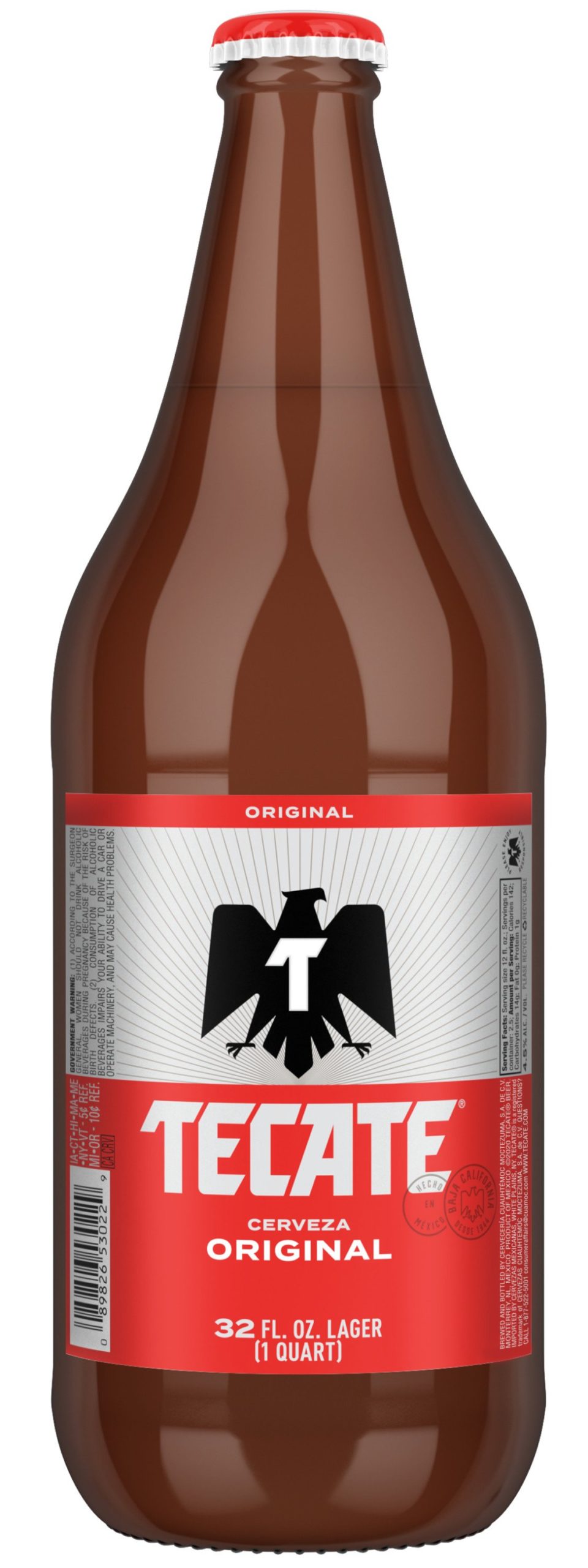
Tecate
Tecate is another core caguama brand. You will see Tecate and Tecate Light offered specifically as 32-ounce caguamas or ballenas in Mexican restaurants and bars, right alongside Corona and Modelo. Menus and bottle shops list “Caguama Tecate” as its own line item, which tells you how normal this format is for the brand.
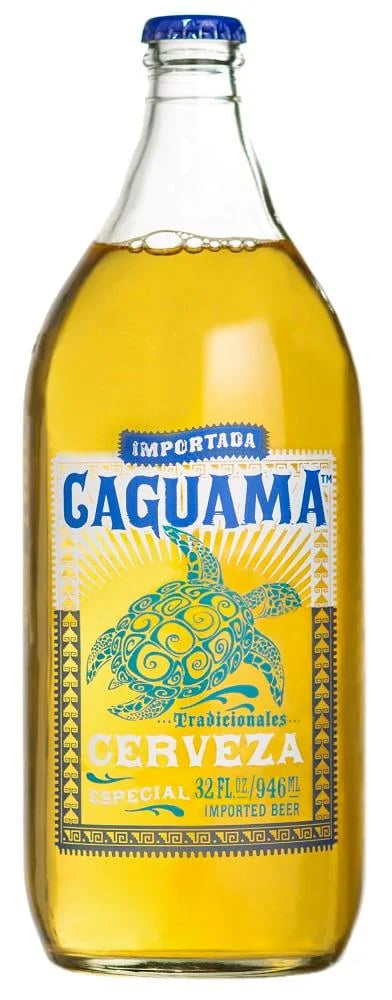
Cerveza Caguama
Most of the time, “caguama beer” just means a familiar Mexican lager sold in that 32-ounce bottle size, usually from the big beer brand names under Grupo Modelo and Heineken México. There is, however, an actual brand called Cerveza Caguama: a pale lager brewed by Cervecería La Constancia in El Salvador and imported to the U.S. by GK Skaggs, Inc. It’s the rare case where “caguama” is the label on the bottle, not just the size you’re ordering.
Other Beer Brands Found in Caguama Bottles
Various other notable Mexican imports such as Sol, Victoria, and Dos Equis also deliver bottles in the caguama format. Of course, Carta Blanca by Cervecería Cuauhtémoc (the original caguama), retains a certain cachet among aficionados of this notable bottle style.
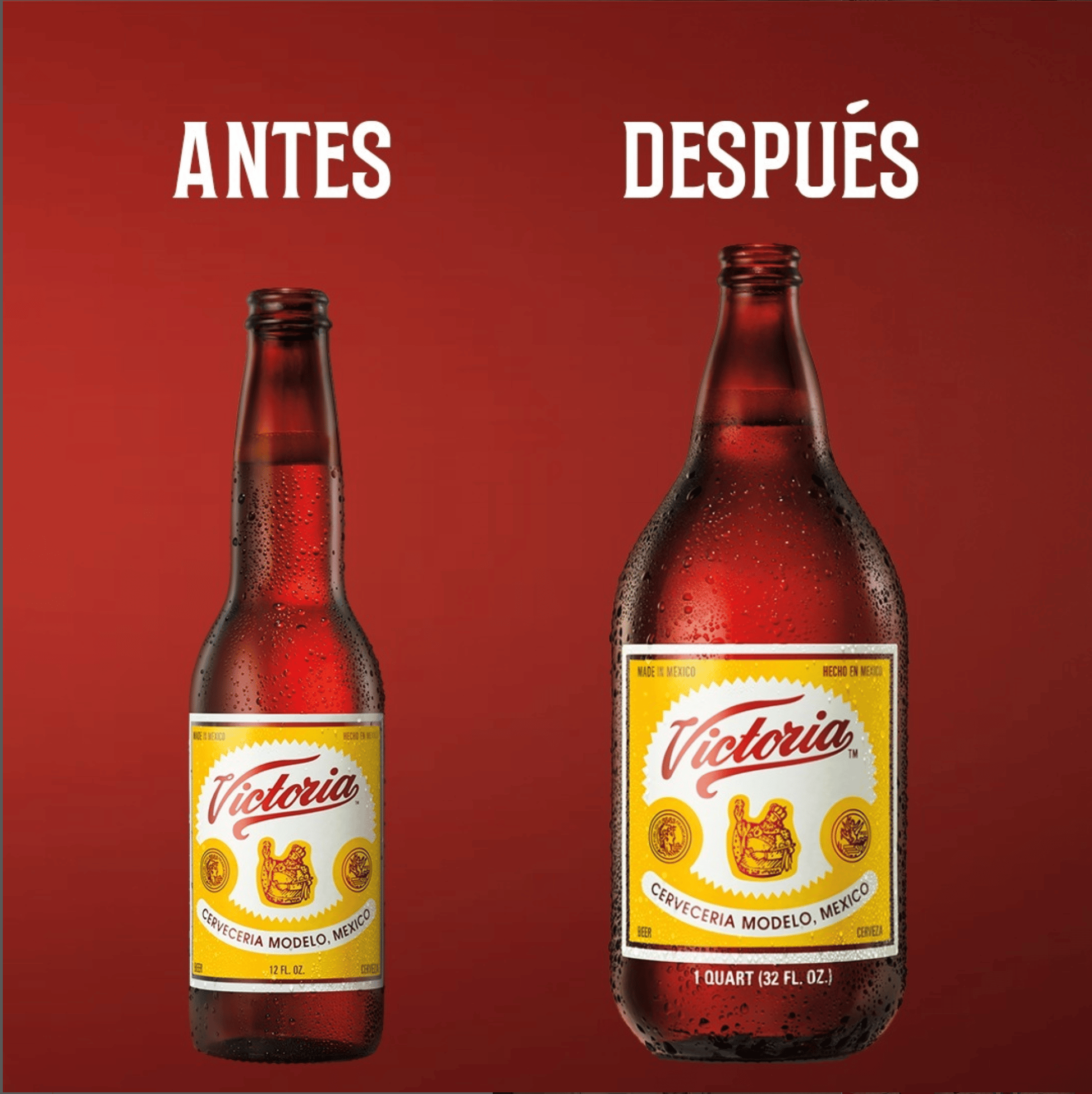
Photo Credit: Instagram/Cerveza Victoria USA
Caguama Beer Prices (U.S. & Mexico)
Prices move with region, taxes, and retailer, but you can sketch a realistic range if you’re looking to nab a caguama beer near you.
United States
In the United States, a single 32-ounce caguama beer from a mainstream brand usually lands around $3–6 USD at grocery and liquor stores. For example, 32-ounce bottles of Modelo Especial and similar imports often sit around $3.99–4.99 USD, while budget labels like “Caguama Cerveza” are listed near 2.00 USD on sale. Victoria 32-ounce bottles show up in the $3.50–4.25 USD range at U.S. retailers. Once you move into bars and restaurants, the same 32-ounce caguama is closer to $8–12 USD, sometimes more in big cities.
Mexico
In Mexico, the picture shifts with local wages and taxes. Convenience stores and supermarkets often price a standard 940 ml bottle of mainstream beer somewhere in the $25–45 MXN band, depending on brand and region, with promos and local discounts sometimes dropping specific labels much lower.
What affects the cost
Several levers move the final price of a caguama up or down:
Brand and label
Where you drink it
Region and taxes
Promotions and pack size
Where to buy Caguama Beer
If you are in the U.S., look for caguama beer in:
Large grocery chains and their online fronts (Walmart, Kroger family stores, Instacart partners)
Dedicated liquor and beer stores
Mexican restaurants, taquerías, and marisquerías that list “caguama” or “ballena” on the menu
In Mexico, 32-ounce / 940 ml bottles are basic, everyday stock at:
Convenience chains such as OXXO
Supermarkets like Bodega Aurrerá and Walmart México
Small neighborhood abarrotes and corner shops
Beach bars, cantinas, and seafood spots along the coasts
So if you are planning a cookout, a beach afternoon, or simply want to know where to find caguama beer, you can assume it is widely available and priced to be shared.
Why People Love Caguamas
There is a reason people get oddly sentimental about a large brown glass bottle. The caguama hits this sweet spot where price, portion, and tradition all line up. It’s not just “more beer,” it’s a fun symbol of togetherness and camaraderie that makes hanging out easier, cheaper, and more relaxed for everyone at the table.
Value per ounce: You are buying close to a liter at once, so your price per ounce is usually lower than smaller bottles. Budget-minded drinkers spot that math right away.
Built for social drinking: A caguama is a built-in sharing ritual. One person opens it, pours a round, and you all keep topping up while the conversation runs wild. It fits Mexican culture, where food, music, and beer are shared by the group, not fiercely individual
Perfect for family gatherings and cookouts: At Sunday carne asada, birthdays, or watching fútbol, you rarely see just one caguama. They roll out in pairs and fours, living in a cooler full of ice, limes, and salsa jars.
Cooler-friendly and practical: Compared to growlers or glass pitchers, caguamas are easier to stack in a cooler, safer to hand around, and simpler to cap between pours.
And there is a nostalgia element: for many Mexicans and Mexican-Americans, caguama beer is wrapped up with memories of their tio at the grill, music spilling out of a cheap speaker, and neighbors dropping by “just for one.”
Loggerhead Lagers: How Caguama Beer Became a Mexican Icon
The word caguama started with a sea turtle and ended up as slang for a brawny beer bottle, but the logic didn’t change much along the way. In both cases, it named something sturdy and unhurried, built to carry more than its share. Once breweries put caguama on a 32-ounce bottle and drinkers folded it into everyday slang, it stopped feeling like a clever nickname and settled in as part of how people talk about beer in Mexico.
That’s why Caguama beer feels less like an unusual container size and more like a small ritual. The caguama bottle can hold a plethora of familiar lager brands, yet the script stays the same: one big bottle in the middle, small glasses around it, and time dilating a little as everyone takes a turn pouring that sweet, sweet nectar.
For the price of a single caguama, you’re not just getting a large serving; you’re buying an easy way to share a good time with a word that now belongs to Mexican drinking culture as much as it ever did to the sea turtle that inspired it. From loggerhead to lager heads, the caguama has come full circle.
Frequently Asked Questions
Header Photo Credit: Pexels/Jonathan Reynaga


Comments 0
No Readers' Pick yet.