





What Is a Sportsbook and How Does It Work?
 Story by:
Casinos and Gambling Blog
Story by:
Casinos and Gambling Blog
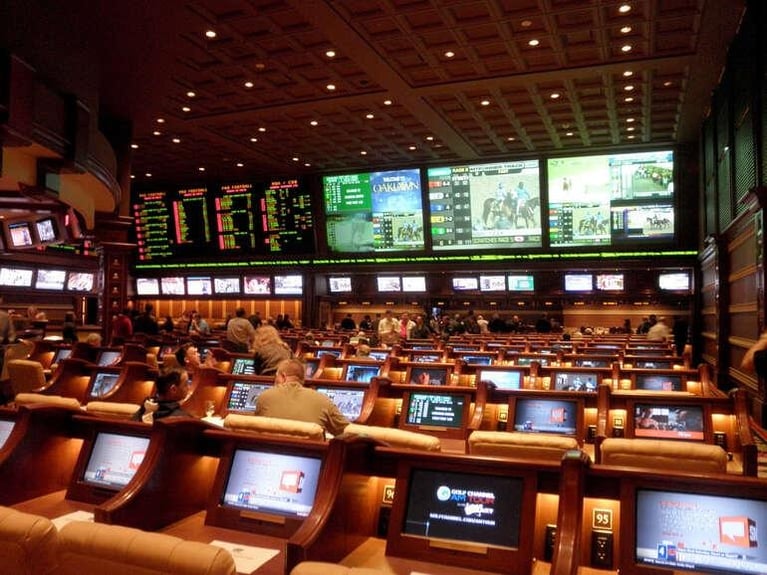
Someone tells you it’s a close game and there’s a cold beer by your side when they say the favourite is down three points. After a few minutes, another person who has checked the phone says that the line has moved. In a beer-oriented environment, these little moments can be incorporated into the social aspect of it, as friends share their tip suggestions, where their next brew is going, or what they plan to do next. Those numbers are generated by a sportsbook, the entity that constructs betting markets, takes bets, and pays the winners based on the odds posted and rules of the sportsbook. A sportsbook may be a physical sportsbook located within a casino or a website or app that allows online wagering.
Some gambling platforms also integrate casino games, wagering, regular rewards, and a VIP program. If you are comparing that casino side of the experience, the roobet monthly bonus calculator lets you model factors such as wager amount, game type, bonus period, and profit or loss scenario instead of judging a monthly reward by the advertised headline alone. The results will not be a guarantee, but instead an estimate. As betting markets become more ubiquitous in sports broadcasts, apps, social feeds, and sports conversations, it’s more important than ever to understand what a sportsbook is. It also makes a traditional sportsbook stand out from newer offerings like sports betting exchanges and prediction markets, which can be superficially similar but have very different dynamics.
Understanding The Concept Of A Sportsbook.
A sportsbook is a company that accepts wagers on sporting events and displays odds on events they might bet on. Some people will also use the terms “sports book” or “bookmaker” or even “book. The terms used differ, but the purpose is the same. The person who sets up or provides a betting market accepts a wager at a designated price, and then resolves that wager once the event’s result is determined. A traditional sportsbook might be a counter at a casino where a bettor places a wager and receives a ticket.
An online sportsbook performs essentially the same function through a website or mobile app. Sports betting, meanwhile, is the activity itself. Think of the distinction like brewing and a brewery. Brewing is the activity. The brewery is the business carrying it out. Sports betting is the activity, while a sportsbook is the business providing the market and accepting the bet.
Why The Sportsbook Definition Matters More In 2026
Sports betting is no longer a niche corner of the sports world. According to the American Gaming Association State of the States 2026 report, in 2025, U.S. commercial sports betting is projected to have gross revenues of $16.89 billion, up 22.6% from 2024. That doesn’t count some tribal gaming activity, making the overall extent of wagers even greater. Meanwhile, sports event contracts on prediction markets have become more prominent to consumers. So it’s important to have the right terminology.
Any type of sportsbook, betting exchange, or prediction market can offer prices on sporting events. However, they do not necessarily follow the same structure or regulatory system. That sounds like tech-speak for those just looking for a way to comprehend the actual numbers shown on the screen during a football match. The practical lesson doesn’t seem so difficult. Before placing a wager, know what kind of platform you’re betting on.
How Does A Sportsbook Work?
From the bettor’s side, sportsbooks work through a straightforward sequence. First, the sportsbook publishes markets for an event. For instance, on an NFL game, you may be able to wager on a point spread, total, player prop, parlay (or dozens of other wagers). The bettor selects a market and the amount of money that will be bet. As long as the wager follows the limits and rules of the sportsbook, the sportsbook will accept the bet offered at the odds that are shown. When the sporting event is over, the sportsbook settles the wager. If the bet wins, it will be awarded the amount of the bet. If the bet loses, the amount bet is lost. Depending on the market and sportsbook rules, some bets may end up being pushed, cancelled, or voided.
| Stage | What the bettor does | What the sportsbook does |
| Market opens | Reviews the betting options | Sets odds and lines |
| Bet is placed | Choose a market and stake | Accepts the wager at the listed price |
| Market develops | May place additional bets | Monitors information and betting activity |
| Odds change | Sees a new available price | May adjust lines or odds |
| Event ends | Waits for the result | Grades the wager |
| Bet settles | Receives a payout if successful | Pays winners and retains losing stakes |
Online sportsbooks automate much of this process. Modern sportsbook technology can update prices rapidly, accept thousands of bets, monitor risk, suspend a live market after an important play, and settle many wagers soon after an event ends. In the broader world of sports gambling, these systems help operators manage the speed and volume of betting activity. That does not mean the sportsbook knows what will happen. It is pricing uncertainty, not predicting the future with certainty.
What Can You Bet on at a Sportsbook?
The range of sporting events available depends on the sportsbook and the jurisdiction in which it operates. Football, basketball, baseball, hockey, soccer, tennis, golf, motorsports, and combat sports are common examples. Some sportsbooks also offer markets on less prominent leagues and competitions. Major sporting events generally produce especially large menus. A big NFL game might have wagers on the final winner, point spread, total score, individual player statistics, touchdown scorers, halves, quarters, and live events as the game unfolds. Hockey can have markets on the winner, puck line, total goals, player shots, periods, and other outcomes.
Not every market is available everywhere. Rules concerning college sports, amateur events, individual athletes, and certain prop bets can differ by location. The world of sports may be enormous, but a regulated sportsbook’s menu is still shaped by local law and its own operating rules. The same principle of defined choices can be seen in beer-focused venues, where tap lists are often shaped by available styles, seasonal releases, licensing requirements, and the brewery’s approach to serving its customers.
The Main Ways to Bet on Sports
Sportsbooks offer multiple ways to bet on the same event.
For a beginner, six formats cover much of what appears on a typical betting screen.
| Bet type | What you are betting on | Simple example |
| Moneyline | Which side wins | Team A to win |
| Point spread | Outcome after a handicap | Team A -3.5 |
| Total | Combined scoring | Over 47.5 points |
| Prop bet | A specific event or performance | Player over 74.5 rushing yards |
| Parlay | Several selections combined | Three teams all to win |
| Live bet | A market offered during play | Next team to score |
- A moneyline is straightforward. Pick the winner.
- A point spread gives one side a numerical handicap. If a football team is -3.5, it generally needs to win by four or more points for that spread bet to succeed.
- A total, often called an over-under, asks whether the combined score will finish above or below the sportsbook’s number.
- Prop bets focus on something more specific than the final result. That might be a player’s yardage, shots, goals, or another measurable outcome.
- Parlays combine several selections into one bet. Because every required leg normally needs to succeed, adding legs reduces the probability of the entire wager winning, even though the potential payout can increase.
- Live betting happens after a game begins. Prices can move quickly because every score, possession, penalty, injury, or change in time remaining affects the state of the event.
How Do Sportsbook Odds Work?
Odds tell the bettor two important things. They show the price of a wager and imply a probability for the outcome.
- American odds are usually displayed with a plus or minus sign.
- A favorite could be listed at -150. An underdog might appear at +130.
- At -150, a bettor would need to risk $150 to win $100 in profit. At +130, a successful $100 wager would produce $130 in profit.
- Point spreads and totals frequently use prices around -110.
- Imagine a football market that looks like this.
Team A -3.5 at -110
Team B +3.5 at -110
A $110 winning wager on either side would return the original $110 stake plus $100 in profit. But odds do more than determine a payout. They also reflect a market’s assessment of probability. A favorite is priced as more likely to win than an underdog, but that does not mean the favorite is guaranteed to win or automatically represents a good bet. Odds are prices, not promises.
How Do Sportsbooks Make Money Through the Vig?
To understand how sportsbooks make money, you need to understand the vig, short for vigorish.
- It is also commonly called juice or margin.
- Consider a simplified market with -110 odds on both sides.
- One bettor risks $110 on Team A. Another risks $110 on Team B.
- The sportsbook collects $220 in total money wagered.
- If one side wins and the other loses, the sportsbook pays the winning bettor $210 — the original $110 stake plus $100 in profit.
In that perfectly balanced example, $10 remains with the sportsbook. That illustrates the purpose of the vig and helps explain how sportsbooks make money over time. Real betting markets are far messier. Bettors do not wager identical amounts. Money does not arrive evenly on both sides. Prices move. Parlays introduce different risk profiles. Sportsbooks can also lose substantial amounts on an individual game. For that reason, saying a sportsbook simply takes 10% of every bet is incorrect.
It is also useful to distinguish vig from hold percentage. Vig describes the theoretical margin built into betting prices. Hold measures the share of total money wagered that the sportsbook actually retains after paying winners during a particular period. Those are related concepts, but they are not the same number.
Why Do Sportsbooks Move Betting Lines?
If you follow betting markets, you will notice that odds change. A football team may open at -2.5 and later move to -3. A favorite could shift from -140 to -155. A hockey total might move after news affecting the expected pace of a game. Sportsbooks adjust lines for several reasons. New information is one. An injury, lineup announcement, weather forecast, starting pitcher change, quarterback status, or suspension can affect the probability of an outcome. Betting activity can matter too.
If significant money arrives on one side of a bet, a sportsbook may change its price. Making one side more expensive and the other more attractive can alter where subsequent wagers go. But the common explanation that sportsbooks always move betting lines simply to create perfectly balanced action on both sides is too neat. Modern risk management is more complicated. A sportsbook may be comfortable with uneven money if its traders believe the price and exposure are acceptable. It can also move because the wider betting market has changed. A moving line contains information. It does not reveal the winner.
How Do Sportsbooks Manage Risk?
A sportsbook accepts wagers without knowing the final score, so risk management is fundamental to the business. Operators monitor how much money is exposed to different outcomes. They may change a price, alter a betting limit, or temporarily stop accepting bets on a market when circumstances change. Imagine that an unusually large amount of money is wagered on one team. The sportsbook does not necessarily panic and try to force the same amount onto the opponent.
Instead, it can evaluate its total liability, confidence in the current price, broader market movement, and the amount of additional betting likely to arrive. This is why the idea of perfectly balanced action is better viewed as a useful beginner concept than an iron rule. A sportsbook is essentially practicing careful management of a portfolio of wagers across thousands of potential outcomes, not just two people betting opposite sides at the end of the bar.
What Are the Key Components of a Modern Sportsbook?
The betting app is only the part users see. Behind it are several systems working together.
- Odds and trading systems create and update betting prices.
- Risk management tools monitor potential sportsbook losses across events and markets.
- Player account systems keep track of identity, balances, wagers, limits, and account activity.
- Payment systems process deposits and withdrawals.
- Compliance technology supports requirements such as age checks, identity verification, geolocation, and responsible gambling controls where applicable.
- Sports data feeds deliver scores, statistics, game clocks, and other information.
- Settlement systems determine whether every bet is won, lost, pushed, or voided under the applicable rules.
Live betting makes the technology even more demanding. A sportsbook may have to update a market seconds after a goal, turnover, penalty, or injury. In other words, the modern sportsbook is as much a technology and risk-management operation as it is a place to gamble on sports.
What Is the Difference Between a Sportsbook and Sports Betting?
Sports betting is a pastime. A sportsbook is the company or website that facilitates this. When someone states, “I bet on sports,” he or she is making a statement about what he or she does. If they say they opened up a sportsbook, they’re referring to the site where they can see the odds and make a wager. The separation is more useful when contrasting standard sportsbooks with other methods of betting on sporting occasions.
How Do Sportsbooks Compare With Betting Exchanges and Prediction Markets?
A conventional sportsbook generally takes the other side of a customer’s wager. It publishes the price. The bettor chooses even if to accept it. A betting exchange typically uses a different model. Customers can be matched against other customers taking opposing positions, while the exchange earns money through commissions or fees. A prediction market can use event contracts whose prices move based on buying and selling. The distinction has become especially relevant in 2026 because sports-related event contracts are increasingly visible alongside conventional sports betting.
In the United States, the regulatory debate is active. Conventional legal sportsbooks generally operate through state or tribal gaming frameworks, while federally regulated prediction-market platforms operate under a derivatives-market framework. Government agencies, states, courts, and industry groups are grappling with boundaries issue for sports-related event contracts. The main takeaway for the average sports betting fan is that not all sportsbooks are equal on sports odds. Look for the ones that operate it, how it works, the regulating authority, and consumer protections.
Are Sportsbooks Legal and Regulated?
The legality of sportsbooks varies from state to state. Sports betting laws are assigned and mainly enforced at the state and tribal level, meaning the legal status of sports betting, age requirements, mobile betting availability, markets for wagering, and operators that hold the license in many states and over 120 tribes vary considerably. Following the Supreme Court’s previous ruling, the Professional and Amateur Sports Protection Act of 1992 (PASPA) was overturned in 2018, allowing the modern U.S. betting market to grow. This allowed the states that won approval to decide how they would implement legal sports betting.
However, sports betting is not legal in all states, and not all sportsbook websites are authorized in your state. Always make sure that an operator is licensed, and that the remit of betting changes, before placing a bet. Licensed sportsbooks can have regulations about licensing, consumer protection, identity verification, technical standards, adverts, responsible gambling tools, and players’ funds. Is access to service identical to its legality?
What Should You Check Before Using a Sportsbook?
The first question should not be which sportsbook offers the biggest bonus. Start with whether the platform is legally available and regulated where you are. Then compare the actual product. Look at the odds. Those minor variations in wager pricing may add up with numerous wagers. Look at some of the sports available for betting, especially if you are a fan of an obscure team or sport. Read the Rules of the House. In unusual circumstances such as a player’s withdrawal, overtime, abandoned games, postponed contests, or others, sportsbooks can handle them differently. Check out account verification criteria and the procedures for withdrawal prior to the deposit. Be sure to read the promotion terms carefully. A high headline shot can turn into an inferior wager once minimum odds, playthrough requirements, game contribution, eligibility, expiry dates, and/or conditions for withdrawals are taken into account.
For readers comparing promotions across casino platforms as well as sports products, Fair Gambling can provide another verification layer by showing tools for bonus analysis, current code drops, and extra reward options at participating casinos where available. Checking what an offer actually requires before depositing is more useful than assuming the biggest advertised number represents the best value. Responsible gambling tools should also be part of the comparison. Friction points like account-history access, cooling-off periods, self-exclusion, and deposit and wager limits can keep users in check. The idea behind a sportsbook is to be entertained, not to have a steady source of income.
What Common Mistakes Do Bettors Make About Sportsbooks?
Understanding how sportsbooks work clears up several persistent myths.
| Common assumption | What is more accurate |
| The sportsbook knows who will win | Odds express prices and probabilities, not certainty |
| The book must balance every dollar | Sportsbooks can tolerate uneven exposure |
| A favorite is automatically a good bet | A likely winner can still be badly priced |
| A line move identifies the winning side | Lines move for multiple reasons |
| A promotion is free money | Bonus terms can materially affect value |
| More parlay legs mean more chances to win | Each required leg adds another condition that must succeed |
One of the biggest mistakes is confusing likelihood with value. A team can be highly likely to win and still offer an unattractive betting price. Another is assuming the sportsbook’s job is to predict every winner. It is not. Sportsbooks lose individual bets and can lose on entire sporting events. The business is built around pricing, volume, margin, and risk management over a much larger set of wagers. Line movement creates similar misconceptions. If a spread shifts from -3 to -3.5, it does not prove that professional bettors know the favorite will cover. New information, market movement, risk exposure, or ordinary betting activity could all play a role.
A Sportsbook Example in Practice
Assume that the San Francisco 49ers play the Kansas City Chiefs. There are dozens or hundreds of possibilities for betting on just one game. A sportsbook could make a moneyline to the winner, put the point spread, run a total proposition, offer touchdown value, offer props, make bets on the first half, make parlays, and provide live betting after kickoff. Each wager should come with a price. Suppose the sportsbook initially makes one team a three-point favorite. Then an important player is unexpectedly ruled out.
The sportsbook may move the spread, adjust the moneyline, change the total, and reprice related player props. Now the game begins. A touchdown changes the score. The clock has moved. One team has a different probability of winning. A player’s statistical outlook may have changed. The sportsbook calculates again. From the couch, it looks like numbers jumping around on a phone while everyone debates whether to grab another IPA from the fridge. Behind those numbers is an active market responding to probability, information, wagers, and risk.
Why Understanding How Sportsbooks Work Matters
You do not need to understand every pricing model to make sense of a sportsbook. But knowing the fundamentals makes you a more informed consumer. You know that odds are prices rather than guarantees. You understand that the vig gives the sportsbook a built-in theoretical margin. You know that sportsbooks do not necessarily need perfectly balanced money on both sides of every bet. You understand that line movement can happen for several reasons. You know that a bonus needs to be judged by its terms rather than its headline amount.
And you recognize that a sportsbook, betting exchange, and prediction market are not automatically interchangeable just because all three can display numbers connected to sporting events. Most importantly, you understand that the sportsbook is a business. If a wager makes watching a game more entertaining, decide what you are comfortable losing before the game starts. Do not increase the stake because you are chasing an earlier loss or feel that a winning bet is somehow “due.” Probability does not know what happened to your last ticket.
Sportsbook FAQ
Before diving into the details, let’s start with the basics: what exactly is a sportsbook, and how does it work?
What Is A Sportsbook?
A sportsbook is a business that accepts wagers on sporting events, publishes odds, manages betting markets, and pays winning bets according to its rules. Sportsbooks can operate at physical locations or online where permitted.
How Does A Sportsbook Work?
A sportsbook creates or offers betting markets, sets prices, accepts wagers, manages risk, adjusts odds when necessary, and settles bets after an event. Its pricing usually includes a margin designed to help the business earn money over time.
How Do Sportsbooks Make Money?
Sportsbooks make money partly through the vig, or vigorish built into betting odds. They also manage their exposure across large numbers of wagers. Individual games can still produce losses for the sportsbook.
Why Do Sportsbooks Charge Vig?
The vig creates a theoretical margin in the market. When both sides of a point spread are priced at -110, for example, the implied probabilities add up to more than 100%.
Why Do Sportsbooks Move Betting Lines?
Sportsbooks may adjust lines because of injuries, weather, lineup changes, new information, market prices, money wagered, or risk exposure. A line move does not reveal which side will win.
What Is The Difference Between A Sportsbook And A Bookie?
Both can describe someone accepting sports bets, but a sportsbook generally refers to an organized betting business or platform. Bookie is a more informal term for a bookmaker and can refer to either legal or illegal betting activity depending on the context.
Are Sportsbooks Legal?
Sportsbooks are legal in many jurisdictions, but the rules vary. U.S. bettors should check current state or tribal regulations and verify that a sportsbook is authorized to operate in their location.
Can Sports Bettors Make Money Betting On Sports?
A bettor can win individual bets and have profitable periods, but there is no guaranteed method of making money from sports betting. Sportsbook odds include a margin; results remain uncertain, and long-term profitability is difficult. Sports betting should not be treated as a reliable income.
What Players Should Remember
After the hype and buzzwords die down, a sportsbook is no longer a mystery. It is a business that provides betting markets, sets the odds for potential results, accepts wagers, controls its exposure, adjusts its odds for events as they happen, and pays out winnings. The vig explains why sportsbook pricing contains a margin. Risk management helps explain why odds move. Regulation explains why the platform you can legally use depends on where you are. And the rise of exchanges and sports-related prediction markets makes understanding the type of product in front of you increasingly important.
It does give you the context needed to understand what all those numbers mean the next time they appear on a screen while you are watching the game with a beer in hand. The best place to start is not to drop a dollar when someone at the other end of the bar guarantees that their favorite is a sure bet. When it comes to beer in a beer-focused environment, this practical style of thinking could be a nudge to help people to choose a beer because of the clear information on its style, ingredients, and serving instructions, rather than based on a stranger’s enthusiastic recommendation.


Comments 0
No Readers' Pick yet.